


















Tensions are flaring between two powerful professional bodies in Ghana — and this time, it’s the media vs. medicine.
The Ghana Journalists Association (GJA) has thrown down a fiery five-day ultimatum to Dr. David Tenkorang-Twum, General Secretary of the Ghana Registered Nurses and Midwives Association (GRNMA), demanding he take back threat-laced remarks made against journalists — or face national and international consequences.
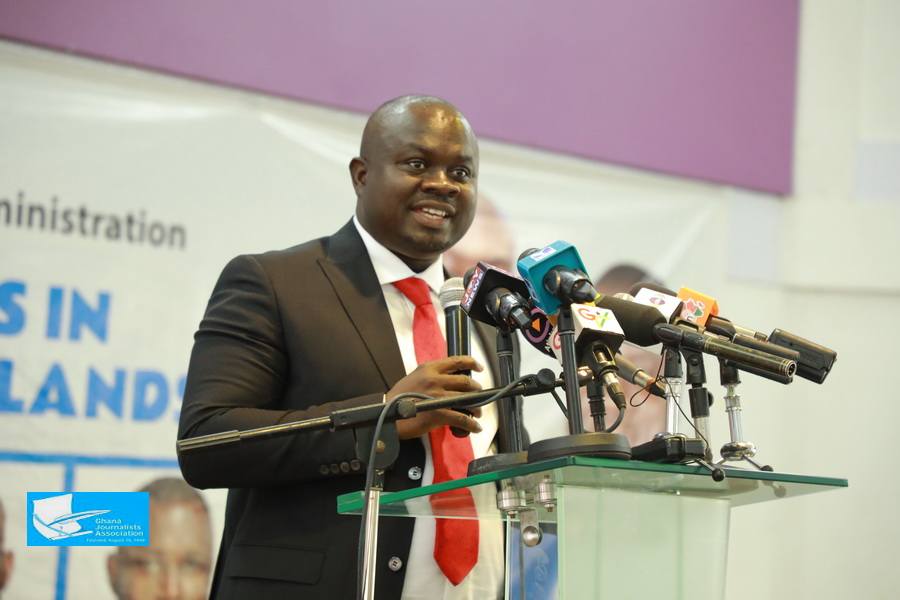
At a no-nonsense press conference held at the Ghana International Press Centre, GJA President Albert Kwabena Dwumfour didn’t mince words.
He condemned Dr. Tenkorang-Twum’s recent radio comments — where the nurse leader claimed journalists had been “marked” and would be “shown” when entering hospitals — as “reckless, dangerous, and a threat to democracy.”
“The safety of journalists is non-negotiable,” Mr. Dwumfour stated emphatically. “Any harm to a journalist will be treated as a direct result of Dr. Tenkorang-Twum’s inflammatory words — and we will hold him personally responsible.”
But the GJA isn’t stopping at strong words. If the GRNMA secretary refuses to retract and apologize, the Association will escalate matters to the National Media Commission, CHRAJ, and international watchdogs like the Committee to Protect Journalists (CPJ) and the International Federation of Journalists (IFJ).
They’ve also urged the Ministry of Health, government officials, and security forces to step in and reassure journalists that hospitals are still safe grounds for media work, not warzones.
In a surprising twist, while calling out Dr. Tenkorang-Twum, the GJA also turned the spotlight on the media itself — chastising sections of the press for unethical reporting, particularly for misrepresenting an old video clip as being linked to the recent Ridge Hospital incident.
“With great power comes great responsibility,” Dwumfour reminded.
“Journalists must report with fairness and accuracy — it’s not just about being first, it’s about being right.”
The press event wasn’t just about the GRNMA feud.
The GJA also raised red flags over safety concerns ahead of the Akwatia by-election on September 2, urging media houses to better protect their field reporters and demanding updates from the military on an earlier assault on a JoyNews crew.
As the conference wrapped, Mr. Dwumfour made the GJA’s stance crystal clear:
“Journalism is not a crime. Journalists are partners in building democracy — not punching bags for public frustration.”
So what’s next? The countdown is on. Dr. Tenkorang-Twum has five days to make peace — or brace for a media firestorm that won’t quell any time soon.