
















Author: Bernard Mornah
Comrade Bernard Mornah writes;
Ghana stands at a critical crossroads.
The question before us is not whether we need roads—we all know we do—but whether we have the courage, urgency, and clarity of purpose to deliver them.
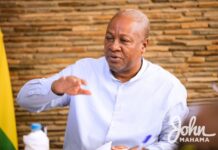
The Big Push Agenda, championed by the John Mahama-led government, is not merely another policy initiative. It is a bold declaration of intent—a ten-billion-dollar commitment to confront, head-on, the infrastructure deficit that has crippled our economy and burdened our people for decades.
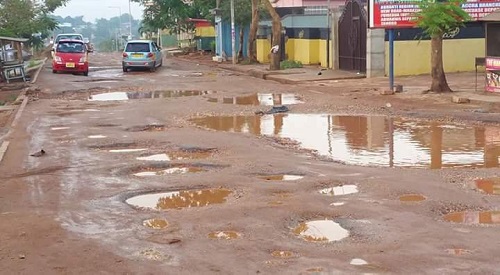
Across this country—from bustling urban centres to the most remote communities—the cry is the same: roads, roads, and more roads. Chiefs demand them. Farmers depend on them.
Traders rely on them. Workers suffer daily without them. This is not a partisan issue; it is a national emergency.
And yet, as the government moves decisively to respond to this urgent call, we are witnessing a chorus of criticism—loud, relentless, and, in some cases, fundamentally flawed.
Let us be clear: no serious nation develops by allowing procedure to suffocate progress.
Competitive tendering is important, yes—but when it becomes a bureaucratic bottleneck that delays critical infrastructure for months on end, it must give way to lawful alternatives.
Sole sourcing, as provided for under Ghana’s Public Procurement Act, is not illegal. It is not unconstitutional. It is a legitimate tool—one that responsible governments may deploy in moments that demand urgency and efficiency.
Do the risks exist? Absolutely. Sole sourcing can open the door to abuse if left unchecked. But allegations are not evidence. Suspicion is not proof.
To date, neither the Fourth Estate nor the NPP Minority has presented concrete, verifiable evidence that any official has engaged in conflict of interest, inflated contracts, or abused their office under The Big Push.
Instead, what we have seen is an attempt to reduce complex engineering and procurement realities into simplistic arithmetic.
Dividing total project cost by kilometres of road and presenting that as analysis is not accountability—it is intellectual laziness.
Road construction is not a one-size-fits-all exercise. Terrain matters. Soil conditions matter. Drainage systems matter. The difference between asphaltic roads and surface-treated roads matters. To ignore these variables is to mislead the public.
The Fourth Estate plays a vital role in our democracy, and its duty to hold government accountable is unquestionable. But that duty must be exercised with integrity, depth, and respect for facts—not sensationalism.
Ghanaians are not interested in noise. They are interested in results. We must therefore strike a balance—between vigilance and vision, between scrutiny and speed.
Accountability must not become an obstacle to development, just as urgency must not become an excuse for impropriety.
Time is not on our side. Every delayed project is a farmer unable to transport produce, a trader losing income, a worker spending hours on deplorable roads. Delay has a cost—and that cost is borne by the ordinary Ghanaian.
The Big Push Agenda represents an opportunity to break this cycle of delay and disappointment. It is an opportunity to act boldly, decisively, and lawfully.
Let us not sabotage it with premature conclusions and unsubstantiated claims.
If there is wrongdoing, let it be proven with evidence. If there is none, let the work continue.
Ghana cannot wait.