













By: GIABA Journalists Network, Ghana Chapter
Churches and religious organizations operate largely on trust. Donors—both local and international—are rarely questioned about the source of their funds.
This is because offerings, tithes, and donations are seen as “gifts to God,” there’s often little verification or due diligence.
This trust-based culture becomes an easy entry point for criminals seeking to clean dirty money under a righteous cover.
Many churches and faith-based groups rely heavily on cash transactions, especially in developing countries.
Cash donations collected during services or events can easily be mixed with illicit funds without trace.
Churches and faith-based groups often receive foreign donations to support missions, humanitarian aid, or church projects.
Criminals exploit these cross-border flows, disguising illicit transfers as legitimate charitable contributions. Once the money is inside the system, it becomes hard to trace or question its origin.
Since such organizations are often exempt from strict banking scrutiny, dirty money can be “sanctified” through these cash flows.
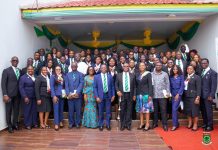
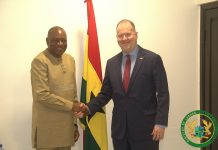
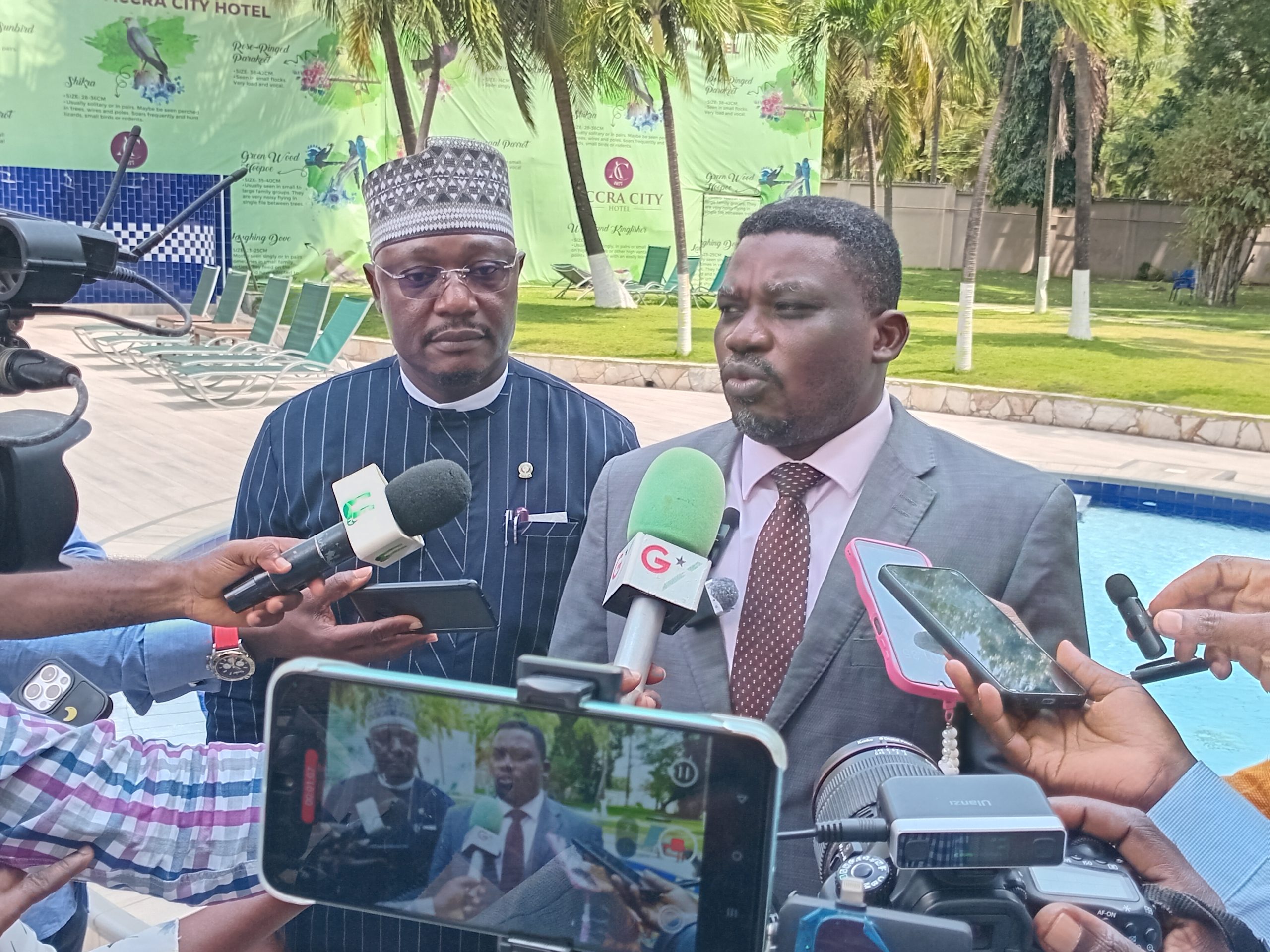
It is a result of these factors that Ghana’s Attorney-General and Minister for Justice, Hon. Dr. Dominic Akuritinga Ayine (represented by Mrs. Yvonne Atakora Obuobisa, Director of Public Prosecutions), at a high level anti-money laundering sensitization seminar for religious groups on Tuesday, 21 October 2025, at the Accra City Hotel, has challenged all religious faith-based institutions not to become conduits for criminal enterprises and whitewashing illicit financial flows in the face of growing threats of money laundering and terrorist financing in the West African sub-region.
The seminar, jointly organised by the Inter-Governmental Action Group against Money Laundering in West Africa (GIABA) and the Financial Intelligence Centre (FIC), brought together leaders from major Christian and Muslim denominations, including the Catholic Church, Methodist Church, Pentecostal and Charismatic Councils, the Office of the National Chief Imam, Ahmadiyya, Shia, and Ahlussunna Missions.
The event underscored the growing concern that criminal and terrorist networks are now targeting religious organisations due to their strong community ties and credibility.
Participants were urged to establish internal systems to identify, report, and prevent suspicious financial transactions within their institutions.
Mrs. Obuobisa, delivering the Attorney-General’s speech, stressed that the fight against money laundering and terrorism financing is no longer confined to banks and businesses—it has reached the doorsteps of the church and the mosque.
She cautioned: “Faith-based institutions are sacred spaces meant to promote peace and righteousness. Yet, because of their trusted nature, they can be exploited to disguise or transfer illicit funds when safeguards are weak or absent.”
The Attorney-General reaffirmed Ghana’s commitment to global anti-money laundering standards under Act 1044 (Anti-Money Laundering Act, 2020), Act 875 (Anti-Terrorism Amendment Act, 2014), and Act 1015 (Corporate Insolvency and Restructuring Act, 2020). However, he warned that “the most sophisticated laws will remain ineffective if faith-based institutions are unaware of their role in enforcement.”
Calling on religious leaders to rise to the challenge, he reminded them that they occupy a “unique and powerful position” in society—shaping moral behaviour and influencing millions.
“Your leadership is indispensable in promoting transparency, integrity, and accountability. By instituting proper bookkeeping, internal audits, and verification of donors, you protect not just your institutions but your faith and communities.”
He further stressed that the fight against illicit financial activities is not just a legal responsibility, but a moral duty, adding that:
“In protecting your institutions from abuse, you are protecting the very values you stand for.”
The event also reaffirmed Ghana’s continued partnership with GIABA in strengthening the region’s collective resilience against financial crimes.
As the seminar concluded, the message was clear: religious institutions must transform from potential targets into strongholds of financial integrity.
“Let your integrity—not loopholes—define your ministry,” the Attorney-General urged.
The sensitization seminar marked a pivotal moment in Ghana’s national dialogue on financial transparency and faith-based accountability—an urgent call for the Church and Mosque alike to guard the sanctity of their altars from the shadows of money laundering.
On his part, the Director General of the Inter-Governmental Action Group against Money Laundering in West Africa (GIABA), Mr. Edwin W. Harris Jr, in a speech read on his behalf by Timothy Melaye from the GIABA Secretariat, reiterated that the moral authority and influence of religious leaders make them critical allies in building a safer and economically viable society.
“This programme is a clarion call on all of us to play our roles in ensuring a peaceful, secured and economically viable nation and region at large, through the instrumentality of religion,” he declared.
Mr. Harris underscored the growing menace of illicit income-generating crimes such as corruption, human and drug trafficking, kidnapping, and other predicate offences of money laundering that have become prevalent in the sub-region.
He expressed concern over the “high level of violent extremism and the obvious challenges associated with these vices,” stressing that religious leaders possess immense moral influence capable of changing the course of communities toward integrity and peace.
“The voice of our religious leaders must be strongly heard against those ills ravaging our societies—especially violent extremism, terrorism, corruption, human trafficking, kidnapping and other predicate offenses. They must not only be heard but must be seen to lead the way by actions and exemplary lifestyles,” he emphasized.
GIABA’s Mission and Mandate
Introducing GIABA to participants who may be encountering the institution for the first time, Mr. Harris explained that it is a specialized ECOWAS institution and a Financial Action Task Force (FATF)-style Regional Body (FSRB) established in 2000 with the mandate to protect member states’ economies from the laundering of proceeds of crime and terrorism financing.
He outlined GIABA’s core mandates, which include:
- Ensuring the implementation of AML/CFT standards in line with FATF’s 40 Recommendations;
- Promoting regional cooperation and best practices tailored to local realities;
- Conducting mutual evaluations to assess compliance and effectiveness of member states’ systems;
- Undertaking research and typologies to identify money laundering and terrorist financing trends; and
- Supporting member states in establishing institutions such as Financial Intelligence Units (FIUs).
“GIABA works to ensure that member States comply with acceptable international standards on Anti-Money Laundering and Combating the Financing of Terrorism. Through mutual evaluations, research, and sustained advocacy, we have risen to the challenge,” he stated.
Building on a Legacy of Engagement
Recalling GIABA’s longstanding relationship with faith-based groups, Mr. Harris cited earlier sensitization engagements, including GIABA’s participation in the 2011 Ahmadiyya Muslim Youth Convention in Nigeria and the 2013 Security Conference for Church Leaders, which eventually led to the establishment of a targeted programme for religious institutions in 2017.
Since then, he said, GIABA has organized a series of workshops across member states — with this second national seminar in Ghana serving as a renewed commitment to deepening collaboration with religious bodies.
Moral Leadership as a Safeguard Against Crime
Mr. Harris urged clerics to be “shining lights and examples” in their communities, promoting honesty, transparency, and accountability.
“Religious leaders are expected to speak the truth at all times, speak against evil, drive the good path, counsel the bad, and report obvious destructive evil to the appropriate authority where necessary,” he said.
He cautioned that the fight against money laundering and terrorism financing should not be left to religious leaders alone. GIABA, he noted, is also engaging other vital sectors — including law enforcement agencies, the judiciary, financial institutions, the media, civil society, women’s and youth groups — to create a holistic and coordinated response.
A Call for Moral Rebirth
In a passionate appeal, the GIABA Director General said that the region has reached a point where a moral rebirth is urgently needed.
“In no other time has our society required moral rebirth than now. Therefore, the importance of this gathering and its expected result cannot be overemphasized,” he stressed, calling on all participants to “take ownership of the seminar and pledge to contribute their quota as religious and opinion leaders in building a better society.”
Acknowledgements
Mr. Harris expressed appreciation to His Excellency, the President of the Republic of Ghana, the GIABA line ministers, the GFIC National Correspondent and his team, religious leaders, the media, and all delegates and resource persons who contributed to the seminar’s success.
“Finally, I thank you all for honoring our invitation and I wish you all fruitful deliberations,” he concluded to warm applause.
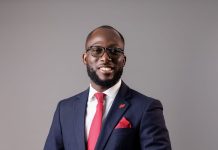
Taking his turn to speak, Deputy CEO of the Financial Intelligence Centre (FIC), Mr. Kofi Boakye, who addressed the seminar on behalf of his Boss, who doubles as the GIABA National Correspondent Kwadwo Twum Boafo, on behalf of GIABA and the FIC, lauded the initiative saying that it was an honour to be part of this national sensitization seminar for religious groups, leaders and faith-based organisations on anti-money laundering and countering terrorism financing regimes.
“This seminar is indeed timely and significant under the auspices of GIABA, a specialised body of the Economic Community of the West African States (ECOWAS) established in the year 2000 to protect our economies from money laundering and terrorist financing,” Mr. Boakye stated
He further further explained what money laundering truly entails:
“Money Laundering is the act of concealing the origin of illicit funding and the financing of terrorism and the proliferation of weapons of mass destruction.
This means that it has become a very complex phenomenon with far-reaching impacts on our nation’s political, social and economic development.
“In Ghana, as in the wider African region, we are confronting a number of evolving crimes. Our recently published 2024 risk assessment impact report indicates that Ghana continues to face medium level threats of money laundering and the vulnerabilities remain real.
….One of the major emerging vulnerabilities are the real estate, NGOs, virtual assets among others. Our Gold sector which accounts for the significant share of our Gold exports has come under increasing scrutiny due to the concerns over the smuggling of Ghana’s Gold.”
As Ghana prepares for its next impact of evaluations, the FIC assured that the government has committed to tackle high-risk ventures in ensuring Ghana remains strictly aligned with the AML/CFT compliance regimes.
Mr Boakye further gave several instances where the church often become conduits for financial crimes and money laundering.
“In the church, faith-based groups, associations or mosque, Illicit funds can be mixed with normal donations so it’s harder to trace the origin once it’s in the general pool.
- Use of donations as a cover for transfers
Funds presented as “gifts,” “tithes,” or “project funding” instead of being recorded as loans or vendor payments — especially when donors are unidentified or use cash.
- Structuring (smurfing) to avoid reporting thresholds
Breaking a large sum into many small donations or cash deposits to stay under bank reporting limits. - Third-party or shell “donors” / fake congregants
Payments routed through unrelated individuals or entities to hide the real source or beneficiary.”