





















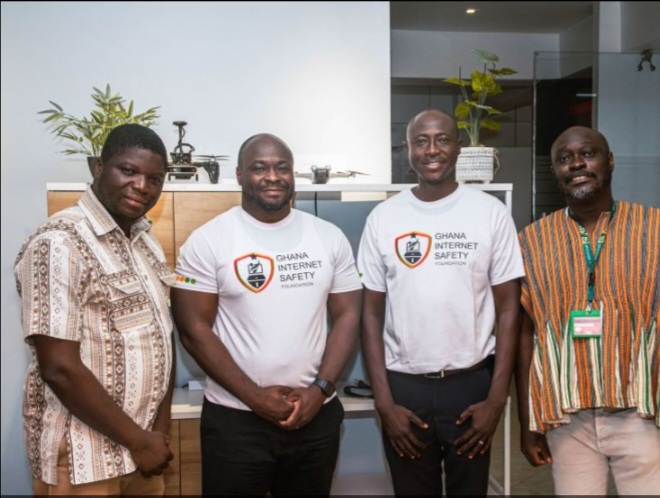
The Kwame Nkrumah University of Science and Technology (KNUST) has once again demonstrated its commitment to innovation and responsible technology with the official launch of a Trust and Safety Training Programme in partnership with the Trust and Safety Africa Academy (TSAA) and the Ghana Internet Safety Foundation (GISF).
The groundbreaking initiative, spearheaded by the Distributed IoT-Platforms, Privacy and Edge-Intelligence Research (DIPPER) Lab, aims to equip the next generation of African professionals, policymakers, and digital citizens with the tools to ensure a safer, more ethical, and inclusive digital ecosystem.
The launch, held at KNUST in Kumasi, brought together a cross-section of stakeholders from academia, government, industry, and civil society.
As the applause filled the hall and cameras flashed, one thing was clear — this partnership between DIPPER Lab, TSAA, and GISF has set a new benchmark for how academia and civil society can work together to shape a trustworthy digital Africa.
The atmosphere was one of optimism and collaboration as participants underscored the urgent need for a structured approach to online safety and trust management in the age of Artificial Intelligence (AI).
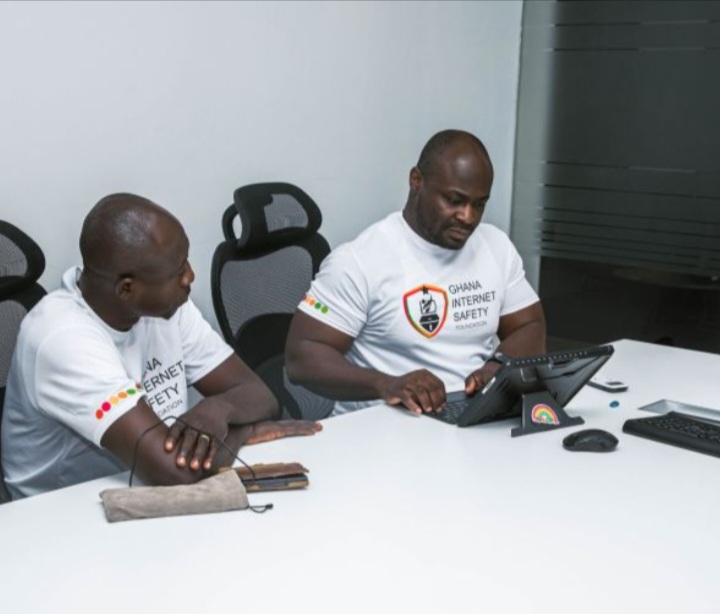
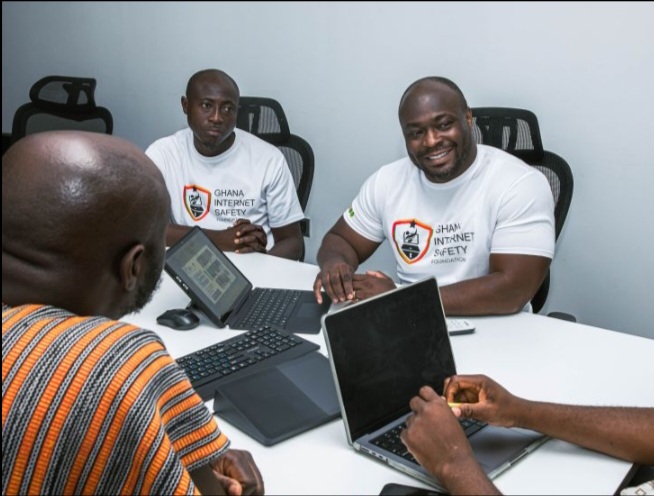
Speaking at the event, Mr. Emmanuel Edem Kwamla Adinkrah, Executive Director of the Ghana Internet Safety Foundation and convener of the Trust and Safety Africa Academy, described the partnership as a “defining moment” in Africa’s digital transformation agenda.
“This collaboration with KNUST represents a milestone in Africa’s digital safety journey,” Mr. Adinkrah said. “By building capacity and nurturing local expertise, we are shaping a future where technology is safer, more inclusive, and resilient.”
He explained that the TSAA, through this partnership, seeks to make Ghana a hub for digital trust, online safety research, and responsible AI education on the continent. According to him, empowering institutions like KNUST to drive the digital trust agenda will not only secure online environments but also create new opportunities for ethical innovation.
“Digital trust is now a currency of the future,” Mr. Adinkrah continued. “If Africa must fully benefit from the Fourth Industrial Revolution, we must prioritize safety, transparency, and accountability in every technological innovation we pursue.”
On his part, Professor Eric Tutu Tchao, Scientific Director of the DIPPER Lab and a leading advocate for privacy and edge-intelligence research, lauded the initiative as a timely intervention in an era where AI technologies are reshaping societies at lightning speed.
“Our world is being redefined by algorithms, data systems, and interconnected platforms,” Prof. Tchao remarked.
“It’s no longer enough to innovate; we must innovate responsibly. That’s what this partnership represents — a commitment to safety and ethical innovation.”
He further emphasized that the DIPPER Lab’s role in the partnership is to bridge research and practical application, ensuring that policies and innovations emerging from African universities directly address the continent’s real-world digital safety needs.
“Through this initiative,” Prof. Tchao noted, “we will not only train experts but also influence how technology is designed, deployed, and governed — ensuring that it reflects our values as Africans and serves the public good.”
The Trust and Safety Training Programme is expected to roll out in phases, beginning with a pilot training module for university students and young professionals, followed by specialized courses for law enforcement agencies, educators, and policymakers.
Participants will be exposed to themes such as AI ethics, privacy protection, misinformation management, cyberbullying prevention, and the responsible use of emerging technologies. The programme will also integrate practical case studies, mentorship sessions, and collaborative projects with industry partners.
A highlight of the launch event was a demonstration by the DIPPER Lab team showcasing how AI-powered systems can be designed with embedded trust and safety features, underscoring the need for proactive design in digital ecosystems.
Representatives from government agencies and the private sector praised the collaboration as a model for cross-sector partnerships in the digital space.
Many noted that the initiative aligns perfectly with Ghana’s Digital Transformation Agenda and the broader African Union’s Data Policy Framework.
The Ghana Internet Safety Foundation, which established TSAA as a training and advocacy arm, has over the years led numerous campaigns on digital literacy, online safety awareness, and responsible social media use among youth and vulnerable groups.
Mr. Adinkrah reiterated GISF’s commitment to making digital inclusion and online safety a core part of Africa’s digital evolution.
“Our vision has always been clear — to ensure that no one is left behind in the digital revolution, and that innovation does not come at the cost of human safety,” he said passionately.
Prof. Tchao also called for stronger policy alignment between universities, government, and the private sector to sustain initiatives like this.
“Research must inform regulation, and regulation must protect innovation. That’s the cycle of trust we hope to nurture here at KNUST,” he stated.
The event concluded with a renewed call for collective responsibility in safeguarding the digital space.
Participants signed a Digital Trust and Safety Pledge, symbolizing their shared commitment to building a secure and ethical digital future for Africa.