















Author: Kofi Agbeko || Political Analyst
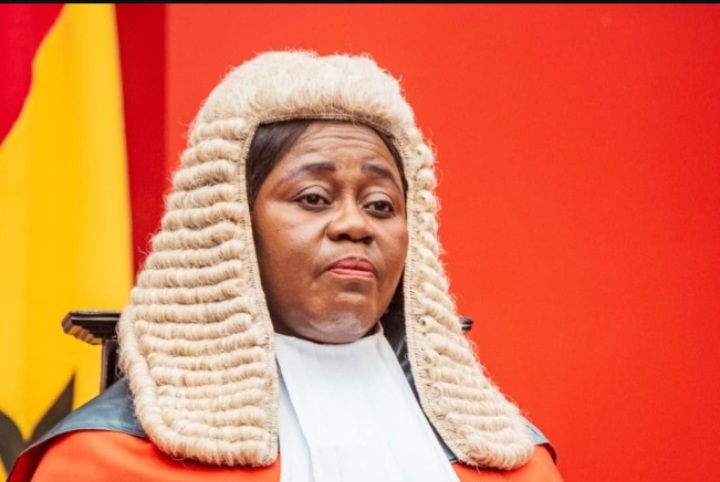
Ghana has once again proven that no one is above the law. The removal of former Chief Justice Gertrude Sackey Torkornoo has divided opinion—but the facts remain unshaken.
The process was lawful, constitutional, and a direct result of her own actions—not presidential manipulation.
From the outset, the loudest cries of “unfair trial” came from the New Patriotic Party (NPP). But why only them? Why has the NPP, and not the broader legal fraternity or the Ghanaian public, rushed to defend her with rhetoric instead of law?
Were they shielding partisan interests hidden within the judiciary? Was her elevation to the highest judicial office a scheme to serve party rather than country?
It is established that both the petitioner and the Chief Justice presented strong witnesses before the Committee of Inquiry.
It is established that those who testified for the former Chief Justice included:
Sophia Akuffo, former Chief Justice and now Council of State member.
Kwasi Anin Yeboah, former Chief Justice.
Nana Dr. S.K.B. Asante, constitutional expert and paramount chief.
Justice Jones Dotse, retired Supreme Court Justice.
Samuel Okudzeto, senior lawyer and ex-Council of State member.
The Ghana Bar Association leadership: Efua Ghartey (President), Victoria Nana Ama Barth (Vice President), Kwaku Gyau Baffour (Executive Secretary).
It is established that the Chief Justice herself testified, calling 12 witnesses in her defense.
It is established that for the petitioner, Daniel Ofori and his team called 13 witnesses. Together, both sides tendered over 10,000 pages of documents—a volume of evidence that underscores the seriousness of the case.
It is established that the Committee’s findings were damning and undeniable. Among the irregularities uncovered were:
Manipulation of case assignments at the Supreme Court to influence outcomes.
Irregular financial authorizations, bypassing proper accountability channels.
Abuse of administrative authority, including the victimization of staff who resisted questionable directives.
Misrepresentation of judicial procedures to justify unlawful decisions.
These were not technical errors. They amounted to stated misbehaviour, the very grounds for removal outlined in the Constitution.
The constitution speaks,
Article 146(1) states:
“A Justice of the Superior Court of Judicature may be removed from office only for stated misbehaviour or incompetence, or on the ground of inability to perform the functions of his office.”
Article 146(9) directs:
“Where the tribunal recommends that the Chief Justice or a Justice of a Superior Court should be removed from office, the President shall act in accordance with the recommendation.”
This is exactly what happened. Nothing more, nothing less.
It is established that Sophia Akuffo testified in favor of the dismissed Chief Justice. But in doing so, she stepped beyond her duty as a Council of State member. Bound by an oath of secrecy and neutrality, she chose instead to play partisan politics. This was a breach of trust, an act of bad faith, and a dent on the credibility of the Council she serves. For the dignity of that body, she too must be held to account.
It is established that some have attempted to frame this removal as a gendered attack, playing feminist politics to shield illegality. That argument is false, dangerous, and dishonest. The law is blind to gender. Illegality is illegality, no matter who commits it. Justice cannot wear a gendered robe. The only robe a Chief Justice must wear is integrity.
Let us be clear: this was not a witch-hunt. It was the Constitution at work. Petitions were filed. A prima facie case was established. An independent tribunal sat in-camera. Witnesses were heard. Documents were examined. A binding report was submitted. The President simply executed his constitutional duty.
Gertrude Torkornoo was not removed by Mahama. She was removed by her deeds. This was not an attack on judicial independence—it was its defense.
The lesson is simple: Ghana must not allow partisan politics—or gender politics—to capture the judiciary. And those who betray their oaths, like Sophia Akuffo, must be held accountable.
Because when justice bends to politics, the nation itself begins to break.
The law has spoken. The Constitution has spoken. And Ghana must move forward—wiser, stronger, and more vigilant.
Kofi Agbeko
Political Analyst