






















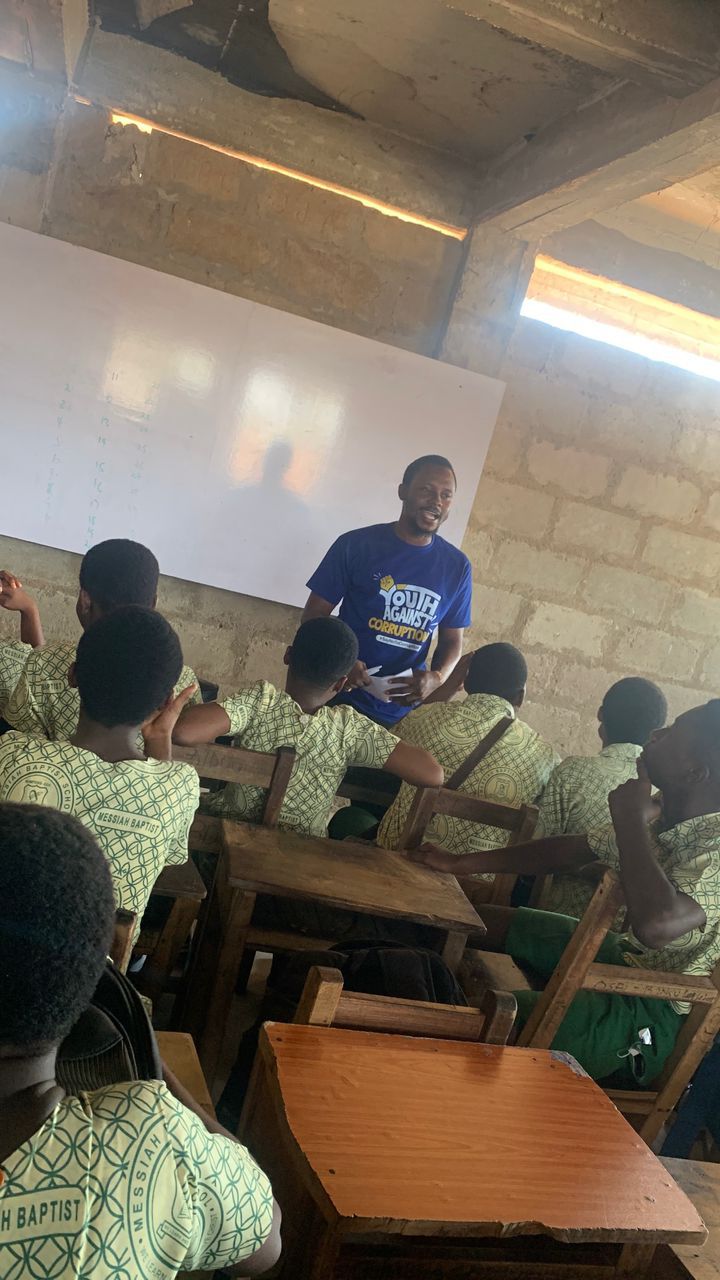
The Ghana Anti-Corruption Coalition (GACC), through its Mampong Local Accountability Network (LANet), has taken the fight against corruption straight to the classroom, engaging young people in the Mampong Municipality of the Ashanti Region as part of activities marking the 2025 International Anti-Corruption Day (IACD).
Observed on the theme “Youth Against Corruption – Resist, Reject and Report,” the 2025 commemoration focuses on empowering pupils in basic schools and communities with the knowledge, courage and civic responsibility needed to confront corruption in all its forms.
The educational outreach, held on Thursday, December 12, 2025, targeted pupils of Mensah Saahene International Junior High School and Messiah Baptist Junior High School.
The initiative sought to raise awareness about corruption, whistleblowing, and the critical role young people play in building an accountable and transparent society.
Despite being in the midst of end-of-term examinations, both pupils and teachers showed impressive enthusiasm and commitment, underscoring the relevance of the anti-corruption message even in demanding academic periods.
At Mensah Saahene International JHS, the session was held with one class, as other pupils were engaged in examinations.
The activity received strong support from the Headteacher, Mr. Jolly, and his assistant, who pledged to facilitate similar engagements for the remaining students at a later date.
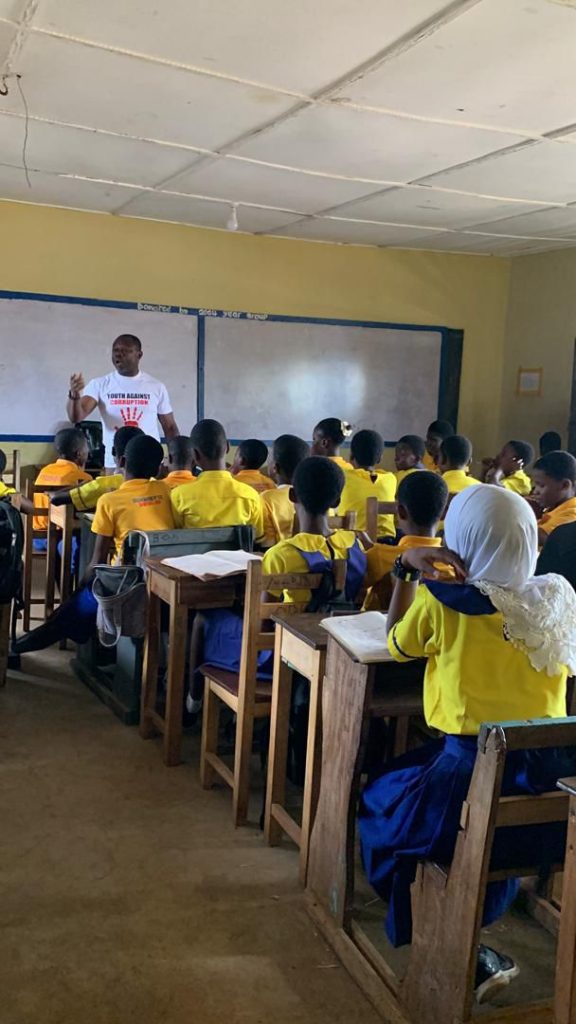
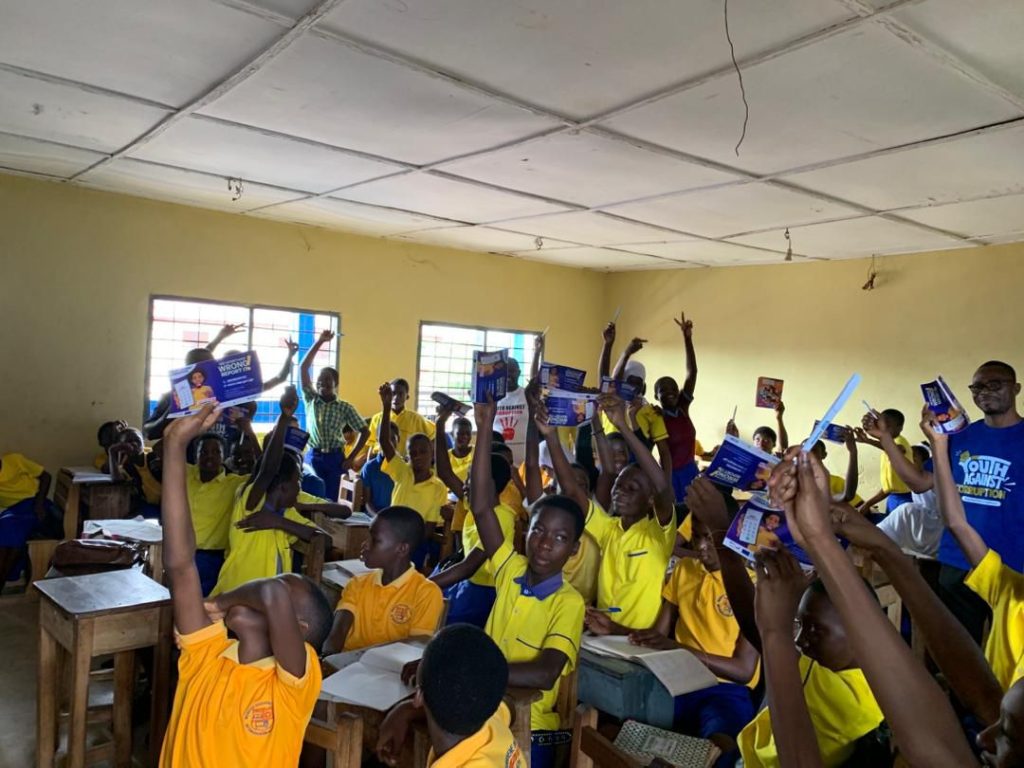
In total, 53 pupils—23 boys and 30 girls—participated in the session.
At Messiah Baptist JHS, the engagement was similarly well received, with the support of a teacher, Elder Darko. Forty-nine pupils, made up of 27 boys and 22 girls, took part in the interactive discussions.
Altogether, 102 pupils across the two schools were reached, reflecting a healthy balance of male and female participation.
During the sessions, students were introduced to the concept of corruption using relatable, everyday examples such as examination malpractice, favoritism, falsification of grades, and bribery.
Facilitators guided discussions on why corruption matters, highlighting its damaging effects on education, healthcare, employment opportunities and national development.
A key focus of the engagement was whistleblowing, which was presented as an act of courage and civic responsibility rather than “snitching.”
Pupils were educated on the Whistleblower Act, 2006 (Act 720) and the Witness Protection Act, 2018 (Act 975), which provide legal safeguards and incentives for individuals who report corruption.
Students were also informed about practical reporting channels, including teachers, headteachers, CHRAJ, the Police, District Assemblies and other relevant institutions.
One of the standout successes of the initiative was the warm reception from both school authorities and pupils, even during a busy examination period. Encouraged by the impact of the engagement, both schools expressed readiness to host regular anti-corruption education programmes beyond the current project.
The Ghana Anti-Corruption Coalition, through Mampong LANet, has reaffirmed its commitment to strengthening civic education and deepening youth participation in the fight against corruption, with plans to scale up similar initiatives across the municipality and beyond.