


















Author: Nicholas Akussah
Accra witnessed a fresh wave of civic engagement as digital content creators and social media commentators converged at a high-level workshop aimed at deepening public understanding of Ghana’s ongoing constitutional review process.
The capacity-building session, hosted by the Center for Democratic Development, Ghana (CDD-Ghana), formed part of broader efforts to broaden citizen participation in discussions around possible reforms to the 1992 Constitution.
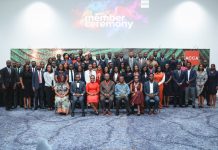
The engagement, held at The Palms in Accra, brought together bloggers, online commentators, and social media influencers whose platforms now shape public opinion across the country.
Organised in collaboration with the STAR-Ghana Foundation and Democracy Hub, and supported by the Foreign, Commonwealth and Development Office (FCDO), the workshop underscored the growing recognition of digital media as a critical pillar of modern democratic engagement.
Participants were taken through the fundamentals of constitutional review, the history of reform efforts, and the key governance concerns that continue to dominate public debate.
Renowned lawyer and activist Oliver Barker-Vormawor led sessions that unpacked the civic responsibility of citizens in reform processes, while policy direction and institutional perspectives were provided by Dr. Kojo Asante, Director of Policy Engagement and Partnerships at CDD-Ghana.
Longstanding Constitutional Concerns
Dr. Asante outlined several structural weaknesses associated with the 1992 Constitution, many of which have persisted for decades. Among them is the concentration of power in the executive arm of government, a situation critics argue weakens accountability and democratic checks and balances.
He also questioned the arrangement that allows Members of Parliament to double as ministers of state, stressing that it compromises Parliament’s ability to exercise effective oversight over the executive.
Other issues highlighted included political interference in the public service, weak accountability mechanisms, and an underperforming local government system.
A History of Unfinished Reforms
The policy expert traced constitutional review efforts across successive administrations, noting that attempts under former President John Evans Atta Mills and later initiatives during the tenure of former President Nana Addo Dankwa Akufo-Addo failed to produce comprehensive reforms.
Under the current administration of President John Dramani Mahama, however, a renewed push has been made. An eight-member Constitutional Review Committee (CRC) was established to conduct nationwide consultations, and according to Dr. Asante, the committee has completed its work and is expected to submit its final report to the President shortly.
Why Digital Influencers Matter
Explaining the rationale behind engaging online content creators, Dr. Asante pointed to changing media consumption habits. With more citizens, particularly young people, turning to social media for news and analysis, influencers now play a powerful role in shaping opinions on national issues.
“Increasingly, people turn to online platforms for explanations on complex policy matters,” he noted, adding that digital voices are often the first point of contact for public education and debate.
He stressed the need to equip these actors with credible and accurate information, warning that misinformation could easily derail constructive national conversations if left unchecked.
Citizens Before Commentators
Beyond their online reach, participants were reminded of their identity first and foremost as citizens with a vested interest in the country’s democratic future. Dr. Asante cautioned that growing public frustration with governance systems, if ignored, could breed apathy or instability.
For this reason, he said, CDD-Ghana sees digital media actors as partners in democratic strengthening—individuals who can help bridge the gap between policy processes and everyday citizens.
Coordinating Civil Society Voices
As part of efforts to sustain advocacy around the constitutional review, CDD-Ghana announced plans to launch a Civil Society Organization Coordination Platform on the review process. Scheduled for November 7, the platform is expected to serve as a collective space for civil society engagement and coordinated action.
Participants were also encouraged to build their own collaborative networks online, with assurances of technical and strategic support from CDD-Ghana. Similar consultative engagements, Dr. Asante revealed, have already been held with traditional media practitioners, youth and women leaders, and stakeholders in the creative sector.
Toward Inclusive Democratic Reform
As Ghana inches closer to another critical moment in its constitutional journey, civil society organisations are intensifying efforts to ensure that the reform process reflects the aspirations of ordinary citizens.
By bringing digital voices into the fold, CDD-Ghana and its partners are signaling a shift toward more inclusive, participatory democracy—one that recognises the power of online platforms to inform, mobilise, and sustain national dialogue on the future of governance in Ghana.