

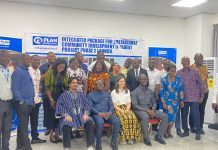

















Ghana has successfully hosted the National Online Safety Summit (NOSS) 2026 at Alisa Hotel, North Ridge, Accra, bringing together key stakeholders to tackle the growing online risks faced by children.
The two-day event, held under the theme “Closing the Gaps: Building a United Front Against Online Child Sexual Exploitation,” saw participation from government officials, cybersecurity experts, child rights organizations, educators, and representatives from the judiciary and technology sector.
The first day featured keynote addresses from prominent figures including Emmanuel Adinkra, President and Founder of the Ghana Internet Safety Foundation (GISF), Helen King, Co-founder and Executive Officer of Praesidio Safeguarding in the UK, and Lydia Davenport from Ghana’s Cyber Security Authority.
Speakers emphasized the importance of a whole-of-society approach to protecting children online, discussing strategies to enable safe internet use, disrupt cybercrime networks, and foster international collaboration.
Addressing the event, Dr. Jamal Tonzua Seidu, Deputy Director-General of the Cyber Security Authority of Ghana, shared experiences from some recent reported cases which mostly involved child victims of online exploitation.
Against this background, he pointed out that
protecting children online requires cooperation among regulators, service providers, educators, parents, and civil society — all sharing responsibility for building a safe and empowering digital environment for children.
He further indicated that the issue is not a lack of systems but rather coordination among stakeholders — including central government, law enforcement, and human rights institutions — to protect children effectively both offline and online.
Government-Led Initiatives on Online Safety
He spoke about several ongoing government efforts aimed at improving child online protection, including:
Nationwide awareness campaigns to educate citizens about safe internet practices and cyber hygiene.
- Strict cybersecurity standards for institutions handling sensitive child data.
- An already established dedicated Child Online Protection Unit within the Cyber Security Authority, with a reporting hotline (292) for cases of online harm against children.

In an exclusive interview, Mr. Adinkrah highlighted the vulnerability of Ghanaian children online, citing research showing that one in five children has been exposed to internet-related harm.
“The summit was organized to bring relevant stakeholders together to ensure Ghanaian children are safe online. Internet safety is the responsibility of everyone, including the government, which sets policy frameworks; traditional parents and digital parenting; and schools, by incorporating online safety in classrooms. If all these stakeholders work together, we can protect children effectively,” he said.
Helen King explained why her organization partnered with GISF and the Ghanaian government to support the summit.
“Through research conducted over the past three years in Ghana, we found that many children, particularly girls, suffer online sexual exploitation. Many do not know how to report incidents, feel ashamed to speak with parents or teachers, or feel pressured to comply with offenders’ requests. Our aim is to support prevention campaigns, educate children on saying no to offenders, and bring agencies together to provide protection,” she said.
The summit also served as a platform to discuss policy, education, and technology-driven solutions to create safer online environments for children and young people.
The Organizers said NOSS 2026 reinforced the shared responsibility of all stakeholders in safeguarding children as Ghana continues to expand its digital presence.