










Author: Nicholas Akussah
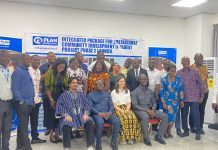
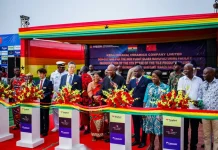
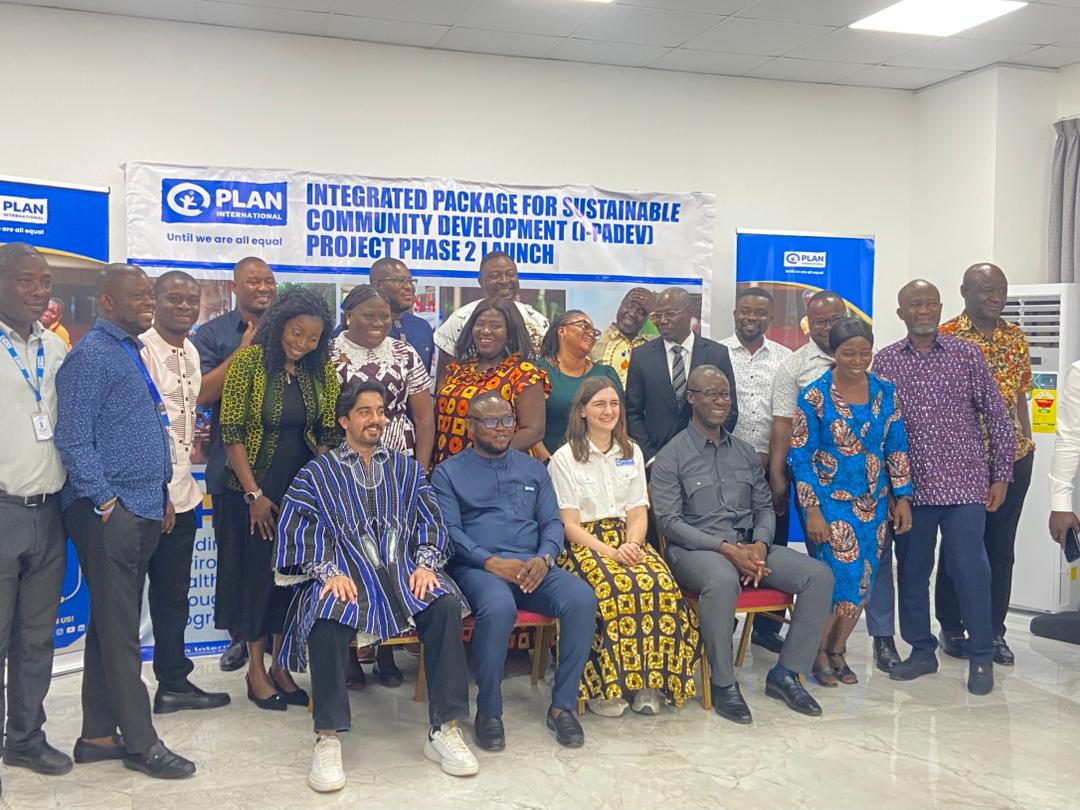
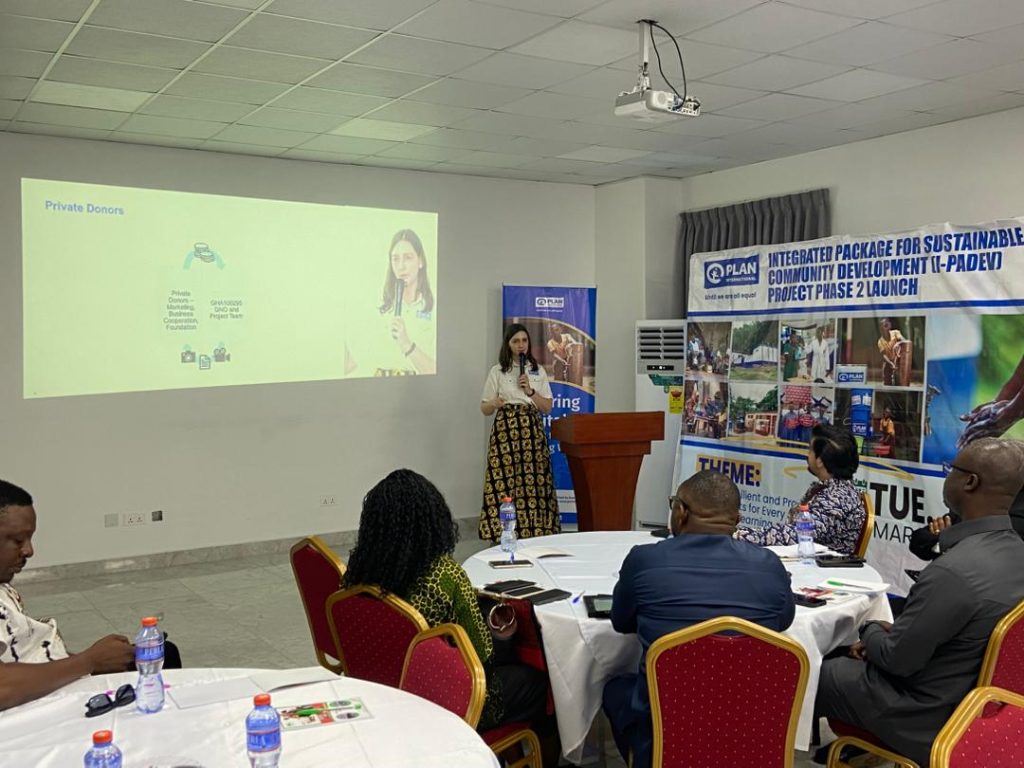
As part of the measures of ensuring equitable safe Water, Sanitation and Hygiene, (WASH) across communities, Plan International Ghana with support from external partners has launched the 2nd phase of the Integrated Package for Sustainable Community Development, (I-PADEV) project.
The 2nd phase of the (€1,360,603) 3-year project which was launched in Accra on Tuesday, 3rd March, is targeted at increasing access to and utilization of safe drinking water, improved sanitation and hygiene to 14,766 people especially vulnerable girls and women in a protective environment in Guan and Wa East districts in the Oti and Upper West Regions of Ghana.
Also, by 2028, the project is seeking to improve access to and usage of basic WASH facilities and services in schools by vulnerable children, especially adolescent girls for better learning outcomes in Guan and Wa East districts in the Oti and Upper West Regions of Ghana, respectively, by 2028.
And to improve access to and usage of gender responsive parenting and healthcare services for Early Childhood Care and Development (ECCD) in Guan and Wa East districts in the Oti and Upper West Regions of Ghana, respectively by 2028, and improve livelihood opportunities for economic empowerment for project participants, especially young women in Guan and Wa East districts in the Oti and Upper West Regions of Ghana, respectively, by 2028.
The selected communities in the Wa East district includes Jumo, Tineaba, Kunyebin, Yala 1, Yala 2, Zini, Belekpong and Chawuli.
Kayadan, Buem Dzolu, Akpafu Adorko, Likpe Bakua, Likpe Koforidua, Likpe Agbozume, Likpe Bala and Santrokofi Gbordome, making up the communities within the Guan District.
According to the project manager, William Domapielle stated that the project is expected to see the implementation of several life changing infrastructures across water, sanitation and hygiene sectors.
“We are expecting to see the constructions of climate resilient (solar powered, flood resilient hand pumps) new infrastructure / water points – new handpumps and mechanized facilities to serve 16 schools and communities, training of Water Sanitation Management Teams (WSMTS), develop water safety plans including household water treatment, and conduct drinking water quality monitoring”, he said.
In a 2023 report by the Ministry of Sanitation and Water Resources, only 25% of Ghanaians had access to basic sanitation. Approximately 56% relied on shared latrines, 1% used unimproved facilities, and 18% practiced open defecation.
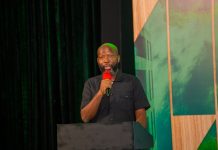
The acting country director of Plan International Ghana, Mr. Frederick Tei-Nobi believes that, access to clean water, sanitation and hygiene is a matter of equality and empowerment.
“ Plan International Ghana firmly believes that improved WASH services promote the empowerment of girls and women by enhancing their dignity and strengthening their position within the community. As we all know, when WASH facilities are inadequate, it is the girls and women who bear the greatest burden”, he said.
According to him, the project will prioritise schools by providing basic WASH facilities and services that will enhance learning outcomes, especially for adolescent girls.
“In addition, we will promote gender-responsive parenting and strengthen healthcare services to support Early Childhood Care and Development. Beyond health and education, this project will create economic empowerment opportunities for young women, ensuring a sustainable and lasting impact”, he stated.
Mr. Tei-Nobi reiterated that their strategy is aimed at working together with partners, communities to ensure sustainable WASH outcomes, as well as focusing on gender equality across their programmes.
“Plan International Ghana works in close partnership with communities, schools, civil society organizations, and government institutions to deliver sustainable WASH outcomes. School WASH remains central to our strategy. Our interventions go beyond infrastructure to include creating of a safe, dignified learning environments for adolescent girls.
These efforts are complemented by large-scale capacity building and behavior change initiatives targeting pupils, teachers, Parent-Teacher Associations, and School Management Committees”, he said.
“Gender equality is systematically integrated across our WASH programming. We address the root causes of gender inequality in WASH service delivery and ensure inclusive participation at all levels.
Menstrual Hygiene Management remains a core priority. By providing education and access to essential products, we support girls’ retention in school and empower women and adolescent girls to participate fully in community life’s” he added.
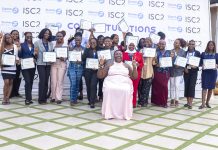
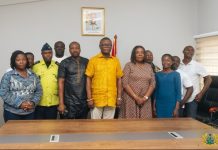
Affirming their support for the project, both District Chief Executives of Guan and Wa East, Hon. Godfred Koffie and Hon. Adamu Sayibu expressed gratitude to Plan International Ghana for the opportunity to provide sustainable development within their communities.
In attendance at the event were representatives from Plan International Germany (GNO), Member of Parliament for Wa East, Hon. Godfred Seidu Jasaw, representatives from the Ghana Education Services, and among others.