














NPP GERMANY
PRESS RELEASE
16—03—2026
Mahama’s Track Record Is Lies, Deceit And Recurring Incompetence —NPP GERMANY Replies MP For Afram Plains South
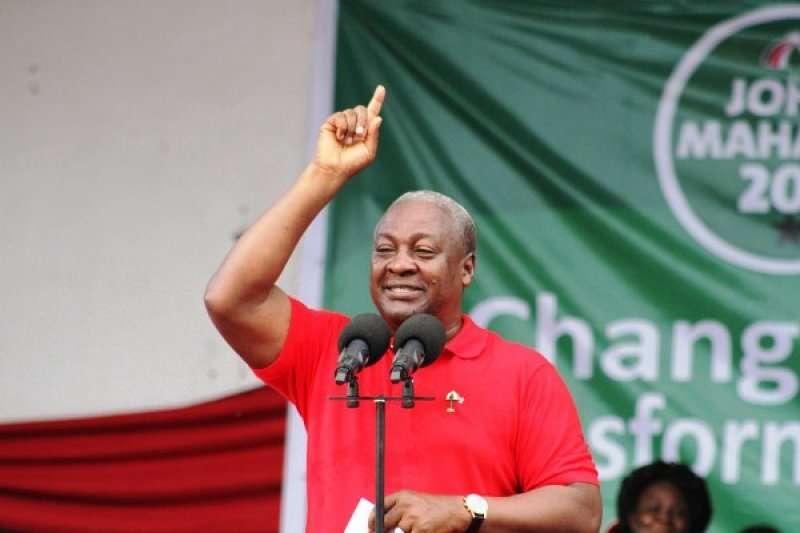
When the Member of Parliament for Afram Plains South, Joseph Appiah Boateng, boldly declared that the track record of John Dramani Mahama is “unmatched,” the claim sounded less like a sober evaluation of governance and more like partisan cheerleading.
In a country where political accountability matters, such sweeping praise demands closer scrutiny. Governance should be judged by results, not rhetoric.
The reality is that Ghana’s recent political history offers plenty of material to assess the record of Mahama’s leadership.
When one examines the economic turbulence, power crises, and stalled development projects that characterized his earlier administration, the idea of an “unmatched” record quickly collapses under the weight of evidence.
During Mahama’s presidency between 2012 and 2017, Ghana faced one of the most debilitating energy crises in its modern history.
The infamous “dumsor” era plunged homes and businesses into prolonged darkness.
Manufacturing output dropped, small businesses folded, and investors began questioning the reliability of Ghana’s economic management.
Economic indicators during that period also painted a troubling picture. Inflation surged, the Ghanaian cedi depreciated sharply, and public debt climbed to worrying levels.
These developments forced the government to seek support from the International Monetary Fund, a move widely interpreted as a sign that the country’s economic management had gone off track.
It is therefore puzzling when some political figures attempt to rewrite this history as a period of exceptional governance.
For many Ghanaians, the memory of economic hardship, erratic electricity supply, and stalled infrastructure projects remains fresh.
Supporters of Mahama often point to isolated projects as proof of performance, but governance cannot be measured by a handful of road contracts announced in parliamentary debates.
True development requires sustained national transformation, not selective examples used to score political points.
Even the roads cited by the Afram Plains South MP are not evidence of a broader national transformation. Road announcements are common in Ghanaian politics, yet the critical question remains whether such projects are completed on time, within budget, and with measurable economic impact.
By contrast, the administration of Nana Addo Dankwa Akufo-Addo invested heavily in major road infrastructure that reshaped transport connectivity across the country. These projects were not merely promises; many became visible symbols of national development.
One notable example is the Pokuase Interchange, widely recognized as Ghana’s first four-tier interchange.
The massive project eased congestion in the Greater Accra corridor and improved connectivity for thousands of commuters traveling daily between Accra and surrounding regions.
Similarly, the Tema Motorway Interchange Project significantly upgraded one of the country’s busiest industrial transport corridors.
By improving access to the Tema Port and surrounding industrial zones, the project strengthened logistics and trade.
The Obetsebi Lamptey Interchange redevelopment also transformed a historically congested part of Accra into a modern transport hub. Such large-scale infrastructure investments demonstrated a commitment to long-term urban planning and mobility.
Beyond Accra, numerous trunk roads and regional highway upgrades were undertaken to improve connectivity between agricultural communities and urban markets.
These projects were essential for reducing post-harvest losses and supporting farmers across the country.
Under Akufo-Addo, initiatives such as the “Year of Roads” highlighted a national effort to accelerate road construction and maintenance. While challenges remained, the policy focus underscored the government’s determination to address Ghana’s infrastructure deficit.
In contrast, Mahama’s previous tenure was frequently criticized for project delays, ballooning contract costs, and limited follow-through. Announcements were often made with fanfare, yet many projects struggled to move beyond initial stages.
Another critical issue was public financial management. Critics argued that weak fiscal discipline during Mahama’s administration contributed to rising debt levels and economic instability.
Such concerns cannot be dismissed simply because a few new projects are announced.
Ghana’s development conversation must therefore move beyond partisan narratives. Claims that one administration has “outperformed across all sectors” require evidence, data, and transparent assessment—not enthusiastic speeches in parliament.
For ordinary citizens, what matters is whether governance improves their daily lives: reliable electricity, stable prices, good roads, quality healthcare, and jobs. Political rhetoric does little to address these real concerns.
Indeed, Ghanaians are increasingly aware of attempts by politicians to reshape public memory.
The tendency to portray past administrations as flawless risks undermining the honest national conversation needed to drive progress.
If the Mahama administration hopes to convince skeptics of its competence, it must do more than rely on political allies to sing its praises.
Delivering measurable results across the economy, infrastructure, and social services is the only credible way to earn public trust.
Until then, claims of an “unmatched” track record will continue to ring hollow.
In politics, reputations are built not by declarations from loyal fanatic MPs on the side of the president but by the enduring evidence of national transformation.
Anything short of this, that evidence remains far from convincing any discerning Ghanaian that there have been progress or advancement.
This cannot — and must not — be business as usual.
God Bless Our Homeland Ghana!!!
Long Live Ghana, long live the Elephant Party!!!!
Kukruduuuu Eeeessshiii!!!
Signed:
Nana Osei Boateng
NPP GERMANY