






















The Media Foundation for West Africa (MFWA) has called for stronger accountability in the management of personal information across Africa, warning that the rapid expansion of digital financial services and online platforms is exposing citizens to increasing privacy and security risks.
The Foundation believes that as more Africans embrace digital transactions, mobile money services and electronic identity systems, greater attention must be paid to how personal information is collected, accessed, stored and shared.
It said the growing dependence on digital platforms has created an urgent need for stronger safeguards to prevent personal data from falling into the wrong hands and being exploited for fraudulent activities.
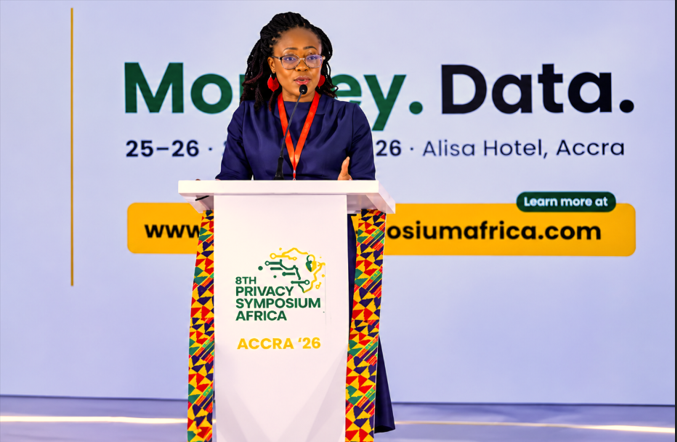
The concerns were highlighted at the opening of the 8th Privacy Symposium Africa in Accra on Thursday, November 26, 2026, where the Foundation called for a more responsible approach to digital innovation.
Delivering a speech on behalf of the MFWA Executive Director, the organisation’s Director of Media and Good Governance Programme, Abigail Larbi, stressed that the benefits of technological advancement must not overshadow the need to protect citizens’ personal information.
She observed that mobile money services, digital identity systems and online platforms had significantly expanded access to financial and other essential services for millions of Africans.
However, she cautioned that these developments had also increased the volume of personal information being collected and exchanged across digital networks, creating new vulnerabilities for individuals.
Ms Larbi illustrated the potential dangers by recounting an experience involving suspected fraudsters who allegedly impersonated representatives of MTN Ghana’s cybersecurity unit in an attempt to obtain her personal details and access her money.
The incident, she suggested, reflects the growing risks associated with digital transactions and the need for users to be protected against individuals who exploit the credibility of established institutions to perpetrate fraud.
Beyond financial losses, the MFWA warned that inadequate protection of personal information could have wider implications for fundamental rights and public participation.
The organisation explained that journalists, in particular, could face difficulties protecting confidential sources when their communications are monitored without adequate safeguards.
It further noted that citizens who fear their personal information could be abused may become increasingly reluctant to express their opinions freely, potentially weakening democratic engagement.
“Privacy is also about freedom of expression, and journalists cannot protect their sources when their communications can be monitored without safeguards. Citizens cannot speak freely when they fear their data will be used against them,” Ms Larbi said.
The Foundation maintained that effective data protection should therefore form an integral part of Africa’s digital development agenda, particularly as governments, financial institutions and private technology companies continue to expand their digital operations.
It called for stronger measures to ensure that technological innovation respects individual privacy and does not expose citizens to unnecessary risks or compromise their fundamental freedoms.
The 8th Privacy Symposium Africa, organised by Unwanted Witness in collaboration with the Hewlett Foundation, Ghana’s Data Protection Commission and the Media Foundation for West Africa, is providing a platform for stakeholders to examine emerging concerns surrounding the continent’s digital transformation.
Held under the theme “Money. Data. Control,” the symposium has brought together regulators, fintech executives, researchers and civil society representatives to discuss data privacy, accountability and the growing digital economy in Africa.
The gathering strengthened conversations around responsible data management and the need to balance technological advancement with the protection of citizens’ rights in an increasingly connected world.
On its part, The Data Protection Commission (DPC) identified inadequate funding, non-compliance by organisations and growing cybersecurity threats as some of the major challenges confronting efforts to strengthen data protection and privacy in Ghana.
Welcoming participants to the two-day symposium, Quintin Akrobotu, Director of Regulatory Compliance at the Data Protection Commission, expressed appreciation to local and international participants, development partners, privacy professionals, academics, civil society organisations and media representatives for their presence.
He described the symposium as an important platform for encouraging insightful discussions, building meaningful partnerships and generating practical outcomes to advance artificial intelligence, privacy and data protection across Africa.
Speaking during an interaction with journalists on the sidelines of the event, Mr. Akrobotu highlighted the operational and regulatory difficulties confronting the Commission in carrying out its mandate of safeguarding personal information and ensuring compliance with data protection laws.
One of the major challenges he identified was inadequate funding and logistical resources, explaining that effective data protection regulation requires sufficient financial, human and technological capacity.
He noted that the Commission needs the necessary resources to conduct investigations, monitor organisations, undertake public education and enforce compliance with data protection requirements.
According to him, limitations in these areas could affect the scale, efficiency and speed of the Commission’s operations, particularly as the volume of personal information being collected and processed continues to increase.
Mr. Akrobotu also raised concerns about non-compliance among some public institutions and private businesses, pointing to weaknesses in the way certain organisations collect, process and manage personal information.
He explained that some organisations fail to adequately meet their data protection obligations, including registering with the Commission, establishing appropriate privacy policies and adopting responsible data-handling practices.
Such shortcomings, he indicated, create difficulties for the Commission in ensuring that individuals’ personal information is properly protected and that organisations remain accountable for how they use such data.
The growing threat of cybercrime and data breaches was another major concern identified by the Director of Regulatory Compliance.
He observed that the increasing incidence of cyberattacks, hacking, phishing, identity theft and unauthorised access to databases presents additional challenges to the protection of personal information.
With businesses, government institutions and individuals becoming increasingly dependent on digital platforms, the risks associated with the exposure and misuse of personal data have also become more pronounced.
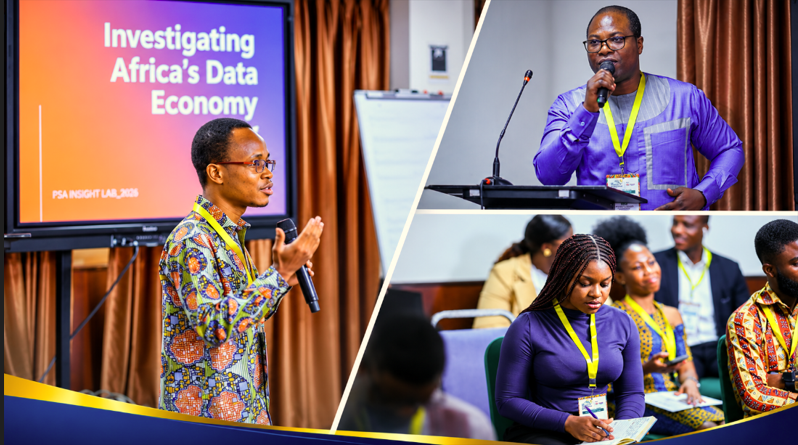
Mr. Isaac Kaledzi from the DW Akademie, who was the lead resource person took the journalists through various areas involved in probing data economies as media personnel.
He shared a load of valuable information including Why Data Economy Matters, Understanding The Data Economy, Investigating The Data Economy, The Investigative Toolkit For Journalists among several others.