



















NPP GERMANY
PRESS RELEASE
23—02—2026
Sad To See Ghanaians Killed Just Trying To Seek Their Daily Bread; May Their Souls Rest In Peace!! But Why Should Ghana Depend On Desert-prone Burkina Faso For Tomatoes?
The brutal terrorist attack on Ghanaian tomato traders in Titao, in northern Burkina Faso, is a tragedy that should shake our conscience as a nation. Seven lives reportedly lost. Others injured.
Families shattered. Dreams cut short. These were not soldiers. They were not criminals.
They were ordinary Ghanaian traders chasing survival — people whose only “crime” was crossing a border to buy tomatoes to feed households back home.
May their souls rest in perfect peace.
But beyond the sorrow and condolences lies a painful national question: Why should Ghanaians die in another country simply to trade tomatoes?
The Government of Ghana has confirmed that a truck carrying Ghanaian tomato traders was caught in a terrorist attack in Titao on Saturday, February 14, 2026. In response, authorities have temporarily suspended tomato imports from Burkina Faso.
It is a necessary step for safety, but it also exposes a deeper structural weakness in our agricultural system.
Why are we so dependent on a country battling insecurity to supply a basic food staple like tomatoes?
Are Ghana’s lands not fertile? Is our climate not favorable? Are our farmers incapable?
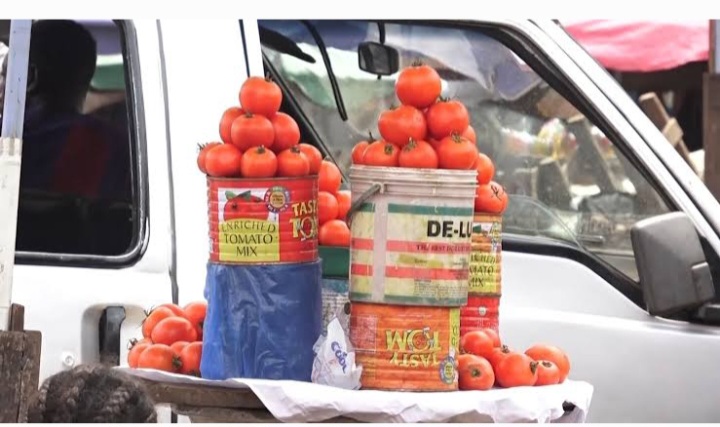
Official figures estimate that Ghana’s annual tomato demand stands at about 800,000 tonnes, driven by urban centers such as Kumasi, Accra, and Takoradi. Tomatoes account for nearly 40 percent of household horticultural spending.
Yet domestic production consistently falls short, forcing us to depend heavily on imports from Burkina Faso — a country largely characterized by Sahelian and semi-arid conditions.
It is both ironic and embarrassing.
We are blessed with vast arable lands across the Ashanti Region, Brong Ahafo, Northern Region, and beyond. We have rivers, rainfall, and human capital.
Yet during the lean season, up to 90 percent of tomatoes sold in Tamale reportedly come from Burkina Faso.
This dependency is not just an economic issue; it is now a national security risk.
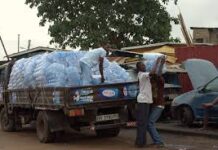
The immediate impact of the import suspension has already been felt. At Agbogbloshie Market in Accra, wholesale prices for a basket of fresh tomatoes reportedly jumped from 3,000 cedis to 4,000 cedis within days. That price shock ripples through every household, every chop bar, every market woman, and every family kitchen. This is not business as usual. It cannot be.
Ghana once had thriving tomato-producing communities. One name stands out — Akumadan in the Ashanti Region. Akumadan was synonymous with tomato abundance. Farmers there cultivated in large quantities, supplying markets across the country.
What happened to that legacy? Why have we allowed such a productive hub to decline while we import from across a volatile border?
Leadership must answer these questions honestly.
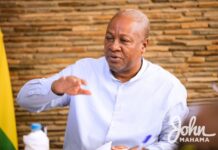
Under President John Dramani Mahama and the National Democratic Congress, there is an opportunity — and indeed an obligation — to reset Ghana’s agricultural agenda.
Campaign promises must translate into practical, measurable action. Agriculture cannot remain a seasonal slogan deployed during elections.
If Ghana’s economy survived for decades on the backbone of agriculture, why are we struggling to produce enough tomatoes?
The challenges are not mysterious. Farmers complain of lack of ready markets.
They face post-harvest losses due to poor storage and limited processing facilities. Irrigation systems are inadequate. Access to credit is expensive and bureaucratic.
Inputs such as improved seeds and fertilizers are often delayed or overpriced. These are policy failures — not natural disasters.
What is the national strategy to strengthen the entire tomato value chain? From seed research and irrigation to aggregation centers, cold storage, processing factories, transport logistics, and guaranteed off-taker agreements — where is the coordinated plan? We cannot continue to operate in fragments.
The Sahel and West Africa Club of the OECD has noted that without intra-regional trade, seasonality and production shocks significantly affect food availability and prices. That is true.
Regional trade is important. But dependence is different from cooperation. Trade should complement domestic strength — not replace it.
Why should our traders risk terrorist-infested routes because our domestic supply chains have collapsed?
Why should Ghanaian mothers pay inflated prices because our agricultural planning is weak?
Why should seven lives be the cost of policy inertia? This tragedy must become a turning point.
The government must urgently invest in irrigation expansion in key tomato-growing belts, revive agricultural extension services, and create guaranteed pricing mechanisms that protect farmers from market volatility.
Tomato processing factories must be revived or newly established to absorb surplus during bumper harvests and stabilize prices year-round.
Akumadan must rise again. So must other farming communities that once fed the nation.
Leadership at this stage requires drastic, workable solutions — not committees, not press conferences, not business as usual. We need bold timelines, budget allocations, and public accountability.
Agriculture should be treated as national security infrastructure.
If we can mobilize resources for roads, energy, and digitalization, we can certainly mobilize resources for food sovereignty.
The deaths of our traders in Burkina Faso must not be reduced to a diplomatic footnote.
They must ignite a national awakening. Ghana’s fertile lands are more than capable of producing tomatoes in abundance.
What is lacking is coordinated leadership, long-term planning, and the political will to act decisively.
Let this be the moment Ghana chooses self-sufficiency over vulnerability.
Let this be the moment when we say: never again should Ghanaians die in another land simply because they are trying to buy tomatoes to survive.
This cannot — and must not — be business as usual.
God Bless Our Homeland Ghana!!!
Long Live Ghana, long live the Elephant Party!!!!
Kukruduuuu Eeeessshiii!!!
Signed:
Nana Osei Boateng
NPP GERMANY
Communications Director