














Author: Elizabeth A. Gyamfi
OSU, ACCRA — On Sunday, August 9, 2026, the sound of Homowo was different. It wasn’t just the beat of drums or the sharing of kpokpoi. It was the whirr of 80 carbon bikes, the roar of thousands of voices, and the thunder of tyres on the 28th February Road.
For one afternoon, culture met muscle power at the 4th edition of the Duku Cycling Festival, and Osu will never be the same.
THE STREETS BECAME A STADIUM
There were no fences. No VIP tents blocking the view.
Chiefs and traditional leaders in full Homowo regalia stood on verandas next to boys in replica jerseys. Elders clapped from shop fronts as Solomon Tagoe and Francis Owusu flew past at 50km/h.
Children sprinted barefoot alongside the peloton for 100 metres, just to say, “I raced with them.”
This is Duku. This is Osu during Homowo.
“Today, the street is our stadium,” one fan shouted as the riders came through Independence Square. “If you want to see cycling, come to Osu!”
Flagged off by Amoako Boafo of Dot Ateliers — the art man who dared to put bikes on the Homowo calendar — the race turned tradition into motion.
What started four years ago as an idea is now the biggest sporting event of the Osu Homowo Festival.
FROM KPOKPEI TO PODIUMS
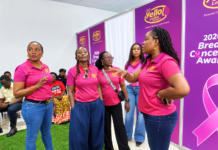
The theme for 2026 was “Women Empowerment, Health is Wealth,” and the street answered.
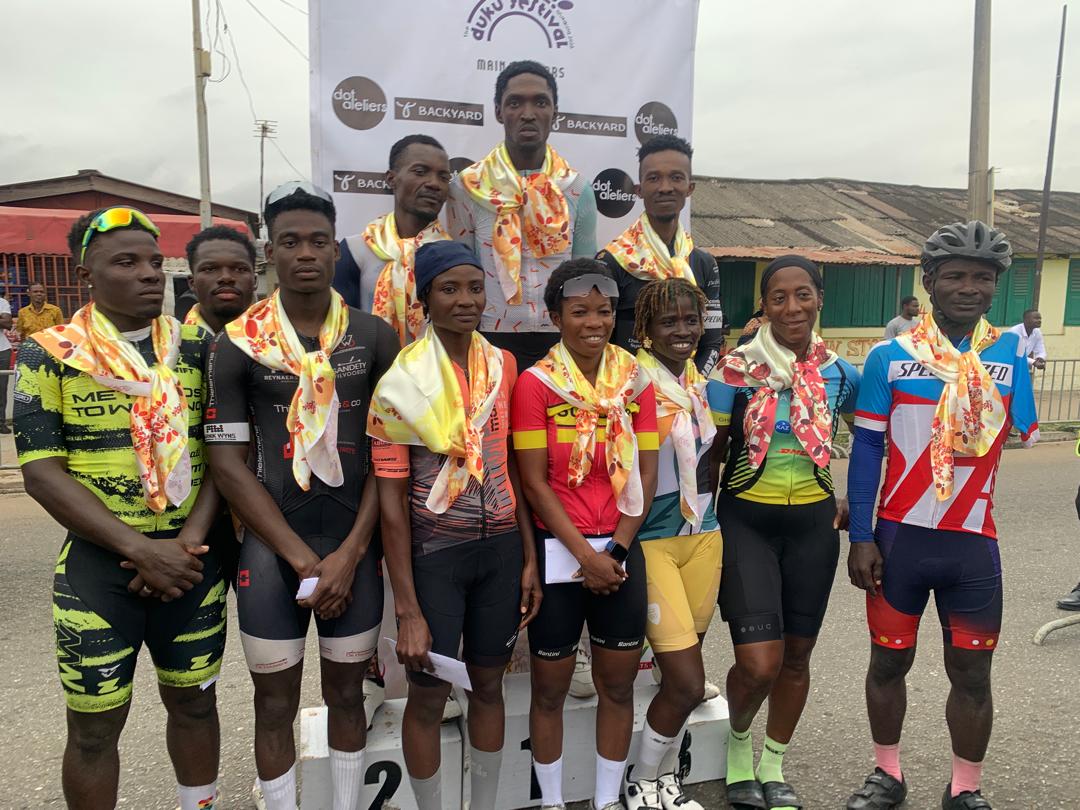
Eleven female cyclists lined up for the 50km race. Nigeria’s Patience Effion Otaidung took the crown, but it was Ghana’s Ellen Anim and Abigail Tetteh who made the crowd proudest.
As Hon. Kobena Mensah Woyome, Special Guest of Honour, told the gathering:
“Do not see the bicycle only as a means of transport. See it as an opportunity. A leisure cyclist can become a professional athlete representing Ghana on the international stage.”
And the girls were watching — from the roadside and from balconies — with dreams of becoming champions on two wheels.
“THE STREET WILL DECIDE”
No other race in Ghana sounds like Duku.
At La Road, the DJ van was louder than the team cars.
At TotalEnergies, market women paused their sales to scream, “Pull him! Pull him!”
And in the final two laps, when Solomon Tagoe and Francis Owusu broke away, the entire stretch of Osu held its breath — then exploded.
When Tagoe of the Ghana Police Team got the nod on the line, Osu’s own Frank Akuffo took fourth place.
The chant went up: “Osu boy! Osu boy!”
That’s the Duku magic. The winner is decided not just by the legs, but by the street.
MORE THAN A RACE
120km for the men. Thirty laps of heat, attacks, and courage.
Forty-five riders were dropped. Only 20 finished.
Average speed: 33.27km/h.
But the numbers don’t tell you about the kelewele mama who sold out by lap 15.
Or the photographer who climbed a mango tree for the perfect shot.
Or the old man who said, “In my day, we danced Homowo. Today, our children ride it.”
Duku 2026 proved something: Homowo is not stuck in the past. It’s riding into the future.
From 80 riders to a final duel of two. From tradition to top-level sport. From Dot Ateliers to the Police Team podium sweep.
The bar has been raised.
And if this is Duku in Year 4, 2027 promises to be even bigger.
Because in Osu, during Homowo, the street doesn’t just watch.