














Ghana stands today as the only peaceful and stable democracy in West Africa, and must be protected as our common home. That was the central message from National Security Coordinator, COP Osman Abdul-Razak, as he cautioned journalists against inaccurate and sensational reports on conflicts.
According to the National Security boss, Ghana’s democratic stability is not just a political achievement but a critical national security asset that must be guarded jealously, especially at a time when the sub-region is plagued by coups, terrorism and violent extremism.
“This is our home. Ghana is the only peaceful and stable democracy in West Africa, and we must all work to protect it,” COP Abdul-Razak declared.
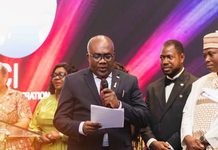
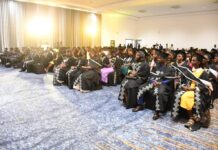
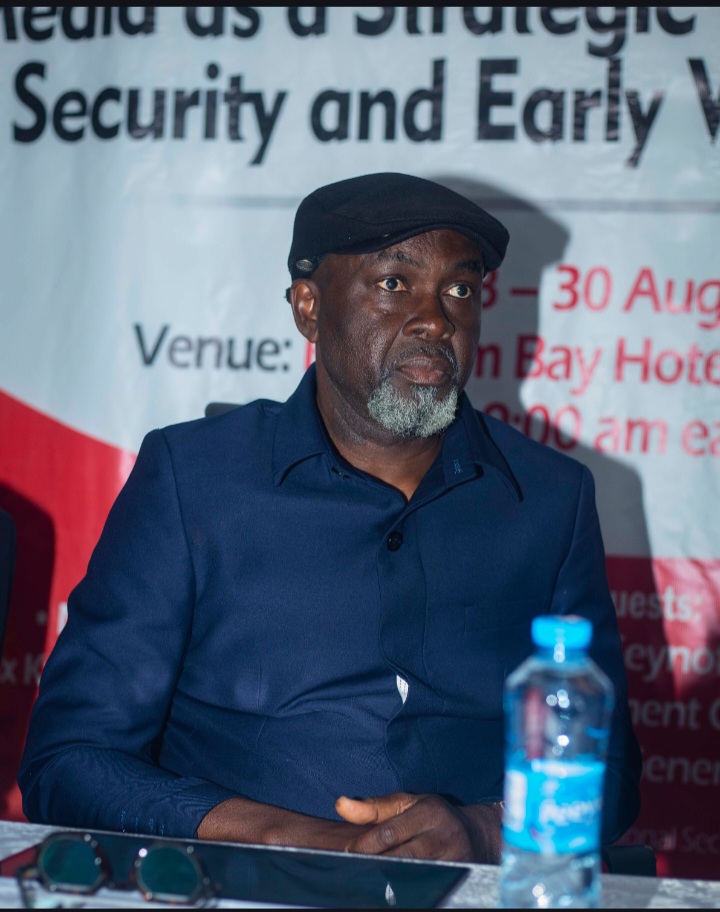
He was addressing a media capacity workshop on responsible security reporting in Accra, organised by the Private Newspapers and Online News Publishers Association of Ghana (PRINPAG).
The workshop was held on the theme “Media as a Strategic Partner in Preventive Security and Early Warning in Ghana” and brought together key stakeholders in the national security and information space.
Dignitaries present included Deputy Presidential Spokesperson Shamima Muslim, and Director-General of the Cyber Security Authority (CSA), Divine Selase Agbeti, among others.
Speaking to the journalists, COP Abdul- Razak urged the media to uphold responsible journalism through accurate information verification, fair and balanced reporting, and a focus on accountability rather than sensationalism.
He stressed that responsible journalism was particularly crucial because the media forms an integral part of the country’s security architecture.
“The media is part of our security architecture and serves as an important source of open-source intelligence for the intelligence community,” he said.
COP Abdul-Razak noted that the information space is as critical to national security as the physical borders of the country, and therefore misinformation could pose serious threats to peace and stability.
“Why should the National Security Council concern itself with this? It has to because the information space is as much a part of the nation’s security terrain as the borders, the airspace and waters,” he stated.
He explained that a free and responsible press could contribute significantly to national stability by exposing corruption, holding public officials accountable and preventing tensions from escalating into violence.
He further cautioned that inaccurate reports on conflicts have the potential to inflame passions, provoke reprisal attacks and endanger lives, particularly in volatile areas.
COP Abdul-Razak therefore outlined the core principles of responsible journalism that journalists must adhere to in order to protect the security of the country.
“Responsible journalism is built on verified truth, represents all stakeholders fairly, and emphasises accountability over sensationalism,” he emphasized.
He added: “This type of journalism informs without provoking, exposes wrongdoing without risking lives, and holds authority accountable without weakening the very institutions we intend to entrench and empower. We are just saying, do it responsibly.”
The National Security Coordinator urged journalists to recognise that their reports could become valuable sources of intelligence to the security community, and must therefore be handled with utmost professionalism.
He pointed out that when journalists report truthfully during periods of tension, they help prevent rumours and misinformation from spreading and potentially stop disturbances.
“When you report truthfully during tension, you prevent rumours from spreading and you protect the public more cheaply than any prosecution could,” he noted.
He also disclosed that the security services employ both kinetic and non-kinetic approaches to address threats, including public education and community engagement to address vulnerabilities that extremists could exploit.
He described Ghana’s democratic stability as an important asset that needs to be protected, particularly in a region facing various security challenges.
To that end, he offered to strengthen collaboration between the security agencies and the media through regular training and engagement to ensure responsible security reporting.
Participants at the workshop welcomed the call and pledged to work with national security to promote peace, accurate reporting and early warning mechanisms for conflict prevention in Ghana.