





















Ghanaian businesses seeking to expand beyond the domestic market need more than access to finance; they require the knowledge, networks and market connections to compete effectively in international trade, Stanbic Bank Ghana has said.
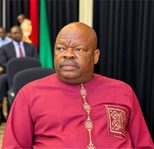
The Head of Business Products Solutioning at Stanbic Bank Ghana, Benedict Kwasi Obeng, said businesses must be adequately prepared to understand target markets, identify viable opportunities and meet the requirements of international buyers before attempting to scale across borders.
He was speaking at the Internationalization and Market Access Dialogue 2026, held under the theme, “International Trade: Its Contributions to Accessing Target Markets.”
According to Mr. Obeng, the ability of local businesses to participate meaningfully in international trade depends on addressing several challenges simultaneously, including market knowledge, financing, business capability and access to credible buyers.
He said this was the rationale behind the establishment of Trade Connect, Stanbic Bank Ghana’s export and import readiness programme designed to help businesses build the capacity required to trade internationally.
“Trade Connect was built to empower businesses to capitalize on new opportunities and, ultimately, to facilitate businesses to trade with the world,” Mr. Obeng said.
He explained that the programme goes beyond conventional training by combining practical learning with market access opportunities, financial solutions and business advisory support.
Through the programme, participating businesses receive support around financial instruments, market access and tailored propositions, while businesses can also access advisory services through the Stanbic Incubator.
Mr. Obeng said the approach was intended to address some of the practical barrier’s businesses encounter when they seek to move from serving the local market to engaging customers and partners across borders.
“For a business to successfully enter an international market, it must first be export ready. That means understanding the market, knowing what buyers require, having the right systems in place and being able to identify and respond to opportunities,” he said.
The programme, he added, provides participating businesses with a pathway to strengthen their operations while gaining exposure to digital markets, peer networks and potential buyers.
He noted that such connections could be particularly important for small and medium-sized enterprises, which often have viable products and services but lack the networks and market intelligence needed to access international opportunities.
Mr. Obeng also pointed to Stanbic Bank’s presence across 21 countries as an important resource for businesses seeking to expand their trading relationships across the continent.
“We have a presence in 21 countries, and we leverage that network to help our clients navigate opportunities in those markets and make it easier for them to trade across borders,” he said.
He said stronger links between Ghanaian businesses and international markets could create opportunities for companies to diversify their customer base, increase revenues and build more resilient businesses.
However, he stressed that internationalization should be approached as a growth process rather than a one-off transaction.
“Supporting businesses to trade internationally is not only about providing financing. It is about helping them understand the market, build the right capabilities, connect with buyers and have access to the appropriate financial and advisory support,” Mr. Obeng said.
He reaffirmed Stanbic Bank Ghana’s commitment to supporting businesses as they pursue opportunities beyond Ghana, adding that building a stronger pipeline of internationally competitive enterprises would require collaboration among financial institutions, businesses and other stakeholders in the trade ecosystem.