



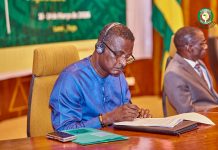
















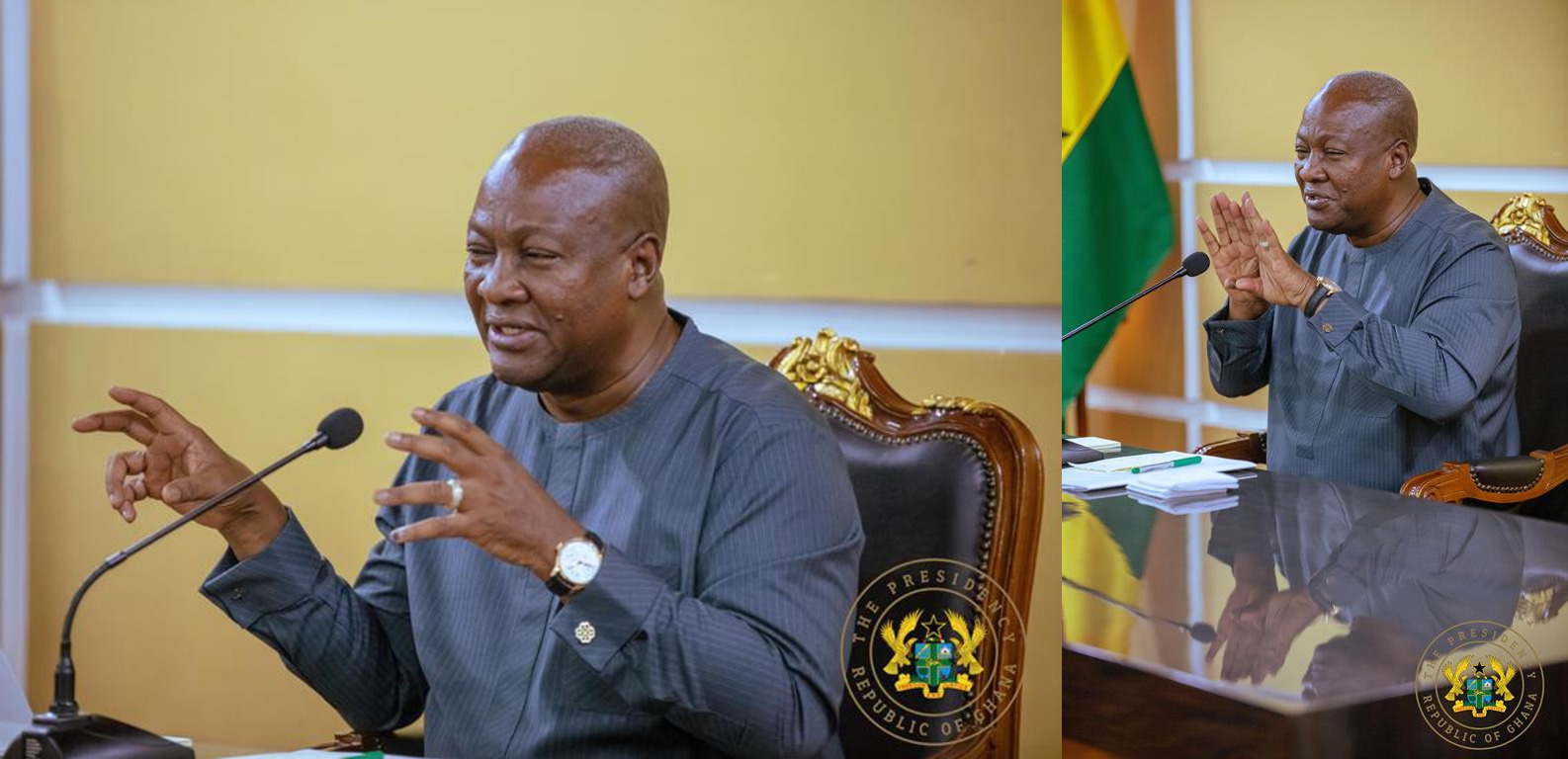
President John Dramani Mahama has given full legal backing to Ghana’s flagship 24-Hour Economy policy after signing the 24-Hour Economy Authority Bill into law, marking a decisive step toward the nationwide implementation of round-the-clock economic activities.
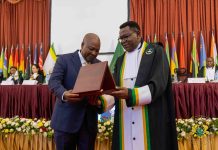
The signing ceremony, held in Accra, at the Presidency formalizes the establishment of the 24-Hour Economy Authority, a central coordinating body tasked with overseeing, regulating, and driving the execution of the policy across key sectors of the Ghanaian economy.
With his signature, President John Dramani Mahama declared that the initiative has now moved beyond policy discussions and political rhetoric into a structured phase of implementation. According to him, the era of strategy formulation has ended, and the time for measurable action has begun.
The President emphasized that the core objective of the 24-Hour Economy framework is job creation on a massive scale.
He noted that the policy is designed to unlock productivity across industries by extending operational hours in manufacturing, services, agriculture, transport, and other sectors.
He stressed that Ghana cannot afford to operate below its productive capacity while unemployment—particularly youth unemployment—remains a pressing national concern. By enabling businesses to operate in shifts around the clock, he argued, more employment opportunities will naturally be created.
The newly established Authority is expected to serve as the nerve center of the program, coordinating ministries, private sector actors, financial institutions, and regulatory agencies to ensure smooth implementation.
Government officials say the Authority will also design operational guidelines, monitor compliance, and provide incentives for businesses willing to transition into 24-hour operations.
This includes working closely with security agencies, energy providers, and transport operators to guarantee efficiency and safety.
President Mahama underscored that the initiative is not merely about extending working hours but about restructuring Ghana’s economic model to increase output, improve competitiveness, and strengthen exports.
He explained that productivity gains from continuous operations would stimulate industrial growth and reduce overreliance on imports, while positioning Ghana as a more attractive destination for foreign direct investment.
Stakeholders within the private sector have welcomed the legal backing, describing it as a bold step toward economic revitalization. Many believe the establishment of a dedicated Authority will bring clarity, coordination, and accountability to the ambitious agenda.
Labour groups, however, have indicated that worker protections, shift regulations, and fair compensation structures must be clearly defined to prevent exploitation under the extended operational framework.
Energy sector analysts also note that the success of the 24-hour model will depend heavily on reliable electricity supply and infrastructure stability. Continuous operations require consistent power, water, and transport systems.
Security experts have pointed out that a vibrant night-time economy will demand enhanced public safety measures, including improved street lighting, policing, and emergency response systems.
Despite these considerations, government officials remain optimistic that the structured implementation approach will address operational challenges through phased rollouts and stakeholder engagement.
President Mahama reiterated that the 24-Hour Economy is not a short-term political promise but a long-term national development strategy intended to transform Ghana’s economic architecture.
He further assured that transparency and accountability mechanisms will be built into the Authority’s operations to ensure that the policy delivers tangible outcomes rather than symbolic gestures.
Economic observers suggest that if effectively managed, the policy could stimulate industrial clusters, boost small and medium-sized enterprises, and create multiplier effects across supply chains.
The signing of the Bill is therefore being viewed as a defining moment in the administration’s economic agenda, signaling a shift from vision statements to institutional action.
As the 24-Hour Economy Authority prepares to begin work, all eyes will be on how swiftly the framework translates into jobs, increased productivity, and measurable economic growth—outcomes the President says will define the true success of the initiative.