















Author: Patrick Baidoo, Coordinator GIABA Journalists Network Ghana
……GIABA says ECOWAS Member States are making significant strides in complying with international anti-money laundering and counter-terrorist financing standards but warns that terrorism, cybercrime and illicit financial flows continue to threaten regional stability.
ECOWAS Member States have recorded significant progress in strengthening their anti-money laundering and counter-terrorist financing (AML/CFT) regimes, with the Inter-Governmental Action Group against Money Laundering in West Africa (GIABA) urging governments to sustain reforms as the region confronts increasingly sophisticated financial crimes.
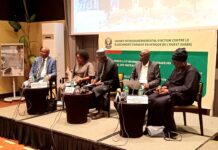
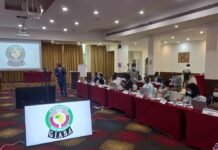
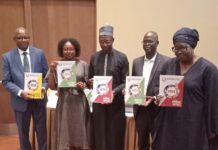
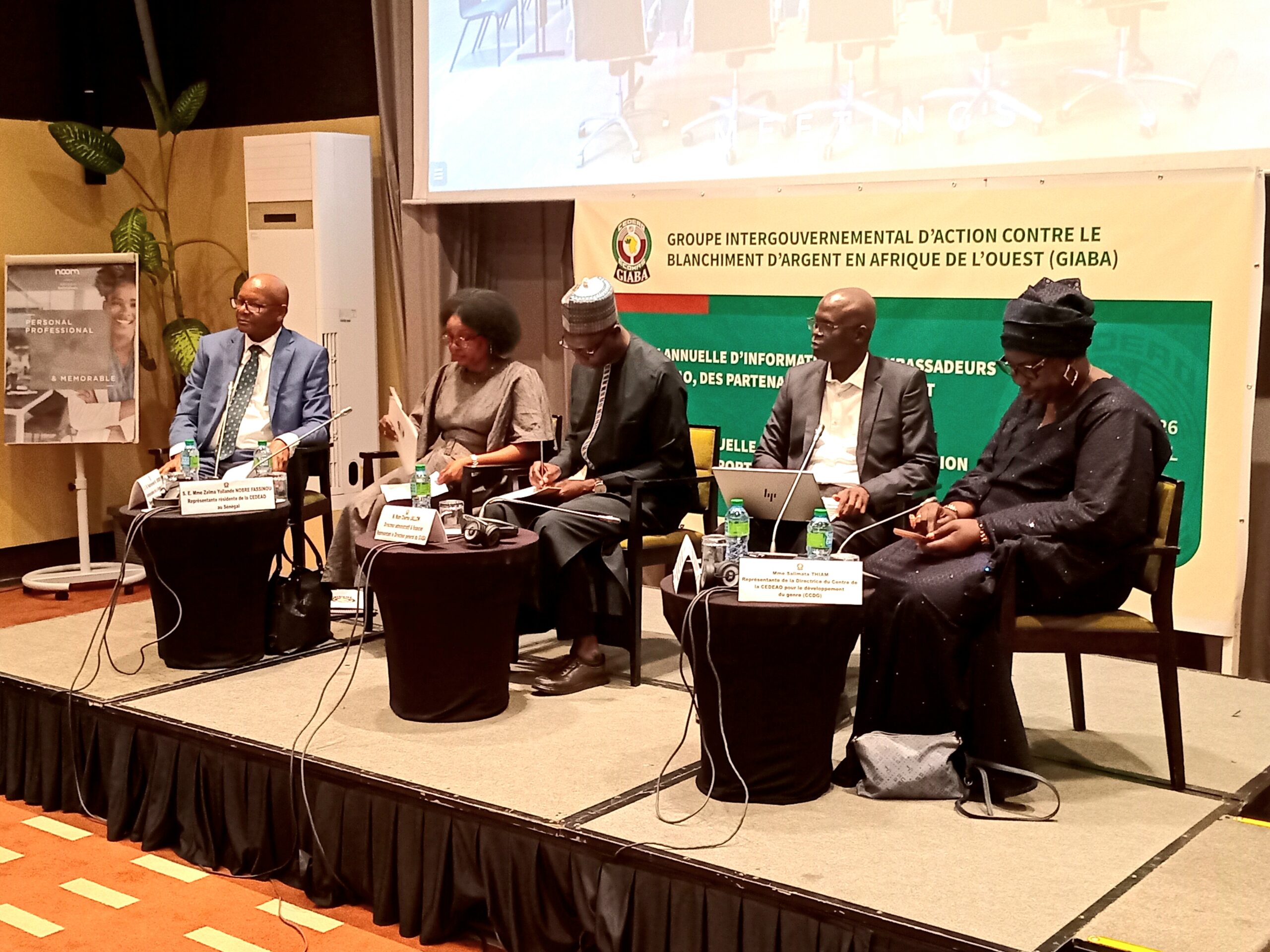
The progress was highlighted during the Annual Briefing Session for Ambassadors, Technical and Financial Partners, the public presentation of GIABA’s 2025 Annual Report and the institution’s Annual Press Conference held on Monday at the Noom Hotel Dakar Sea Plaza in Dakar, Senegal.
Speakers at the event acknowledged that although West Africa continues to grapple with terrorism, organised crime, corruption, cybercrime and illicit financial flows, Member States have made measurable improvements in aligning their national systems with international standards under the Financial Action Task Force (FATF) framework.
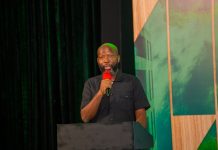
Delivering the keynote address on behalf of GIABA Director-General Mr. Edwin W. Harris Jr., Acting Director of Administration and Finance Mr. Jallow Mam Cherno said the institution’s latest assessment reflects encouraging progress across the region.
“The 2025 Annual Report bears testimony to the progress made while highlighting the challenges we need to address,” Harris stated.
According to him, one of the report’s major findings is the growing commitment of Member States to implementing international AML/CFT/PF standards while improving the effectiveness of institutions responsible for combating financial crime.
“The report highlights Member States’ efforts to strengthen their compliance with international standards and improve the effectiveness of their national systems, as part of the third round of mutual evaluations now focused on achieving concrete results,” he said.
Unlike previous assessment rounds that largely measured technical compliance with international standards, Harris explained that the third round places greater emphasis on the practical effectiveness of national systems and the measurable outcomes achieved in disrupting financial crime.
He noted that over the past year, GIABA intensified technical support to Member States through specialised training programmes, national risk assessments, typology studies, institutional reforms and capacity-building initiatives for Financial Intelligence Units and other competent authorities.
“Faced with these challenges, GIABA has continued to implement its Strategic Plan by strengthening technical assistance to Member States, training activities, national risk assessments, typology studies and helping build the capacities of Financial Intelligence Units as well as other relevant stakeholders,” Harris explained.
He attributed much of the progress to sustained collaboration with the Financial Action Task Force (FATF), other FATF-style regional bodies and technical and financial partners who continue to invest resources in strengthening regional financial integrity.
“These advances would not have been possible without the constant support of our technical and financial partners,” he said. “Their support remains essential to enabling GIABA and its Member States address the new challenges posed by financial crime.”
Despite these achievements, Harris cautioned that West Africa continues to face serious threats from terrorist financing, corruption, organised crime, illicit financial flows and cyber-enabled criminal activities that increasingly exploit technological innovations.
“Our meeting is taking place against a regional backdrop of persistent terrorist attacks, transnational organised crime, corruption, illicit financial flows and cybercrime,” he observed.
He further warned that digital transformation and the rapid expansion of crypto-assets have introduced new vulnerabilities that require governments to modernise regulatory and enforcement systems.
“Technological developments, including crypto-assets and digital transformation, are creating new opportunities, but also new vulnerabilities.”
For that reason, Harris stressed, strengthening compliance with international standards is no longer merely a regulatory obligation but a necessity for regional peace, economic development and security.
“Against this backdrop, the fight against money laundering, terrorist financing and proliferation financing remains essential to the security, good governance and development of our region.”
A major highlight of the event was GIABA’s reaffirmation that the organisation will continue supporting all Member States, including Burkina Faso, Mali and Niger, following the Ministerial Committee’s decision to maintain their full membership.
Harris described the decision as a demonstration that combating financial crime must transcend political disagreements.
“This decision reaffirms our recognition of the fact that the fight against money laundering, terrorist financing and proliferation financing transcends political considerations and requires technical cooperation based on solidarity and common interest.”
He added that GIABA remains committed to serving every Member State “with impartiality, professionalism and in strict compliance with its mandate.”
Speaking at the event, Her Excellency Mrs. Zelma Yollande Nobre Fassinou, ECOWAS Resident Representative in Senegal, commended Member States for the steady progress recorded while encouraging governments not to lose momentum.
“For over twenty years, GIABA has played a vital role in strengthening national frameworks to combat money laundering, terrorist financing and proliferation financing,” she stated.
“The progress made by Member States is encouraging, and the third round of mutual evaluations now focuses on the practical effectiveness of the mechanisms put in place.”
She noted that stronger national financial systems remain central to ECOWAS Vision 2050, which seeks to build an integrated, prosperous and resilient region founded on democracy, transparency and responsible governance.
“Our region continues to face increasingly complex security and economic challenges, characterised by terrorism, transnational organised crime, corruption, illicit financial flows and the growing use of new technologies for criminal purposes.”
She therefore stressed that no country can effectively tackle financial crime in isolation.
“In the face of these borderless threats, regional and international cooperation remains our most effective response.”
Fassinou also acknowledged the invaluable contributions of technical and financial partners, ambassadors and international organisations in supporting reforms across the region.
“The presence of the Ambassadors, technical and financial partners, and international organisations is of particular importance. Your support helps to strengthen regional cooperation, mobilise the necessary resources and underpin the reforms essential to tackling these shared challenges.”
On behalf of the ECOWAS diplomatic corps, His Excellency Hadrammeh M. Sidibeh, High Commissioner of The Gambia to Senegal and Dean of ECOWAS Ambassadors, described the compliance gains as evidence that collective regional action is producing tangible results.
“The progress made in recent years, notably the launch of the third round of mutual evaluations, bears witness to this momentum.”
“This new phase emphasises the effectiveness of national frameworks and the concrete results achieved in the prevention and prosecution of financial crime.”
Sidibeh reaffirmed the commitment of ambassadors to supporting national reforms and enhancing cooperation among Member States.
“As Ambassadors, we remain fully committed to supporting these efforts, promoting cooperation between our States and upholding the values on which our Community is founded: solidarity, good governance, transparency and regional integration.”
He further praised technical and financial partners for supporting GIABA’s numerous programmes aimed at improving institutional capacity across West Africa.
“Their support contributes to the development of more resilient financial systems, the improvement of public governance and the strengthening of investor confidence,” he said.
Sidibeh also highlighted the indispensable role of journalists in strengthening financial integrity through investigative reporting and public education.
“Through their investigations, analyses and awareness-raising efforts, they help to promote transparency, strengthen public accountability and foster a genuine culture of integrity.”
As GIABA prepares to conclude another year of implementing its strategic objectives, speakers agreed that the progress reflected in the 2025 Annual Report demonstrates that Member States are steadily building stronger legal, regulatory and institutional frameworks capable of combating increasingly sophisticated financial crimes.
They, however, cautioned that sustaining these gains will require continued political commitment, deeper regional cooperation, increased investment in national institutions and unwavering support from development partners to safeguard West Africa’s financial systems and promote lasting peace, security and sustainable economic growth.