





















Author: Hajar Diko Osman || A Journalism For Liberty Fellowship At The Liberalist Centre
For many years, whenever Okada was discussed in Ghana, the conversation was mostly about whether it should be legal or not. There were also concerns about accidents, reckless riding and crime.
But recently, I have started looking at the Okada business differently.
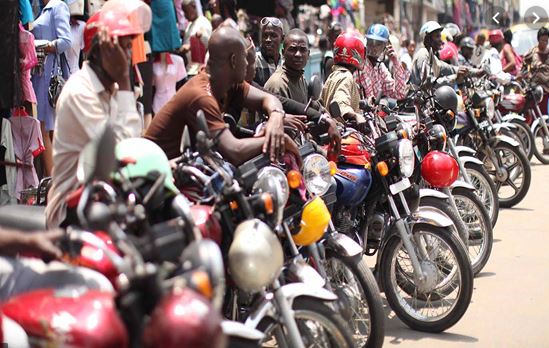
In my community in Accra, Okada has become very common. At busy junctions, you will find riders waiting for passengers. I have also noticed migrants, particularly Nigeriens, involved in the business.
It made me wonder: beyond transporting people from one place to another, what is attracting people to Okada?
So, I decided to speak to some of the riders.
One young Ghanaian rider I spoke with started doing Okada after he was unable to complete senior high school because of financial problems. He had hoped to become a soldier, but with limited options available to him, he turned to something he already knew how to do: riding a motorcycle.
“It is not something that I actually wanted to do,” he told me. “The other jobs I dreamed of were difficult to reach, but Okada was close.”
He started with a motorcycle through a work-and-pay arrangement and completed the payments this year. Today, he owns the motorcycle.
The business has also changed his living situation.
“When I started Okada, I was living with my mother,” he said. “With the business, I was able to save, rent my own room and now I have my own bike.”
His story shows another side of the Okada conversation that we often overlook. For some young people, this is not simply a motorbike carrying passengers. It is how they earn a living.
I also spoke briefly with a Nigerien rider in my community. He told me that he previously hawked clothes before moving into the Okada business because he found it more profitable. His current motorcycle, he said, is about a year old.
His story made me think even more about why people are moving into the business. You do not necessarily need an office, a university degree or a huge amount of money to start. For someone who already knows how to ride, a motorcycle can become a way to earn an income.
Okada is also going digital
The business is also changing with technology.
The Ghanaian rider I spoke with is registered on Bolt. He initially joined because of incentives offered to riders, but he says one of the biggest advantages of using an online platform is the possibility of finding another passenger after completing a trip.
With the traditional Okada station system, he explained, a rider may take a passenger somewhere and have to return to the station without another passenger. With an online platform, there is a better chance of getting another trip from wherever he drops the passenger.
He is, however, unhappy with the commissions currently charged and says the fares are sometimes less attractive than what riders can earn through the traditional Okada system.
Still, his experience shows how technology is changing the way Okada riders work.
From prohibition to regulation
For years, Okada riders operated in Ghana even though the law did not allow motorcycles to carry passengers for a fare.
That position has now changed.
In December 2025, Parliament passed the Road Traffic (Amendment) Act, 2025 (Act 1153), which provides a legal basis for motorcycles, tricycles and quadricycles to be used commercially, subject to the rules set for their operation.
But Okada did not become popular because the law changed. The business was already growing before then.
Motorcycles are also not new to everyday life in Ghana. In parts of northern Ghana, they are a common means of transport, used by both men and women for their daily activities. Nigeria also has a long history of commercial motorcycles, popularly known as Okada, providing transport and livelihoods, although the rules and restrictions differ from one state to another. These experiences show that the bigger question is not simply whether motorcycles should be allowed, but how commercial riding can be properly regulated and made safer.
People needed a faster way to move through traffic and reach places where other forms of public transport were not always convenient. At the same time, riders were earning an income from providing that service.
For me, that is an important part of the conversation.
Okada is not only about transportation. For the person riding the motorcycle, it can mean food on the table, paying rent or being able to support themselves and their families.
Legalising Okada is not enough
But recognising Okada as a source of livelihood does not mean we should ignore the safety concerns.
The Ghanaian rider I interviewed supports the decision to legalise and regulate Okada, but he believes government must go further.
“Just legalising Okada is not enough,” he said.
He believes riders should receive proper training before they are allowed to operate commercially. He also wants licensing taken seriously and believes both drivers and motorcycle riders need to understand how to share the road safely.
I agree with him.
If Okada is going to remain part of our transport system, then the rules must work. Riders should be properly trained and licensed, motorcycles should be safe, and traffic rules should be enforced.
But the rules should also be practical enough for riders to follow.
The young rider I spoke with believes that, if he stays safe and the business continues to work for him, he can make a sustainable living from Okada.
His story, and that of the Nigerien rider who moved from hawking clothes to riding Okada, reminded me that behind the motorcycles we see every day are people trying to earn a living.
Okada will not solve Ghana’s unemployment problem, and legalising it will not automatically make our roads safer. But it is difficult to ignore the livelihood it is providing for some people.
Sometimes economic opportunity does not come in the form of a big company or a formal office. Sometimes, it is a young man sitting on a motorbike at a junction, waiting for his next passenger.