





















Author: Fiifi Nettey, Freelance Journalist–Columnist For Business & Financial Times Newspaper Ghana, West Africa Diplomatic Society South-Africa.
Another leg of the tour took us to Kunshan, a city strategically located in the heart of the Yangtze River Delta (YRD), one of China’s most dynamic economic regions. It plays a significant role in the country’s economic development, benefiting from the region’s immense economic strength, which accounts for approximately one-fifth of China’s GDP.
The wider region is also home to five of China’s top 10 universities, reinforcing its reputation as a centre for education, innovation, and economic growth.
Geographically, Kunshan occupies a strategic position within the Yangtze River Delta, bordered by Shanghai to the east and Suzhou to the west. Its location makes it a vital hub within the Shanghai Metropolitan Area, supported by an extensive transportation network.
Five major expressways, including the Shanghai–Nanjing Expressway, passes through the city, alongside other four high-speed railway lines. Remarkably, Shanghai Hongqiao International Airport is only a 17-minute by high-speed train journey from Kunshan, highlighting the city’s outstanding transport connectivity and strategic position as a centre for business, investment and industrial growth.
Spanning about 931 square kilometres and boasting a population of more than 3 million, Kunshan has grown into one of China’s leading economic powerhouses.
It’s GDP has exceeded CNY 500 billion for four consecutive years, while its industrial output has surpassed CNY 1 trillion for five years in a row. These impressive figures reflect Kunshan’s sustained economic growth, strong industrial base, and growing contribution to China’s economic development.
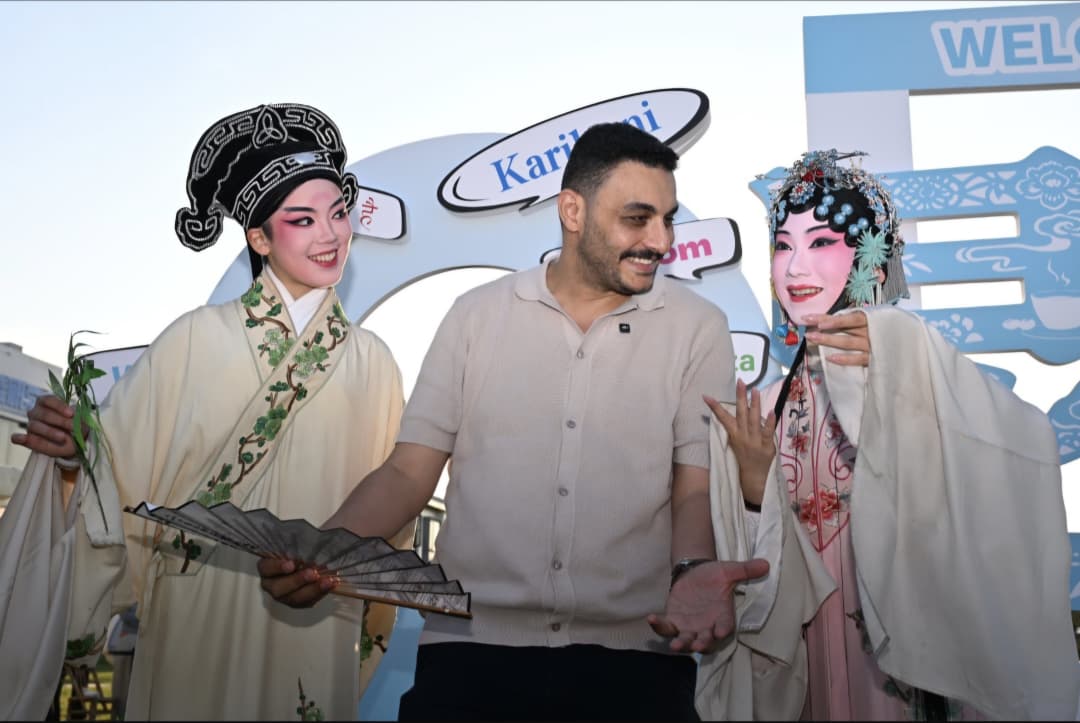
As we arrived at a village called Shangmingdian, I was delighted to see the inscription “AKWAABA,” meaning “WELCOME” as been part of signboard greeting visitors though there were others. I was very delighted to see such inscription in my naitive Ghanaian language thousands of kilometres away from Ghana. This symbolic gesture gave me a sense of pride and some level of satisfaction within me. This indicates China’s strong commitment to Africa and its ready to share his rich cultural heritage with Africa
The historic village, located in Zhangpu Town on the southern outskirts of Kunshan, is about 15 kilometres from the city centre and borders Jinxi and Dianshanhu.
Covering 465 hectares, Shangmingdian has 495 households and a registered population of approximately 1,776. With its fertile farmland, network of waterways and rich natural environment, the village was once a peaceful agricultural community.
Shangmingdian Village has undergone a remarkable transformation from an economically struggling agricultural community into a thriving centre of rural innovation.
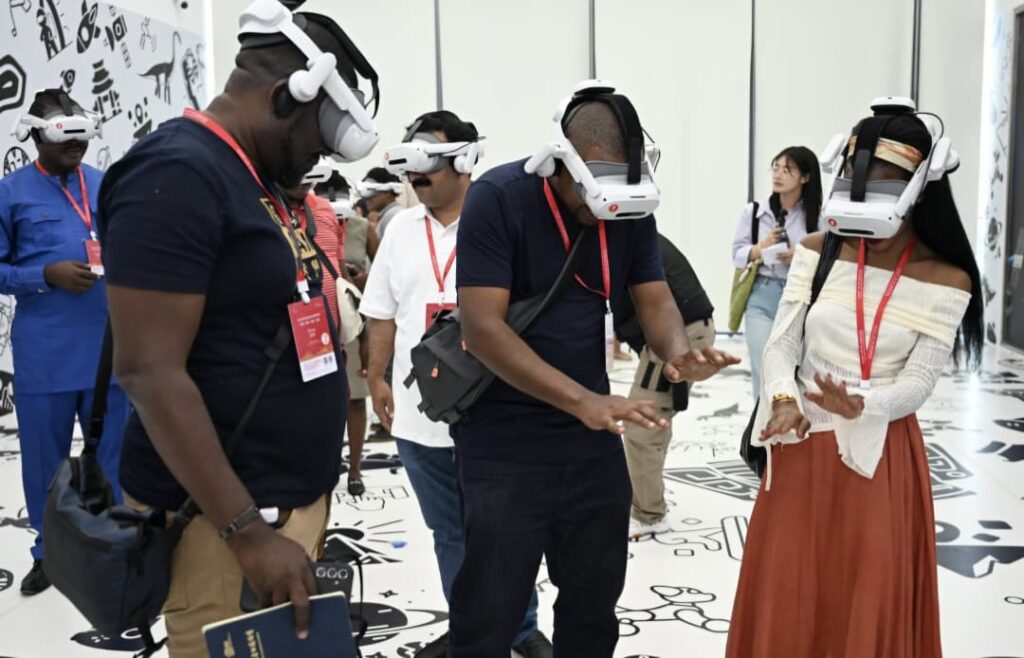
Today, it has successfully integrated technological innovation into its tourism sector, attracting technology startups and young professionals while enhancing its tourism appeal through guesthouses, creative rice-paddy art and other cultural attractions.
Its success lies in its ability to strike a balance between technological advancement and traditional village life, offering a compelling model of rural revitalisation that preserves local heritage while creating new economic opportunities for residents.
Beyond its developmental achievements, the village is equally remarkable for the warmth and hospitality of its people, who are exceptionally friendly, welcoming and always willing to assist visitors. Its peaceful and serene environment, coupled with its strong connection to cultural traditions, makes Shangmingdian Village a unique destination where modern innovation coexists harmoniously with rural charm and heritage.
During our visit, we also had the opportunity to witness a captivating performance of Kunqu Opera, also known as Kun Opera, Kunshanqiang or Kunju, one of the oldest forms of Chinese opera still performed today. Often celebrated as the Voice of Kunshan, this 600-year-old traditional art form originated in Kunshan, in the Suzhou region of southeastern China, during the Ming Dynasty.
Rooted in popular theatrical traditions, Kunqu Opera gradually evolved into a sophisticated performing art, distinguished by its graceful melodies, expressive singing, elegant movements and distinctive musical style known as kunqiang. Over the centuries, it has produced celebrated classical works, including The Peony Pavilion and The Palace of Eternal Life. In 2001, UNESCO recognised Kunqu as a Masterpiece of the Oral and Intangible Heritage of Humanity.
The performance offered a fascinating glimpse into China’s rich cultural heritage and its enduring commitment to preserving traditional art forms. It was a reminder that, even as Kunshan embraces modernisation and technological advancement, it continues to value and celebrate the cultural traditions that define its identity.
Kunshan, continues to preserve the art through theatres, festivals, schools and cultural activities.
Today, the tradition remains an important part of the city’s cultural identity, connecting its rich history with modern life.
Observing this model of cultural heritage and development brings to mind Africa’s immense cultural heritage and rich historical traditions. African countries can draw valuable lessons from Kunshan’s approach by integrating it’s traditional heritage, cultural practices and historical identity into modern development and technological advancement in ways that improve people’s livelihoods.
However, also seeing the inscription “AKWAABA,”
symbolically connects Ghana with China and the rest of Africa. It represents a message of friendship, openness and shared opportunities, suggesting that China offers possibilities for Africans and people from other parts of the world. It is time for the African continent to explore these opportunities, strengthen cooperation with China, and harness the benefits of such partnerships to drive economic transformation, accelerate development and achieve greater economic independence.
Adopting similar strategies could transform rural communities, particularly through tourism, while preserving cultural identity and traditions. By adapting this model to their local contexts, African countries can create employment opportunities, generate income for rural communities, attract investment and promote sustainable economic and technological development.
As Kunshan demonstrates that cultural preservation and modernisation can go hand in hand, offering valuable lessons for Africa’s development journey.