














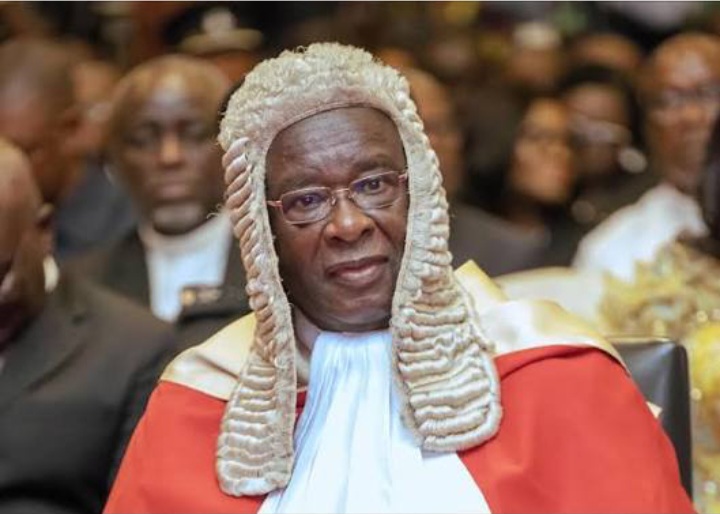
Accra, September 3, 2026 — The New Patriotic Party (NPP) has launched a strong political attack on the Chief Justice of Ghana, Justice Paul Baffoe Bonnie, demanding his resignation and formal membership of the National Democratic Congress (NDC) over what the party describes as comments that compromise the perceived neutrality of the Judiciary.
In a statement issued on Thursday, September 3, 2026, under the headline “A Judiciary Captured: The Chief Justice Must Resign and Formally Join the NDC,” the NPP said it had received with “profound shock and disgust” a video allegedly showing the Chief Justice making comparative comments about the performance of the current NDC administration and the previous NPP government.
According to the opposition party, the comments suggested that the current NDC government and its appointed Chief Executive Officers were performing better than the previous NPP administration, which governed Ghana for eight years.
The NPP argued that such political comparisons were inappropriate for the head of Ghana’s Judiciary, insisting that the Chief Justice must maintain a position above partisan political contest.
The party said the language attributed to the Chief Justice was inconsistent with the constitutional responsibilities attached to the office and was more characteristic of political communicators and party activists.
“It is not the language of a Chief Justice,” the NPP stated, describing the alleged remarks as language associated with “a party propagandist.”
The party further invoked Articles 125 and 127 of the 1992 Constitution, arguing that those provisions establish the Judiciary as an independent arm of government and protect its independence from control or direction by other authorities.
The NPP also referenced the judicial oath, stressing that the Chief Justice is bound to administer justice to all persons without fear or favour, affection or ill will.
Against that constitutional background, the opposition party contended that any public conduct suggesting political alignment could undermine confidence in the independence and impartiality of the Judiciary.
The NPP maintained that the video was not an isolated incident but what it described as part of a broader pattern that had generated concern within the party.
The statement alleged that the Chief Justice had previously appeared at functions involving political appointees of the current government, which the NPP said raised questions about the appearance of proximity between the Judiciary and the Executive.
According to the party, a Chief Justice who appears closely associated with members of the Executive could face difficulties convincing the public of complete neutrality when presiding over cases involving the government.
The NPP consequently accused the Chief Justice of presenting himself as something other than the impartial head of an independent Judiciary.
The party went further to allege that the Chief Justice’s conduct amounted to an appearance of political identification with the NDC, an allegation that carries significant implications for public confidence in Ghana’s judicial system.
The opposition therefore called on the Chief Justice to resign if political commentary was indeed his preferred role and to formally join the NDC rather than remain at the head of the Judiciary.
The NPP also questioned what it described as the Chief Justice’s declared commitment to ensuring that the agenda of President John Dramani Mahama succeeds.
The party specifically connected that concern to the government’s Operation Recover All Loot (ORAL) initiative, arguing that the programme could affect individuals associated with the NPP.
The statement suggested that the Chief Justice’s perceived closeness to the government’s agenda could become particularly contentious in cases involving politically exposed persons or members of the opposition.
The NPP’s position represents a serious escalation in the political debate over judicial independence, particularly because the Chief Justice occupies the highest leadership position within Ghana’s Judiciary.
The allegations and demands contained in the statement, however, are the NPP’s claims and criticisms; the supplied statement does not contain a response from the Chief Justice or the Judiciary addressing the accusations.
The controversy is likely to intensify public discussion about the constitutional boundaries between judicial leadership, political expression and the independence of Ghana’s institutions, especially where the conduct of senior public officials becomes the subject of partisan scrutiny.
Below is the full statement: