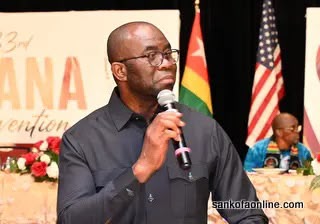



















BETHESDA, MD — The Grand Ballroom of the Marriott Bethesda North ascended into a sovereign chamber of Ewe grandeur and continental purpose, as the 33rd CEANA Convention attained its full regal zenith during the Kete (Kente) Banquet, unveiling one of its most commanding, dignified, and ceremonially distinguished editions in the Convention’s storied history.
A sweeping wave of woven brilliance, ancestral rhythm, and economic urgency surged through the hall as more than 1,200 delegates, traditional rulers, diplomats, and diaspora innovators gathered under the theme “Preserving Culture, Inspiring Generations.”
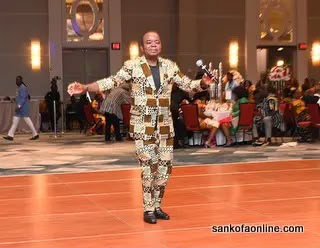
The evening erupted into spectacle when the DMV Cultural Troupe stormed the ballroom with the Kadodo, the sacred Ewe dance of ancient Dahomey. The “Atsimewu”and “Sogo” drums thundered like ancestral summons as dancers moved with warrior precision, escorting the distinguished dignitaries in a procession that felt like a royal enthronement.
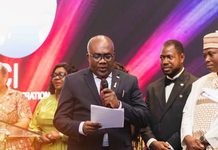
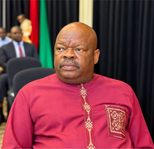
The moment electrified the hall as Speaker of Parliament Rt. Hon. Alban Sumana Kingsford Bagbin was ushered in alongside Ambassador Victor Smith, symbolizing a powerful fusion of diplomacy and national leadership.
Togolese musical icon, Agboti Yaw and rising star Chief One , followed with a sonic explosion that sent dancers swirling in radiant Kete cloths, turning the ballroom into a cultural arena where tradition and modernity danced as equals.
A warm welcome from Nuna Ametepe framed the night’s purpose: heritage, unity, and transformation.
The presence of Speaker Rt. Hon. Alban Bagbin, Ambassador Victor Smith, Bank of Ghana Governor Dr. Johnson Asiama, and His Excellency Ben Dotsei Malor, Deputy Permanent Representative of Ghana to the United Nations, elevated the convention’s stature and underscored CEANA’s rising diplomatic and economic relevance across the diaspora.
Moreover, with over ten Members of Parliament in attendance, the evening assumed the aura of a national convocation rather than a diaspora gathering , a moment where cultural celebration, state authority, and diaspora influence converged under one majestic roof.
In a brief but powerful remark, H.E. Victor Smith delivered a firm and dignified welcome to all attendees, setting the tone for a gathering anchored in purpose, unity, and forward momentum.
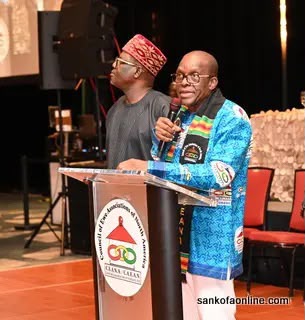
Rt. Hon. Alban Bagbin delivered a sweeping address that blended cultural pride, political history, and economic urgency. He honored CEANA’s legacy since its founding in Washington, D.C. in 1993 , schools, libraries, clinics, scholarships , before issuing a challenge that shook the hall: “CEANA has proven what unity in North America can achieve at home.
But what will the people back home remember this 33rd Convention for? Let this be the turning point. Let us move beyond the micro to the macro. Let’s dream big, think big, and act big to give birth to a mega lasting legacy project.”
He emphasized that diaspora engagement must evolve from remittances to enterprise creation, regional trade, and cross‑border integration across Ghana, Togo, Benin, Nigeria, and Côte d’Ivoire.
Gbabin invoked the shared linguistic and cultural heritage stretching from Kpando, Ho, and Aflao to Lome, Atakpame, Cotonou, and Porto‑Novo, urging the youth to embrace indigenous identity. He recalled his landmark decision to replace colonial parliamentary wigs with authentic West African attire, citing pioneers like Prof. R.E.G. Armattoe, Jacob Wilson Sey, and Anton Wilhelm Amo as models of intellectual courage and aspiration.
Governor of the Bank of Ghana , Mr. Johnson Asiama followed with a data‑driven economic briefing that electrified the hall. He announced inflation down from 54% to 5.0% in August 2026, Q1 GDP growth at 6.4%, international reserves above $12 billion, and a policy rate reduced to 14%.
He revealed that private remittances hit $7.8 billion in 2025 , nearly triple Ghana’s FDI inflows , before unveiling diaspora‑focused policies including IMTO licensing for diaspora entrepreneurs, a new Diaspora & Remittance Office, and the “Remit to Invest” framework designed to channel remittances into structured savings, retirement portfolios, enterprise financing, and real estate development.
He praised CEANA’s medical professionals for supporting the Bank Hospital Foundation and urged engineers, IT experts, and academics to build mentorship pipelines, declaring, “One tree does not make a forest. Your contribution has never been only financial. It is about knowledge, skills, networks, and experience. From sending home, it is time to shift to building a home.”
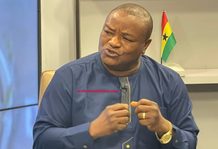
Member of the Council of State, H.E Gabriel Tanko Kwamigah‑Atokple, advised CEANA to transform its diaspora strength into institutional partnerships and capacity‑building for Ghana, particularly in sectors such as health, research, and youth empowerment and development. He further urged the Volta Region to embrace unity and collective purpose in order to convert investment, expertise, and relationships into sustainable development.
CEANA President, Mr. William Kumah , distilled his entire vision into one powerful sentence: CEANA’s flagship mission , that cultural heritage is not only the memory of our ancestors but the living blueprint for a future in which a world‑class Cancer Research and Treatment Center, backed by a permanent Endowment Fund, becomes the diaspora’s most enduring gift of life, dignity, and generational progress to Eweland.
The overwhelming consensus among participants was that the 33rd Annual CEANA Convention stood out as one of the most flawlessly organized, joy‑filled, and community‑affirming gatherings in recent memory, thanks to the exceptional leadership and execution of the Ewe Association of DC Metro.
The night concluded with a high‑energy fundraising drive to support legacy infrastructure projects across Ghana , Togo and Benin . Delegates pledged resources, expertise, and networks to build a future where cultural identity fuels economic transformation.
The 33rd CEANA Convention did not simply celebrate heritage , it repositioned the Ewe diaspora as a continental development force, ready to shape policy, drive investment, and inspire generations.