
















Minority Leader in Parliament, Alexander Kwamena Afenyo-Markin, has cautioned government appointees and persons entrusted with public office to exercise power with humility and restraint, warning against the abuse of office for personal or partisan interest.
He made the call on Saturday, September 26, when he addressed a Grand Durbar of Chiefs and people of Akuapem Amanokrom, Eastern Region, the Gyase Division of the Akuapem State under the distinguished patronage of HRM, Oyeeman Okoforobour Osim Kwatia II, the Gyasehene of Okuapem and Chief of Amanokrom.
The historic durbar, held at Amanokrom, was under the theme: “20 Years Of Odwira, Honouring Our Heritage, Securing Our Future.”
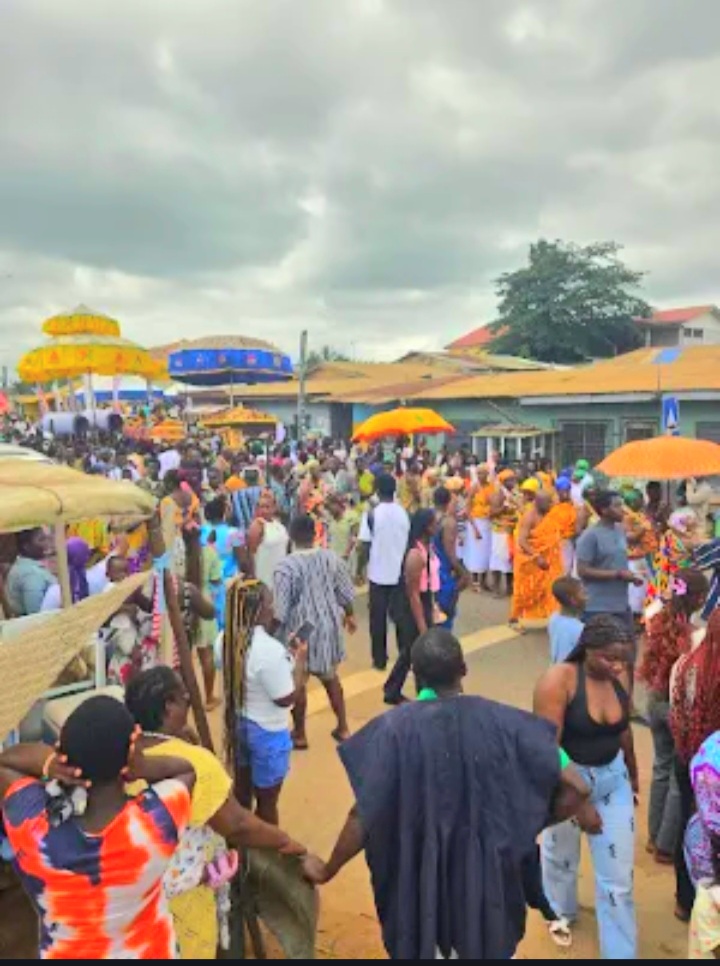
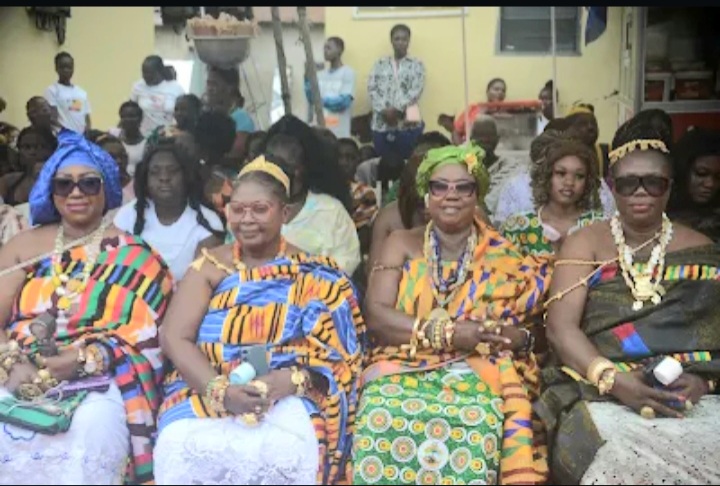
It brought together chiefs, queen mothers, traditional leaders, political leaders and hundreds of citizens including the Okuapeman diaspora communities.
There was open display of paying homages to the chiefs, elders and well wishers as well as the distribution of the Gyasehene Customary Drinks.
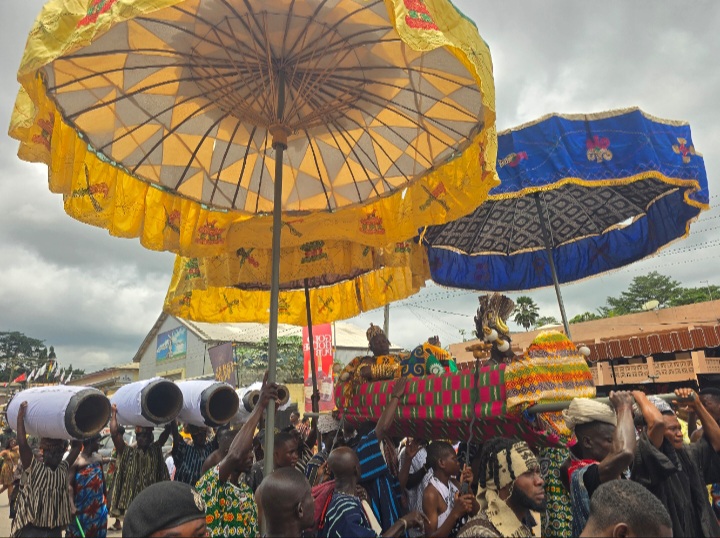
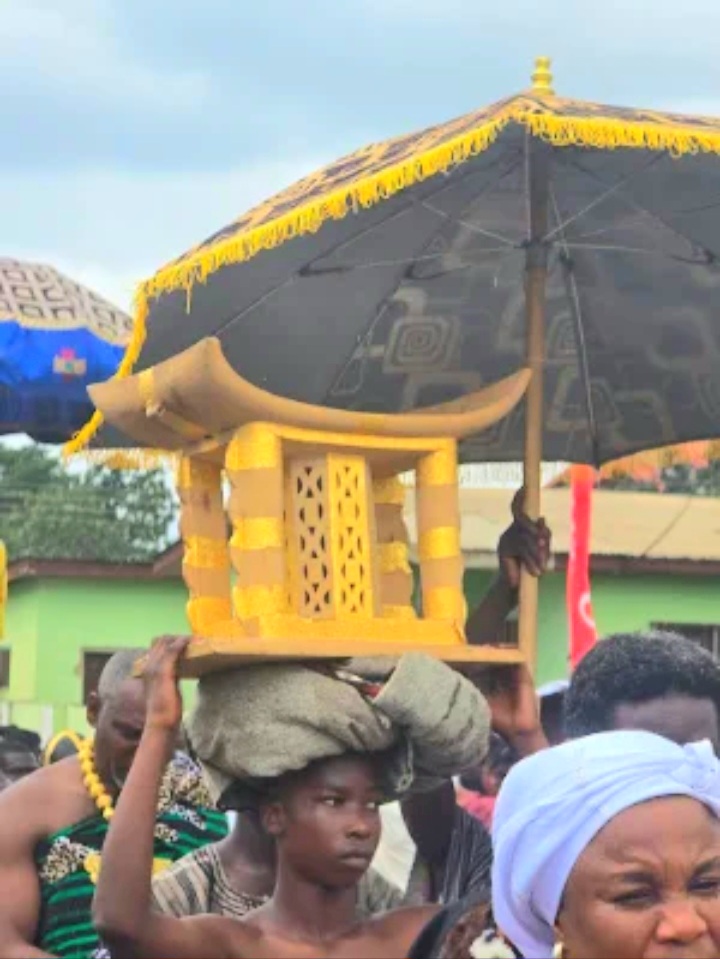
There was also a grand entry and processesion of chiefs through the streets of Amanokrom.
The customary pouring of libation by Okyeamepanyin Osei Manu, also heralded the talking drums Fontomfrom display.
This colourful procession included, the Twafohene, Ankyeasehene, Akyeamehene, Adawsohene, Dodowahene, Poribonhene, Bretuhene, Osomanyawa, Gyasehene, Asonahene, Gyasewahene, Gyasehemea, Akyempemhene and the Ankobeahene.
Addressing the durbar, Mr. Afenyo-Markin, who was the Special Guest of Honour at the festival, said power is transient and must be used to serve the people and not to intimidate or marginalize them.
“When the people give you the opportunity to serve, do not abuse power. Power is a trust that must be used to uplift the people and not to oppress them,” the Minority Leader stated.
He stressed that public service must be anchored on humility, accountability and respect for the rule of law, adding that abuse of power only deepens public mistrust in leadership.
Touching on the current political climate, Mr. Afenyo-Markin called for a united front among political leaders to regain the trust of the electorate, which he said was fast eroding.
“We must as leaders present a united front if we want to attain and retain the trust of the electorates. Ghanaians are watching us and they expect us to lead with unity and purpose,” he said.
He lamented that excessive partisan politics was unhealthy for national development and urged politicians to put Ghana first in all their dealings.
“This partisan politics is unhealthy and must be stopped. We cannot build a nation when everything is reduced to NPP and NDC. We need to think Ghana first,” he charged.
The Effutu MP also added his voice to calls for urgent collective action to protect the country’s water bodies and environment from degradation, particularly from illegal mining activities.
According to him, the protection of water bodies was not the responsibility of government alone but a collective duty of traditional authorities, political leaders and citizens.
“Osahene is right when he calls for collective efforts to protect our water bodies. This is a duty for all of us. If we destroy our rivers, we destroy our future,” he emphasized.
Hon. Afenyo-Markin said the core mandate of any government, regardless of political affiliation, must be the creation of sustainable jobs, especially for the youth.
He noted that the youth unemployment rate remains high and poses a serious threat to national security and stability if not urgently addressed.
“The core mandate is to create more jobs, especially for the youth, since the unemployment rate is high. Our young people need hope, they need jobs, and they need a future to believe in,” he said.
He further called on traditional leaders to play a more active role in national development discourse, particularly by amplifying the needs of deprived communities.
“Our traditional leaders must play a key role to preach aloud about developments, especially in deprived areas. Nananom are the custodians of the land and their voices carry weight in protecting our democracy,” he added.
The Minority Leader commended the Chiefs and people of Amanokrom for sustaining the Odwira Festival for two decades, describing it as a powerful symbol of unity, heritage and forward planning.
The Grand Durbar was climaxed with rich display of Akuapem culture, drumming and dancing, with a renewed call from Nananom for peace, unity and accelerated development of the Akuapem State and Ghana at large.
About Akuapem Odwira Festival
The Akuapem Odwira Festival has several related purposes, among which are purification, thanksgiving, eating of the new yam, service to ancestors, purification of the King and his People for a happy and prosperous new year, mourning of the dead of the immediate past year, re-affirming political loyalties and allegiances, re-establishing the military order and social ties and proclaiming the unity of the State Organizations.
Basically, therefore, the festival celebration is to affirm the spiritual values that inspire the people’s way of life, values that can operate in the relationship between man and the unseen, or between man and his environment and whilst influence the scope, form, content and intensity of the religious behavior.
The festival also strengthens the social bonds which binds members of the Akuapem Community not only within Akuapem but throughout the whole of Ghana and particularly the Kin group within it.
Like all traditional festivals, the Akuapem Odwira Festival is a combination of ritual, ceremonial, artistic and recreational activities which take place in difference locations according to a defined schedule.
The festival also provides opportunities for the collective renewal of the arts as a form of community experience or as an expression of group consciousness with great deal of stress being laid on music and dancing on many events of the festival.
Significantly, the festival was inspired by issues that were partly religious and partly political. It therefore dramatizes Akuapem Sacred Myths, Legends and specific historical episodes such as those which took place during the great Akatamanso war of 1826.
Odwira is a time for organized expression of public sentiment is done in a social context through the medium of songs, but as a collective action.
In this way, the festival provides the unique opportunity for the expression of group solidarity through songs and other activities to remind members of the Akuapem Community of their great past or their relationship with the departed members of the community.
The first ever Odwira Festival in Akuapem was celebrated one hundred and seventy nine years ago on 16th October, 1826 soon after the Akatamanso war from 1826 to the present.
Therefore, the Akuapems and the Adaebutuw have been celebrated one hundred and seventy nine times respectively with varying degrees of spiritual intensity.
The following are some important dates of the Akuapem Odwira and Adaebutuw festivals since 1826.
(Friday) Fida Fofie
In 1826 the Great Akatamanso War against the Ashantis started.
11th August, 1826 (Monday)
Ashanti Army completely routed after being defeated in the Akatamanso War.
16th August, 1826
Spiritual consultations on the Odosu Shrine at Mpeniase Akropong
23rd August, 1826
The decision to make the Odwira Festival an annual Akuapem Festival Celebration was taken at Mpeniase at the time of the Okuapeman purification ceremony.
6th September 1826
Akuapem celebrated the first Adaebutuw festival after the Akatamanso War.
Akropong.
Brief History of Akuapem Amanokrom
The town Amanokrom was founded in 1742 by Nana Amanor Awua, their third ruler. It is one of the 17 principal towns that constitute the original Akuapem State.
The town is also one of the Akan Twi-speaking enclaves, and it forms the Adonten No. 3 (Main Army Number Three) of the Akuapem State. Amanokromhene is a descendants of Akyem Abuakwa Asona clan and they founded their town ten years after the formation of the Akuapem State.
The Akuapem State was founded in 1733 after the signing of the Abotakyi Accord following the Akyem and their allies’ defeat of the Akwamu Kingdom in the 1730 after the Battle of Nsakye. The name Amanokrom means “Amanor’s Town” and their appellation is “Asuketewa A Eso Aguare” A rivulet that makes bathing possible”
Origin and Migration;
Their oral tradition asserts that their ancestors were members of the Akyem Abuakwa Asona clan group, their apical ancestor was Nana Ahenkora Kese, the Asona Chief of Adanse Kokobiante, who shared common ancestry with Nana Kuntunkununku I, the first King of the Asona group (Akyem Abuakwa) when they were settling in Adanse Kokobiante. In the great migration of the Asona clan southwards, Ahenkora Kese’s group was led by Nana Agyapong Tenten.
He moved with the people to first settle at Adanse Ofoase and later proceeded to join his relative, Nana Ofori Panin. The groups moved together to settle at Pamen on the Eastern side of what became the Akyem Abuakwa State.
It was in their settlement at Pamen that the hilly Guans sent a message to Akyem chiefs to help them to break the shackles of the autocratic and dangerous chains of the Akwamu. The Akwamu was then a powerful state which has conquered many Akan and non-Akan states and placed them under their powers and made them vassal states.
They lay siege on main roads and capture non-Akwamu citizens and sell them into slavery. Many Guan citizens were captured in this dastardly act. Reindorf (1887) recorded that the Akwamu princes forced Guan women to go naked and use the middle of the breast as targets in their gun marksmanship or shooting training. This led to several deaths of Guan women.
LIST OF PAST CHIEFS OF AMANOKROM
1 Nana Ahenkora Kese 1550-1600 At Adanse Ofoase
2 Nana Kwasi Wareko Ampem 1600-1642 At Adanse Ofoase
3 Nana Agyepong Tenten 1642-1700 At Ofoase and Pamem
4 Nana Kwatia Akompi I 1700-1736 Pamem, Amamprobi
5 Nana Osim Kwatia I 1736-1740 Amamprobi / Akropong
6 Nana Amanor Awua 1740-1760 Akropong, Odomenae and Amanokrom
7 Nana Fo Kwagyan 1760-1770 Amanokrom
8 Nana Adagkwa Asare Yiadom 1770-1784 Amanokrom
9 Nana Odame Tenten 1784-1796 Amanokrom
10 Nana Ofei Dankwa I 1796-1816 Amanokrom
11 Nana Epo Wosereka 1816-1825 Amanokrom
12 Nana Ohene Ntow (Koso) 1825-1835 Amanokrom
13 Nana Grogoo Bapo 1835-1844 Amanokrom
14 Nana Asamoah Amanor 1844-1850 Amanokrom
15 Nana Osabu Gyawu 1850-1855 Amanokrom
16 Nana Mensah Kuma 1855-1862 Amanokrom
17 Nana Kwasi Darko 1862-1911 Amanokrom
18 Nana Kwasi Asamoh 1911-1914 Amanokrom
19 Nana Kwadwo Darko (Kwadwo Pa)
1914-1919 Amanokrom
20 Nana Ofei Darko 1919-1925 Amanokrom
21 Nana Ampem Darko 1925-1942 Amanokrom
22 Nana Kwatia Akompi II 1943-1955 Amanokrom
23 Nana Ofei Dankwa II 1956-1974 Amanokrom
24 Oyeeman Wereko Ampem II 1975-2005 Amanokrom
25 Oyeeman Osim Kwatia II 2007- to date Amanokrom