















Author: Rita Hingorani
You would think that life in organic townships is how it is supposed to really be: hardships, stress, hustling and poverty – for some people – in some cases. In between some brief refreshments of happiness through special occasions such as adoring, birthday parties and wedding parties, etc.
Or for some even, funerals. But that is not how life should be. Life is for the living, as some like to say. Life is meant to be enjoyed. Of course, it does have its ups and downs, but it should not be the case that it is constantly full of struggles und sufferings as many know it to be when living in the organic townships. There is abundance for everyone, after all.
There are people living in organic townships who do not even know of the existence of government-developed planned townships that are connected to other planned townships by road, once one enters any of these government-planned developements. So, if they lack enough financial means to protect themselves, they are usually the ones to suffer the most among those who have enough financial means to escape the harsh realities of organic townships into planned townships.
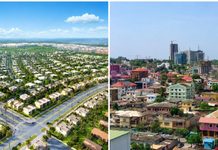
Such victims are usually the ones, who do not even believe Ghana is developed in those government-planned townships, since the government developed such zones for its citizens – not only in Ghana – to make their lives easier. These zones are the opposite of organic townships with their informal businesses such as street vendors and roadside kiosks inhabitants; high crime rates such as corruption, and underdeveloped, poor, and low-financed infrastructure add on to the characteristics o organic townships. Compared to organic townships, government-planned townships are the zones in which many people know the government to focus predominantly on job creations.
People, who do not know of the planned townships are not able to do what their cohorts are able to do: traveling into planned townships via highways and entering commercial zones within these developments to look for jobs, and successfully get employed. Thus, the victims in organic townships face a war: how can they survive in “this economy?”, as they often ask themselves.
To survive, many take any job that will finance their upkeep and that of their family’s as well. Sometimes, even with an MBA they still earn only 2000 Ghana Cedis a month. It is an unjust world they tend to live in, especially, when rent prices are ridiculously high, transportation costs fuel one’s anxiety, and the Cedi rate is depreciating increasingly. Not to forget, electricity and water bills becoming outrageous. How can anyone survive in this economy? Of course, it is understandable if people migrate to government-planned townships, when they hear of them. After all, who does not want an easier life?
Unfortunately for the victims in organic townships, who do not know about state-developed planned townships to seek refuge in there, life becomes even more difficult when they realize that who they thought of to be their biological family is not even their biological family. This is a very common situation that is said to take place in organic townships, unlike planned townships. The situation becomes even more painful, when these people realize that literally they grew up with self-tan on their entire bodies and hair wax in their hair that shrunk their natural hair length and altered their original hair texture to become more harder. That is when they realize an identity crisis has hit in.
Who do they trust about such discovery? Why did this happen to them? Who was really behind this mess of them landing in the wrong family, and why, in the first place did this happen? Most importantly, why was their appearance altered so much? It is a very painful and scary situation to navigate around, and a strong support system is needed to help the victims in such an exceptionally difficult time.
It is said by many that such scenarios are very common in organic townships – globally. As a matter of fact, an increasingly number of people are claimed to be leaving their so-called families and reuniting with others they believe to be their biological family members. However, why is it the case that many victims do not report such miserable situations to the authorities in organic townships? The answer is simple: they know the law in organic townships may not always be on their side, when they are fighting powerful people with “connections”.
The corruption is simply too much for them. Thus, they carry their legal issues to loved ones who care about them and are willing to take action on their behalf. This then tends to end in an aggressive confrontation between the victims, their loved ones, and the culprits they thought of, initially, to be their family members. Why were those victims in those imposters’ families? This is when saving one’s reputation kicks in: explaining the truth would destroy the imposters’ lives. Thus, the culprits may begin to lie, spiralling their situation out of control.
The situation is then spiralled out of control because the victims’ loved ones – there is always at least one loved one – always introduces the victims to someone in government-planned townships, who can protect the victims. Thus, they finally find the protection and help they need.
This is the silent stories of many victims in organic townships. However, at least they find refuge at the end, usually because they discovered the imposters are not even their biological family, leading them to finding their own tribe. So, everyone at some point in life, eventually discovers the government-planned townships with all their districts consisting of neat, well-maintained, aesthetically-pleasing residential, commercial, recreational and retail zones, that are all connected by different roads to other districts within other planned townships. Sometimes, these districts within government-planned townships are linked to each other by a highway that takes one from one planned township to the other.
How do people usually realize they are in the wrong families? They bicker and fight with so-called family members a lot more than the average person with their own biological family members; they are outcasts within their so-called families; they often experience emotional, mental, verbal – or the classic – physical abuse that leaves them feeling unappreciated and hated in their so-called families.
Last but not least, genuine, proper care and, especially, platonic love that one should have for their own family members, is missing to a point, the victims wonder how this is even their family.
So, of course if they realize they do not belong in their so-called family because they get clear signs that there is color (self-tan cream) on their body, and hair wax in their hair, for example, they run away and open up to trusted friends or partners about their scary situation, who then find a way to save them from the world of misery they lived in. That is when very often, government-developed planned townships come into the picture: there is always someone who knows someone who knows about such zones that stretch far into vast lands and were developed to make the lives of the nation’s citizens easier and more protected. Why protected? Corruption is said to be very difficult to carry out in such zones. That is all.
Once the victims move into and now live in such government-developed planned townships, they realize they have to adjust to the new environment and its lifestyle. Everything is new to them, probably: starting with the aesthetics maintenance that is expected of them when it comes to their individual houses in their own residential area; not being permitted to litter as some may be used to in organic townships; understanding the atmosphere there is even much cooler and nicer; and it possibly being even more multicultural there than they might be used to in organic townships.
If they are toxic, they may miss a life of struggles and hardships since life in planned townships is more peaceful and comfortable. And, if people are used to committing corruption it is going to be more difficult for them to survive there. However, at least, the victims are now in a safe environment where the law is on their side – so long as they are just and do not commit corruption.
Having read this, the government – not only in Ghana – has developed planned townships and mixed-use estates to make life easier for its citizens just so they can avoid such hardships and sufferings people usually go through when they live in the organic townships. Yet, many people still decide to live in the organic townships for whatever reasons. Maybe this is a sign that government-developed planned townships and mixed-use estates are not for everyone, although life in organic townships is much harder than life within any of these mixed-use planned developments.
All in all, everyone is responsible for their own decision as to which worlds they want to live in. So, what is it for you: government-developed planned townships, government-developed mixed-use estates, or organic townships with all its hurdles and issues? You decide your own fate: today, tomorrow, or eventually in the future. It is all up to you.