




















…Calls for Greater Professional Competence and Institutional Accountability
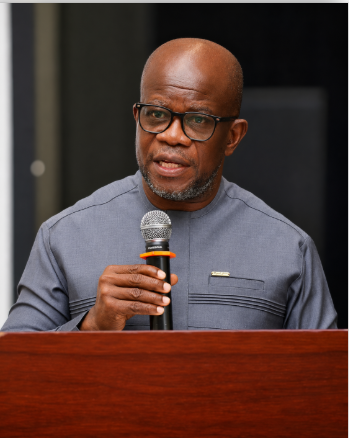
The Chief Executive Officer of the State Interests and Governance Authority (SIGA), Professor Michael Kpessa-Whyte, has called for structured induction and professional coaching to become an integral part of public-sector appointments to strengthen corporate governance, institutional performance and accountability.
He said although appointments to the boards and leadership of public institutions were sometimes influenced by political considerations, regional balance and representation, such considerations must not compromise professional competence and effective service delivery.
Prof. Kpessa-Whyte made the call on Sunday, November 29, 2026, when he addressed the Berkha Africa Coaching Soirée 2026 as the Special Guest of Honour at the Kempinski Hotel Gold Coast City, Accra.
The programme, organised by Berkha Africa under the theme, “Leading Institutions That Learn,” brought together directors of public and private institutions, chief executives, board chairs, professional coaches and leaders from various organisations.
“Merit may not always be the currency of public appointment, but competence must always be the currency of public performance,” he stated.
Bridging the Competence Gap
Prof. Kpessa-Whyte observed that some appointees assumed leadership positions without adequate knowledge of corporate finance, fiduciary responsibilities, risk management and the commercial operations of the institutions they were appointed to govern.
He explained that while such individuals might possess political judgement, local knowledge and a genuine desire to serve, they needed professional support to discharge their responsibilities effectively.
“The route to the seat may be political, but the standard in the seat must be professional,” he emphasised.
He noted that structured coaching could help newly appointed directors understand financial statements, ask relevant questions of management, distinguish oversight from interference and appreciate the boundaries of their responsibilities.
“Appointment confers authority. Only learning confers competence,” he added.
The SIGA CEO urged appointing authorities and institutions to make coaching and structured induction standard components of significant public appointments.
“No one should be entrusted with the stewardship of public assets and then left to learn by trial and error at the public’s expense,” he cautioned.
Strengthening Corporate Governance
Prof. Kpessa-Whyte further advocated the extension of professional coaching beyond management and staff to include boards of directors.
He explained that the increasing complexities of corporate governance required directors to think strategically, manage competing interests and exercise effective oversight without undermining management.
“The quality of governance in any institution will never rise above the quality of thinking around its board table,” he said.
He maintained that investing in boardroom competence would improve decision-making, strengthen accountability and enhance institutional performance.
Enhancing the Performance of State Enterprises
Touching on the operations of state-owned enterprises, Prof. Kpessa-Whyte said leaders of such institutions had a dual responsibility to deliver commercial results while serving the public interest.
He noted that the entities under SIGA’s oversight held significant national assets and must, therefore, demonstrate financial discipline, integrity and accountability.
He explained that SIGA’s mandate under Act 990 of 2019 extended beyond monitoring institutional performance to strengthening the governance and leadership capacities necessary to achieve results.
“Our ambition is not merely to supervise state enterprises, but to help them become institutions that think, learn and deliver,” he stated.
Coaching as a Strategic Investment
Prof. Kpessa-Whyte urged public and private institutions to recognise coaching as a strategic investment rather than an optional leadership development programme.
He said effective coaching sharpened decision-making, encouraged leaders to take ownership of their responsibilities and helped bridge the gap between institutional strategies and their implementation.
“The most expensive thing in any institution is a leader who has stopped learning,” he remarked.
He also commended Berkha Africa and the International Coaching Federation for promoting professional coaching, ethical standards and leadership development in Ghana.
He encouraged institutions to engage qualified coaches and establish partnerships that would build sustainable leadership capabilities.