





















Author: GIABA Journalists Network, Ghana Chapter
A high-level coalition of global and regional anti-financial crime experts has converged for the first time in Accra for the 2025 Joint Experts Meeting (JEM) of the Financial Action Task Force (FATF) and the Inter-Governmental Action Group against Money Laundering in West Africa (GIABA), with a resounding call for tougher, coordinated action against money laundering, terrorist financing, and illicit financial flows across the sub-region.
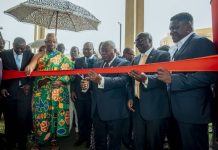
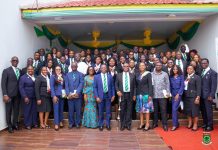
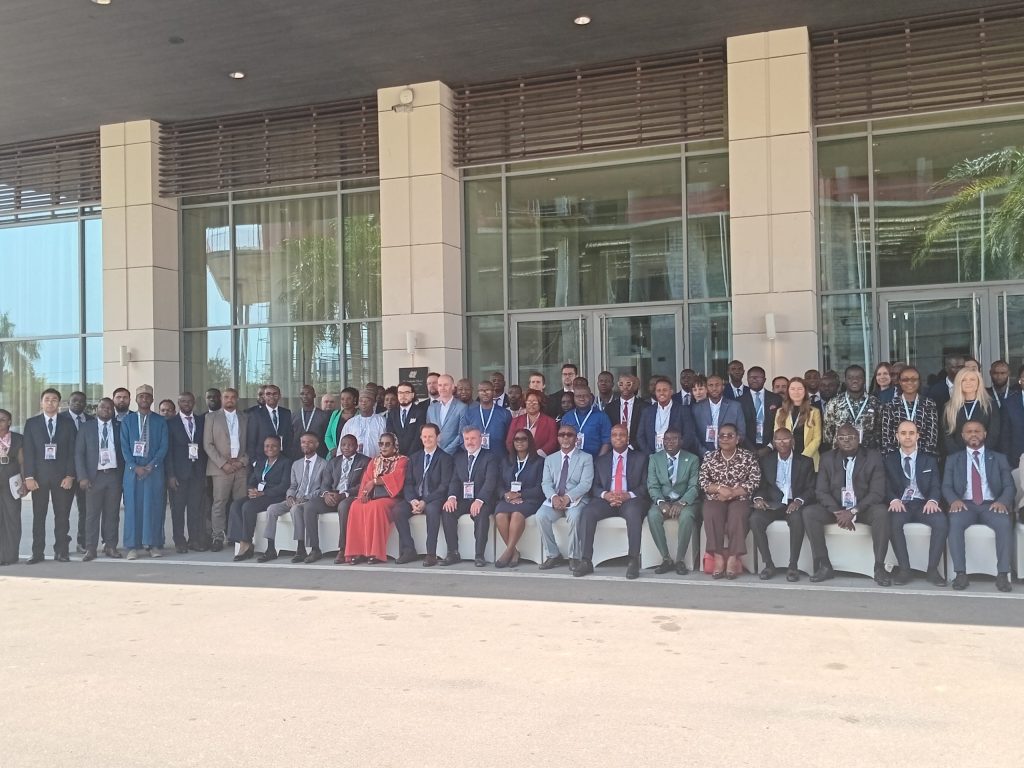
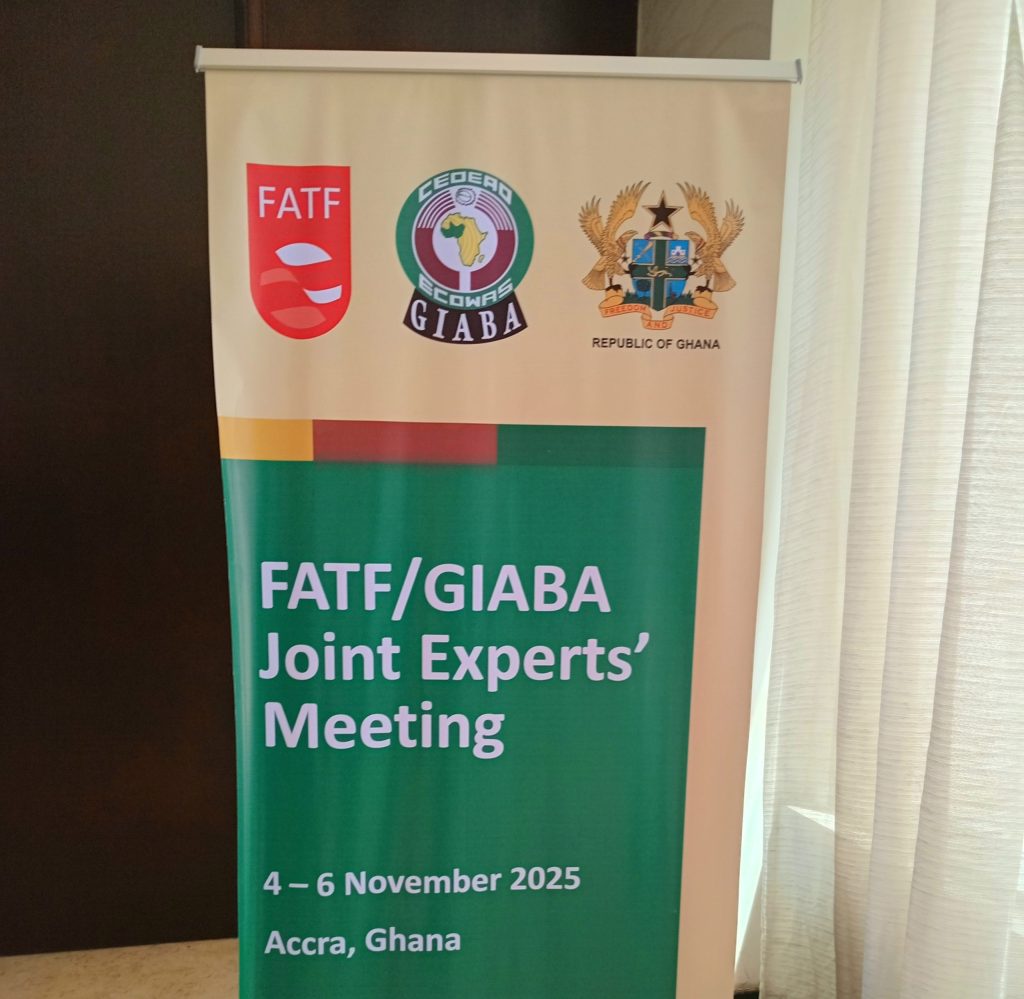
The 2025 FATF-GIABA Joint Experts Meeting, which runs from November 4 to 6 in Accra, brings together regional policymakers, law enforcement officials, international partners, and financial experts to chart a new course for Africa’s anti-money laundering and counter-terrorist financing agenda.
Opening the meeting on Tuesday 4th November 2025, Ghana’s Deputy Minister of Finance, Thomas Nyarko Ampem, urged member states to take decisive and collective steps to combat the increasing sophistication of financial crimes undermining Africa’s economies.
“We must strengthen our institutions, close the regulatory gaps, and foster real-time intelligence sharing among countries in the region,” he said.
“This is the only way we can collectively protect our economies and ensure financial integrity.”
Mr. Ampem called for enhanced collaboration, capacity building, and cross-border coordination among financial intelligence units, noting that criminal networks were exploiting regional vulnerabilities to launder illicit funds through legitimate trade and investment channels.
GIABA Director General: ‘No Country Can Win Alone’
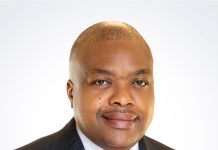
In his address, the Director General of GIABA, Mr. Edwin W. Harris Jr., warned that West Africa stood at a “critical crossroads” in its fight against money laundering and terrorist financing.
He lauded Ghana for hosting the historic meeting and for demonstrating leadership and commitment to financial integrity within the region.
“Ghana’s commitment reflects the leadership and resolve required to advance the integrity of financial systems across our region and beyond,” Mr. Harris said.
He described the Joint Experts Meeting as a “strategic milestone” for both West Africa and the FATF Global Network, serving as a vital platform for technical cooperation and mutual learning.
This year’s gathering, he explained, focused on Trade-Based Financial Crime (TBFC) and Terrorist Financing (TF) — two major threats he called “real, urgent, and consequential.”
“As our economies become more interconnected and digitalised, criminal networks are exploiting regulatory gaps and leveraging complex trade and corporate structures to move illicit funds across borders,” he cautioned.
“These activities undermine domestic resource mobilisation, distort markets, and erode public trust in institutions.”
The GIABA boss announced that the organisation had commenced its third round of mutual evaluations, with Ghana becoming the first member state to undergo the process, expected to be completed by November 2026.
He called on all Ghanaian agencies to cooperate fully, describing the process as “nationally owned” and essential for building credibility and resilience.
FATF President Calls for Global-Regional Partnership
Delivering a televised address, Ms. Elisa de Anda Madrazo, President of the Financial Action Task Force (FATF), hailed the meeting as a “historic moment” — the first-ever FATF-GIABA Joint Experts Meeting to be hosted in West Africa.
“This is a testament to the growing commitment and leadership in the region to tackle all forms of financial crime,” she said.
Ms. Madrazo commended the Government of Ghana for hosting the event and praised GIABA for its longstanding partnership with the FATF in advancing anti-money laundering and counter-terrorist financing (AML/CFT) standards.
“As President of the FATF, one of my top priorities is to foster cohesion across the Global Network through partnership,” she explained. “The collaboration between GIABA and the FATF is vital to our shared mission.”
She highlighted Nigeria and Senegal’s contributions under the FATF’s guest jurisdiction initiative, noting that regional insights had helped shape global responses to terrorist financing and trade-based financial crime.
“The threats we face globally are serious and ever-evolving,” Ms. Madrazo warned. “Terrorist financing continues to destabilise communities and undermine peace and security. Trade-based crimes and fraud erode trust in financial systems and divert resources away from those in need.”
‘We Must Work Together’
The FATF President urged participating experts — drawn from law enforcement agencies, customs, and financial intelligence units — to share insights, challenges, and good practices to enhance the effectiveness of global AML/CFT frameworks.
“Your work is complex, cross-border, and resource intensive, yet essential to safeguarding communities and financial systems and ensuring that crime does not pay,” she stated.
She reaffirmed the FATF’s commitment to listening to and learning from regional partners, ensuring that global standards remain grounded in local realities.
“We are here to listen, to learn, and to work with you. Together, we can disrupt the financial flows that enable the operations of criminal and terrorist groups, protect legitimate finance, and build a secure financial system for us all,” Ms. Madrazo emphasized.
Progress And Milestones
GIABA’s Director General also celebrated major progress made within the region, highlighting the recent delisting of Burkina Faso and Nigeria — both GIABA member states — from the FATF “grey list,” alongside South Africa and Mozambique.
“These delistings reflect sustained commitment, technical rigour, and high-level political will to strengthen AML/CFT frameworks,” he said.
“For the sub-region, this signals growing maturity in our collective response to financial crime and reinforces confidence in our capacity to uphold financial integrity.”
A Call To Action
Mr. Harris reiterated that fighting financial crime demands “vigilance, adaptability, and shared resolve,” urging all member states to turn the outcomes of the meeting into tangible action.
“This Joint Experts Meeting is not an end in itself; it is a catalyst. The ideas generated here will inform GIABA’s ongoing regional projects and enrich FATF’s global work on terrorist financing,” he said.
In closing, both the FATF and GIABA leaders expressed optimism that the Accra meeting would mark a turning point in regional cooperation, innovation, and enforcement.
“Together, let us turn insight into action — action that deters, detects, and disrupts financial crime, while enabling legitimate trade and inclusive growth to flourish across West Africa and beyond,” Mr. Harris concluded.