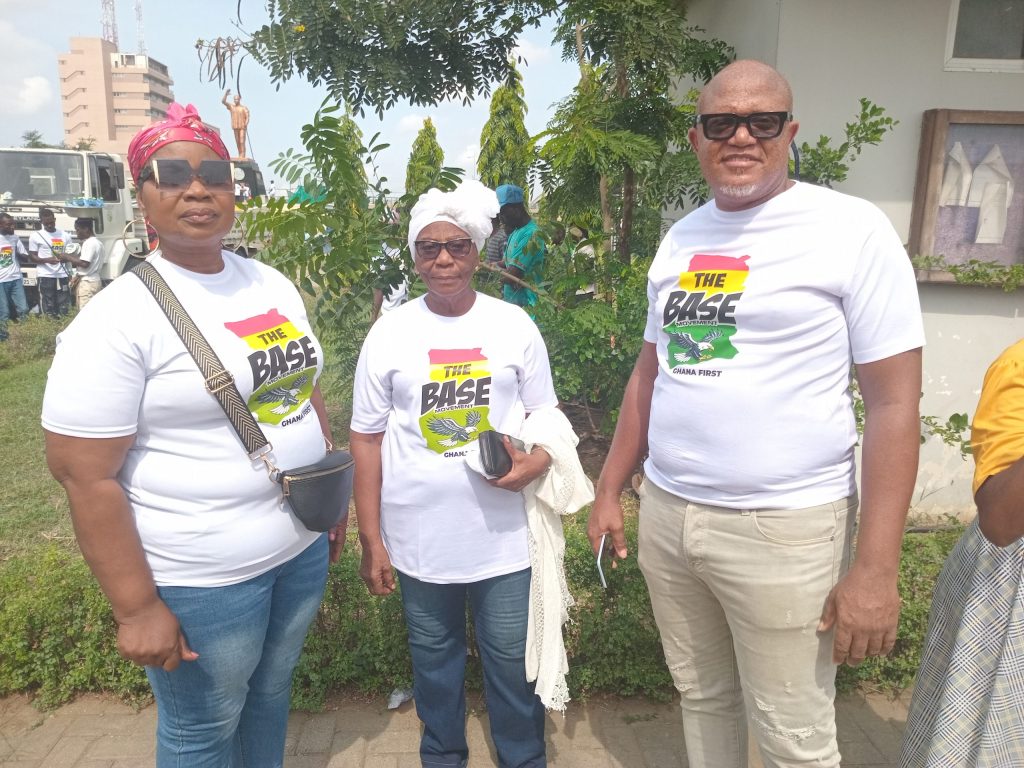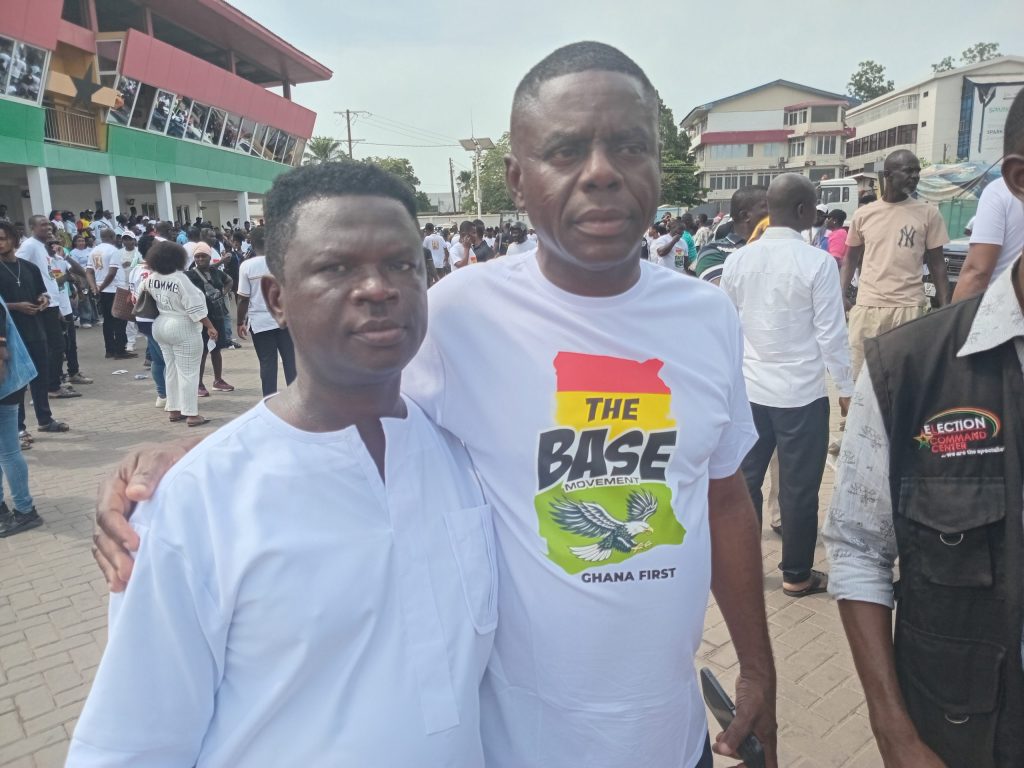





















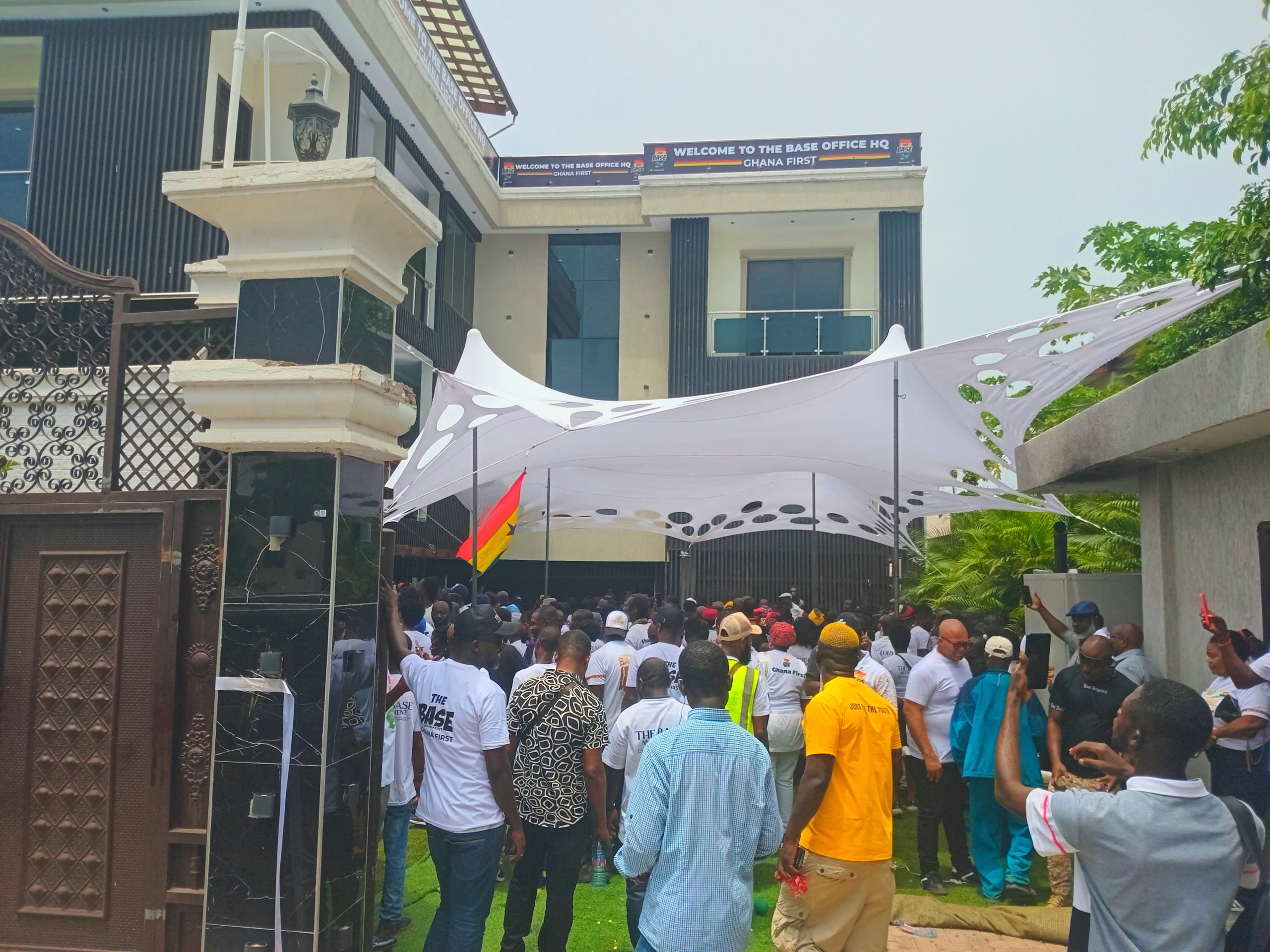
Ghana’s evolving political landscape witnessed a fresh twist on Monday as a newly formed political group, the Base Movement, formally announced its presence with the inauguration of its national headquarters at Tesano in Accra.
The unveiling ceremony, held on April 20, 2026, attracted massive crowd of enthusiastic supporters who converged at the popular Kwame Nkrumah Interchange, a location often associated with major civic gatherings.
Clad in coordinated attire reflecting national colours and identity, participants signaled the movement’s intention to position itself as a people-centered political alternative and a very attractive third force.
The procession that followed turned heads across parts of the capital, as supporters marched through key suburbs including Caprice, Avenor, and Tesano, where the newly established headquarters is situated.
The march, though held under intense sunshine, maintained high energy levels, with chants and songs underscoring calls for political transformation.
Observers noted that the turnout reflected growing public appetite for alternatives beyond Ghana’s long-standing two-party dominance.
At the heart of this new political force is Dr George Oti Bonsu, a businessman and former financier of the New Patriotic Party.
His departure from the ruling political structure has sparked conversations about internal party dynamics and the potential ripple effects ahead of the 2028 general elections.
Addressing the gathering, Dr. Bonsu emphasized the need for a shift in leadership style, particularly one that prioritizes economic growth and employment.
He argued that Ghana’s youth deserve practical opportunities rather than recurring political promises.
In a notable remark, he expressed openness to leadership from successful business figures such as Ibrahim Mahama or Kennedy Agyapong, citing their perceived capacity to drive job creation.
According to him, the future of the country hinges on pragmatic leadership that understands enterprise and wealth generation.
He maintained that his personal ambitions are secondary to the broader goal of youth empowerment and national progress.
The event also served as a recruitment platform, with many attendees signing up to become members of the movement.
Organizers described the registration drive as a strong indicator of grassroots momentum.
Speakers at the launch consistently criticized the entrenched dominance of both the New Patriotic Party and the National Democratic Congress.
They argued that the political duopoly has limited innovation and slowed national development.
Instead, they positioned the Base Movement as a credible third force capable of redefining governance.
Dr. Bonsu disclosed that the movement has already established nearly a hundred branches nationwide.
He encouraged supporters to expand this network further by mobilizing at the constituency level.
Unity and inclusiveness were recurring themes throughout the speeches delivered by various leaders of the movement.
Members were urged to welcome new entrants and avoid internal divisions that have plagued other political entities.
The presence of diverse groups—including religious leaders, traditional authorities, and academics—added weight to the occasion.
Analysts suggest that such inclusivity could enhance the movement’s appeal across different segments of society.
The establishment of a physical headquarters in Tesano is seen as a strategic step toward institutionalizing the movement.
It signals an intention to transition from a loose political idea into a structured organization.
Political watchers are already speculating on how the Base Movement might influence the dynamics of the 2028 elections.
While it remains early days, the group’s messaging appears tailored to resonate with disillusioned voters.
Dr. Bonsu’s criticism of his former political allies has also fueled debate about loyalty and accountability within party systems.
His claims of neglect and lack of recognition have not gone unnoticed in political circles.
Despite the controversy, supporters view his move as bold and necessary for democratic diversity.
They argue that new voices are essential to challenge complacency in governance.
The Base Movement’s leadership insists that their agenda goes beyond rhetoric and will focus on tangible policy alternatives.
They have pledged to prioritize job creation, youth empowerment, and national unity.
As Ghana inches closer to another election cycle, the emergence of new political actors could reshape traditional alliances.
For now, the Base Movement’s launch stands as a statement of intent—one that signals both ambition and disruption in Ghana’s political arena.