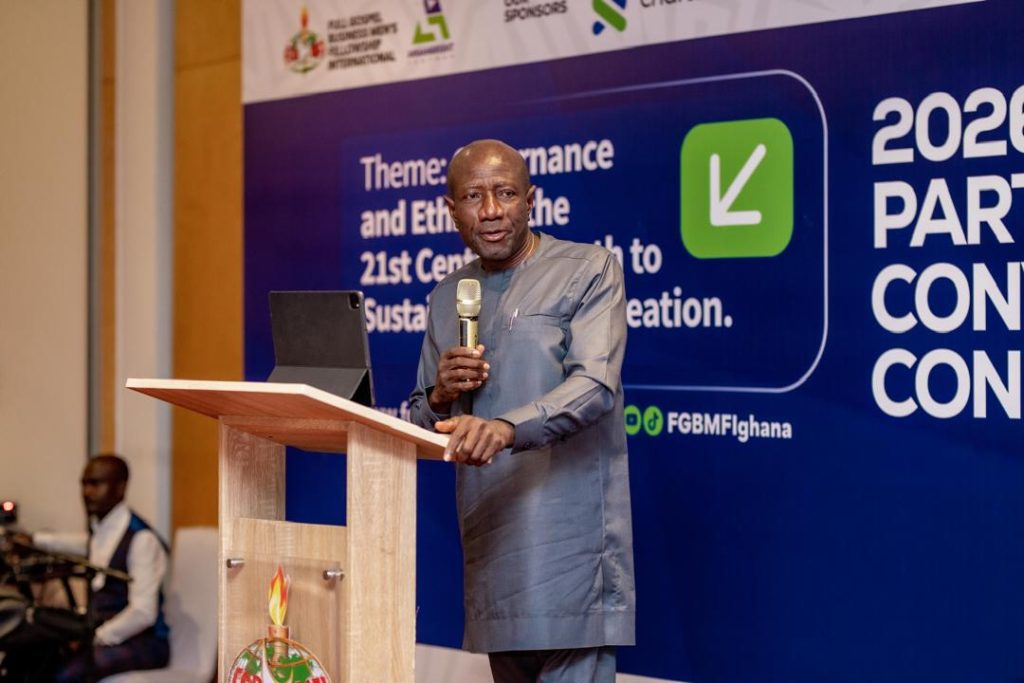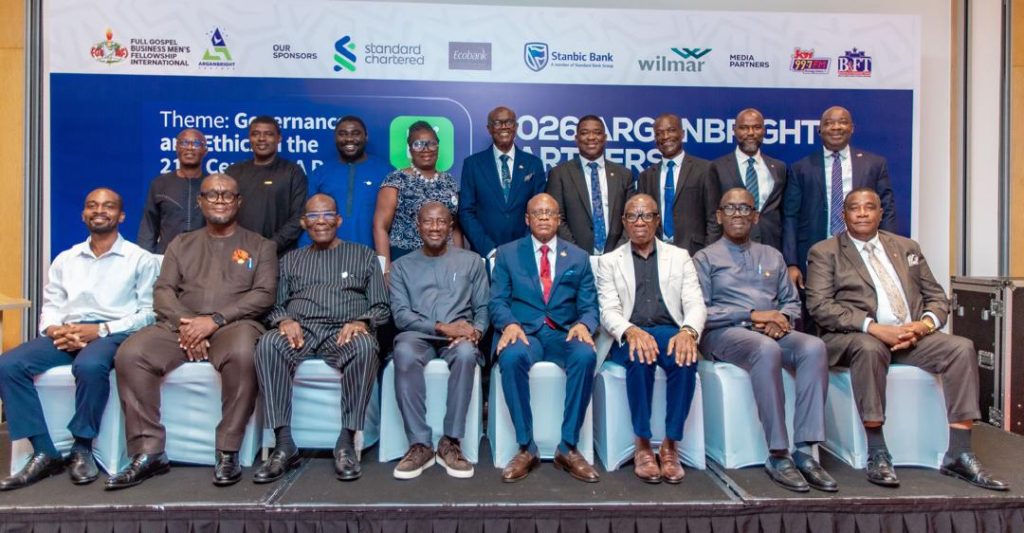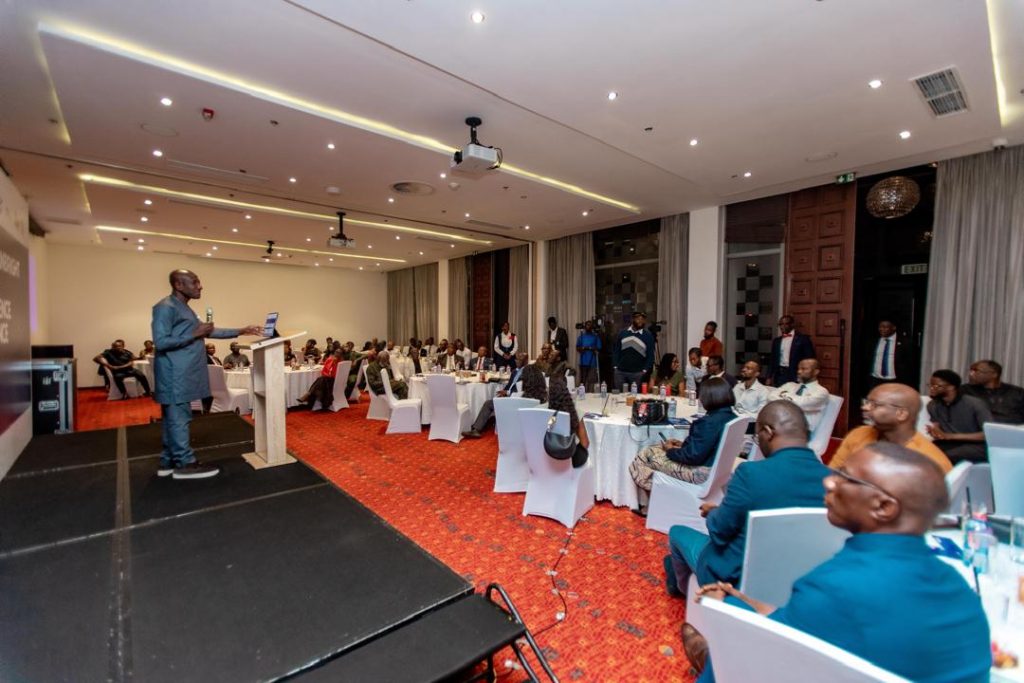



















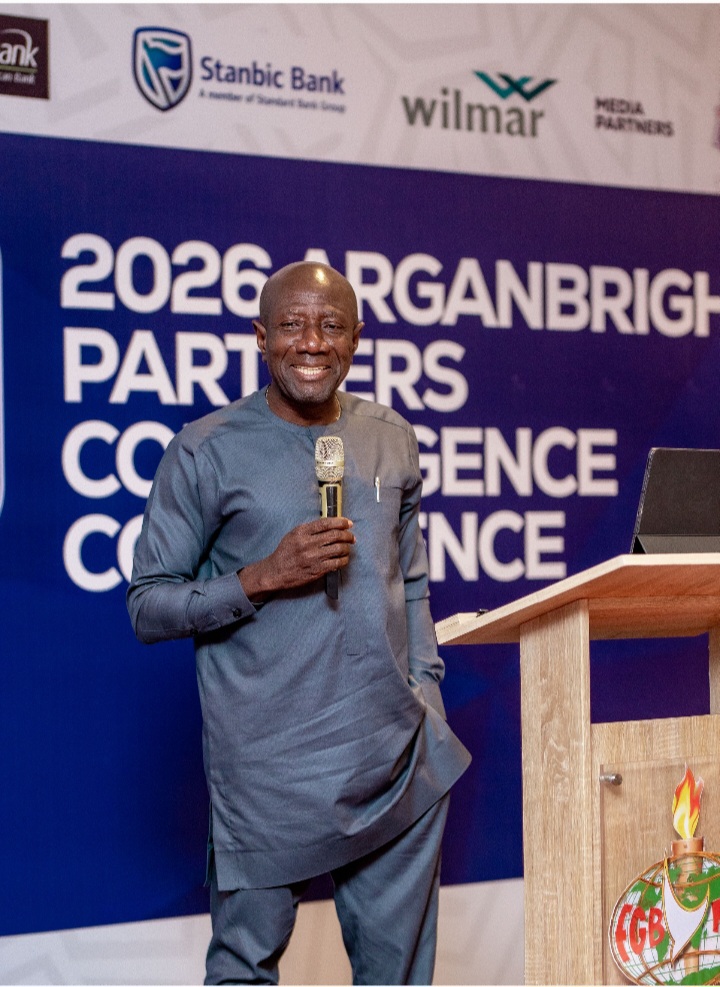
Accra, May 8, 2026 – Senior Vice President of MTN Group, Ebenezer Asante, has called for a fundamental shift in how organisation’s approach leadership, urging businesses to adopt what he describes as a new ethical architecture anchored on accountability and human dignity.
Delivering the keynote address at the Arganbright Partners Convergence Conference held at the Accra Marriott Hotel, Mr. Asante told participants that the most pressing challenge confronting modern institutions is not profitability, but purpose.
Speaking on the theme “Governance and Ethics in the 21st Century: A Path to Sustainable Value Creation,” he argued that while many organisations continue to prioritise growth and returns, they often overlook the broader implications of their decisions on people and society.
“The central crisis we face today is not a crisis of profit; it is a crisis of orientation. The real question is not simply how much value is created, but for whom that value is created and at what cost to human dignity,” he said.
To address this gap, Mr Asante introduced what he termed the “Senseholder Value Accountability Framework,” a practical guide designed to help organizations recalibrate their ethical compass.
He explained that the framework challenges leaders to confront three critical questions: how their organizations are perceived, what blind spots they may be ignoring, and how they respond when placed under pressure.
According to him, these questions are intended to move governance beyond compliance and into a more reflective and values-driven practice. “Ethical leadership must be deliberate. It must be interrogated consistently, especially in moments of uncertainty and strain,” he noted.
Mr. Asante further identified greed, power and fame as the primary forces that often drive ethical lapses within institutions.
He cautioned business leaders and professionals to remain vigilant, stressing that unchecked ambition can easily erode organizational values and public trust.
“These drivers are subtle but powerful. If they are not managed consciously, they will shape decisions in ways that compromise integrity. Leadership must therefore be anchored on discipline and a clear sense of responsibility to all stakeholders,” he said.
He also called for a more inclusive approach to corporate governance, where employees are empowered to contribute meaningfully to ethical discourse within their organizations.
In his view, fostering an environment where individuals can speak up without fear is critical to building resilient and trustworthy institutions.
“Ethics cannot be imposed from the top alone. It must be lived across all levels of the organisation. Leaders must set the tone through visible action, not just policy, and organizations must be intentionally designed to uphold dignity and create sustained value.”
While reflecting on the programme, Mr Asante cited the African philosophy of Ubuntu — “I am because we are” — as a guiding foundation for ethical leadership.
He noted that ethical leadership should not be framed as an unattainable ideal but understood as a sustained commitment to pursuing one’s best interests while remaining accountable to others, to one’s organisation, and to the broader environment and society.
He emphasised that this philosophy demands frequent and honest self-introspection from leaders as a deliberate practice of looking inward to improve the quality of decision-making and judgement over time.
The conference, organized by the Full Gospel Businessmen’s Fellowship International, brought together key stakeholders from academia and industry to examine the evolving role of governance in today’s business environment.
Among the dignitaries present were former Rector of the Ghana Institute of Management and Public Administration, Prof Stephen Adei; Chief Executive Officer of Standard Chartered Bank Ghana, Mansa Nettey; and Chief Executive Officer of Chase Petroleum, Kwaku Bediako, alongside other business leaders and management professionals.
Mr Asante was accompanied by MTN Ghana officials, including Chief Risk and Compliance Officer, Joseph Dogbe; Acting General Manager for Sustainability and Shared Value, Georgina Asare Fiagbenu; and Manager for Data and Devices, Abdul Latif Issahaku.
About Scancom PLC
MTN Ghana is the market leader in the mobile telecommunications industry in Ghana, offering subscribers a range of exciting options under Pay as You Go, Pay Monthly and Mobile Financial Services.
The company is part of the MTN Group which is a leader in emerging markets with a clear vision to lead the delivery of a bold new digital world to our customers. We are inspired by our belief that everyone deserves the benefits of a modern connected life. Scancom PLC is listed on the Ghana Stock Exchange. Our strategy is Ambition 2030: Leading digital solutions for Africa’s progress.