















NPP GERMANY
PRESS RELEASE
07—05—2026
The Writings Are So Clear That “Dumsor” Is Mahama-NDC Legacy Forever And Ever—NPP GERMANY
The return of John Dramani Mahama to the presidency was marketed as a moment of redemption, experience, and national reset.
To many of his supporters, it symbolized the comeback of a leader who understood the hardships of ordinary Ghanaians and possessed the maturity to correct past mistakes.
Yet, only months into his second coming, an old national trauma appears to be resurfacing — the haunting specter of “dumsor,” the prolonged and painful power crisis that once crippled Ghana’s economy and deeply scarred public confidence.
For many citizens, the frequent power cuts being experienced across parts of Ghana today are reopening old wounds.
Businesses are counting losses, students are struggling to study at night, hospitals are depending heavily on generators, and households are once again planning their lives around unpredictable electricity interruptions.
The fear in the minds of many Ghanaians is simple: are we returning to the dark days that defined a major part of Mahama’s first administration?
The word “dumsor” itself became politically radioactive during Mahama’s first presidency.
It evolved from a mere description of power outages into a symbol of economic frustration, governance challenges, and institutional inefficiency.
The energy crisis during those years damaged industries, collapsed small businesses, and weakened investor confidence in Ghana’s economy.
Years later, Mahama’s critics argue that history is dangerously repeating itself.
Despite government explanations that the current outages are linked to technical upgrades and transformer replacements, public confidence remains low because Ghanaians have heard similar assurances before.
President Mahama has repeatedly insisted that the current outages are “not dumsor” but temporary disruptions caused by infrastructure modernization efforts.
Government officials say over 2,500 transformers are being deployed nationwide to stabilize the grid and improve reliability. (News Alert Gha)
However, for the ordinary trader at Makola, the welder at Suame Magazine, or the cold store operator in Kasoa, semantics do not matter.
Whether it is called “upgrades” or “maintenance,” the reality remains the same when lights go off for hours and productivity comes to a halt. Citizens judge governments by lived experiences, not official explanations.
The challenge facing Mahama today is not merely technical; it is deeply psychological and political. His legacy on power supply was already heavily contested long before his political comeback.
That history means every blackout today automatically triggers memories of the painful years between 2012 and 2016 when darkness became a national routine.
Many Ghanaians vividly remember factories reducing operations, workers losing jobs, and families sleeping in unbearable heat during the peak of the earlier dumsor era.
The scars of that period have not fully healed. This explains why the current outages are generating intense anxiety nationwide.
Social media conversations reveal growing public frustration and skepticism. On Ghanaian Reddit forums and other online platforms, citizens have openly questioned government explanations, with many insisting that the outages feel identical to the earlier dumsor period.
Some citizens acknowledge that infrastructure upgrades and the recent Akosombo-related technical problems may genuinely be contributing factors. Others, however, believe the government is downplaying a deeper crisis within Ghana’s energy sector.
The Mahama administration argues that it inherited structural problems within the energy sector and has already begun reforms aimed at stabilizing electricity supply.
The government points to renegotiated power purchase agreements and financial restructuring measures as evidence of efforts to secure long-term energy sustainability.
Yet leadership is often measured not by inherited problems but by the ability to inspire confidence during crises. At the moment, public trust appears fragile.
The memories associated with Mahama and dumsor are simply too politically powerful to ignore.
The tragedy for Mahama is that his second presidency was expected to become a chapter of political vindication. Supporters hoped he would return stronger, wiser, and more prepared to avoid the governance failures that haunted his first administration.
Instead, the re-emergence of widespread power concerns threatens to overshadow his broader policy agenda.
Ghana’s energy sector remains one of the most politically sensitive sectors in the country because electricity touches every aspect of national life.
When the lights go off, economic activity slows, frustration rises, and public anger spreads rapidly. Power stability is not merely an infrastructure issue; it is a governance test.
The opposition, unsurprisingly, has seized the moment to remind Ghanaians of Mahama’s previous record on electricity.
Critics argue that no Ghanaian leader should ever again preside over prolonged nationwide power instability after the painful lessons of the past.
At the same time, fairness demands acknowledging that Ghana’s energy challenges are complex and cumulative.
Population growth, aging infrastructure, financial indebtedness in the power sector, transmission losses, and maintenance gaps have built up over decades. No single administration bears full responsibility for every energy problem confronting the country today.
Still, political reality rarely rewards nuance. In politics, perception can become more powerful than technical facts. Once citizens begin associating a leader with darkness and hardship, reversing that perception becomes extraordinarily difficult.
Mahama therefore faces a defining moment in his second coming. He must move beyond reassurance speeches and deliver visible, measurable, and consistent improvements in electricity supply. Ghanaians are exhausted by promises. They want reliability.
The recurring outages are also damaging Ghana’s economic recovery efforts.
Small and medium-sized businesses are spending more on fuel for generators, while manufacturers worry about rising operational costs.
Investors considering Ghana as a business destination are also watching developments closely.
Educational institutions are affected as well.
Students preparing for examinations struggle during outages, while digital learning and research activities are disrupted.
In a modern economy increasingly dependent on technology, unstable electricity supply becomes a national development obstacle.
Health facilities are equally vulnerable.
Although major hospitals often have backup generators, smaller clinics and health centers are not always adequately prepared for prolonged outages. In healthcare, even a few minutes without stable electricity can become dangerous.
One of the strongest criticisms emerging today is the apparent communication gap between authorities and the public.
Many citizens complain that outages occur without proper schedules or adequate notice. This uncertainty intensifies frustration because people cannot plan effectively around the disruptions.
The government must therefore recognize that transparency is as important as technical intervention.
Honest communication, clear load management schedules, and regular public updates could help reduce panic and rebuild trust.
Mahama’s second coming was supposed to represent national renewal and experienced leadership.
Instead, the return of persistent power interruptions threatens to revive the very issue that contributed heavily to his earlier electoral defeat.
The President still has an opportunity to change the narrative. If his administration can rapidly stabilize the grid, modernize infrastructure, and restore public confidence, he may yet rewrite his energy legacy.
But if the outages worsen or persist for long periods, history may permanently remember his presidency through the dark shadow of dumsor.
Ultimately, Ghanaians do not care about political slogans when their refrigerators stop working, their businesses collapse, or their children cannot study at night.
They care about results. Electricity is not a luxury; it is the lifeblood of a functioning nation.
And in the court of public opinion, the verdict on Mahama’s second coming may ultimately be determined not by speeches, rallies, or political messaging — but by one simple question asked daily in homes across Ghana: “Has the light come back?”.
This cannot — and must not — be business as usual.
God Bless Our Homeland Ghana!!!
Long Live Ghana, long live the Elephant Party!!!!
Kukruduuuu Eeeessshiii!!!
Signed:
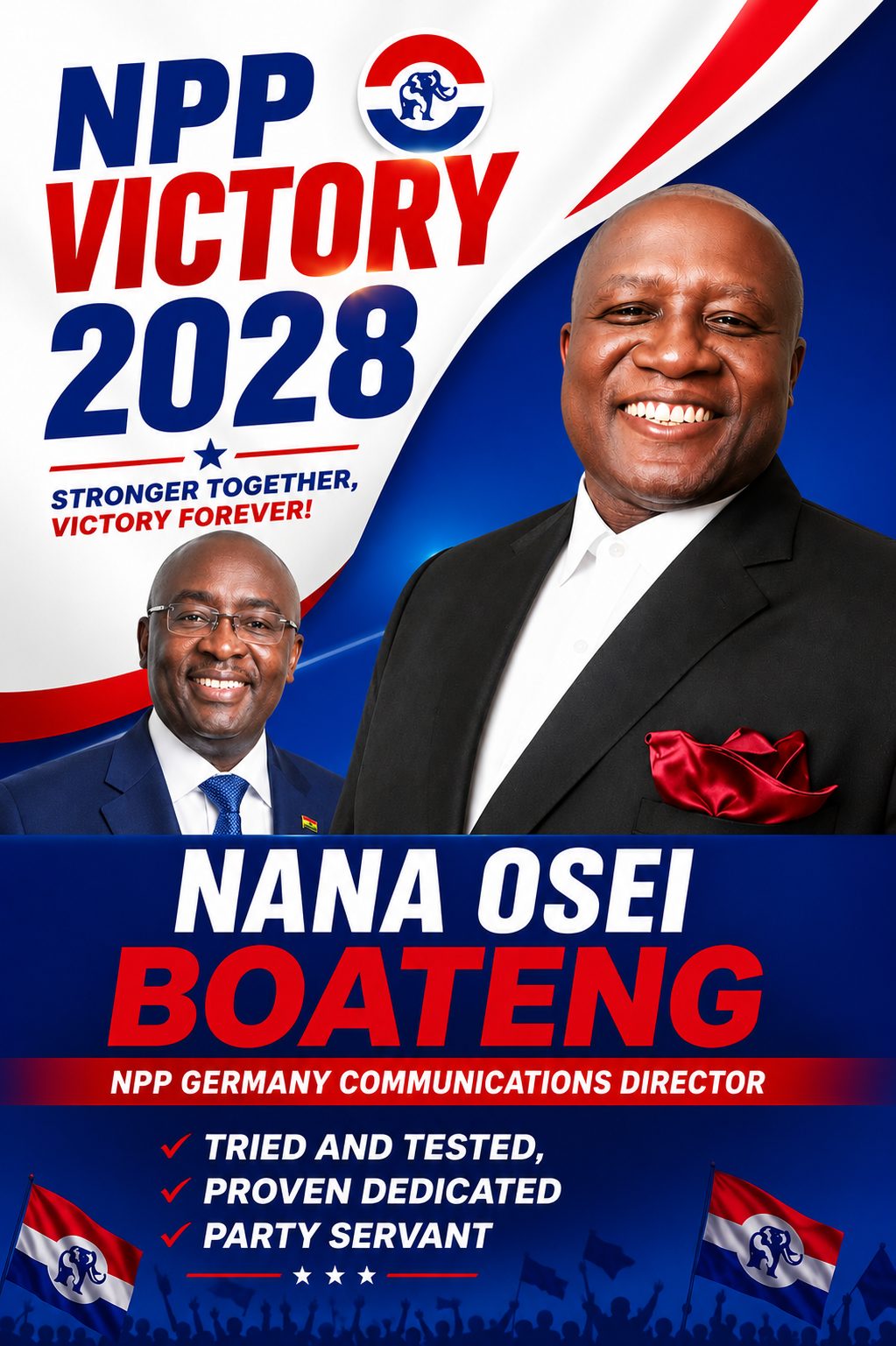
Nana Osei Boateng
NPP GERMANY Branch
Communications Director