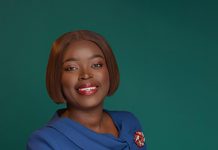
















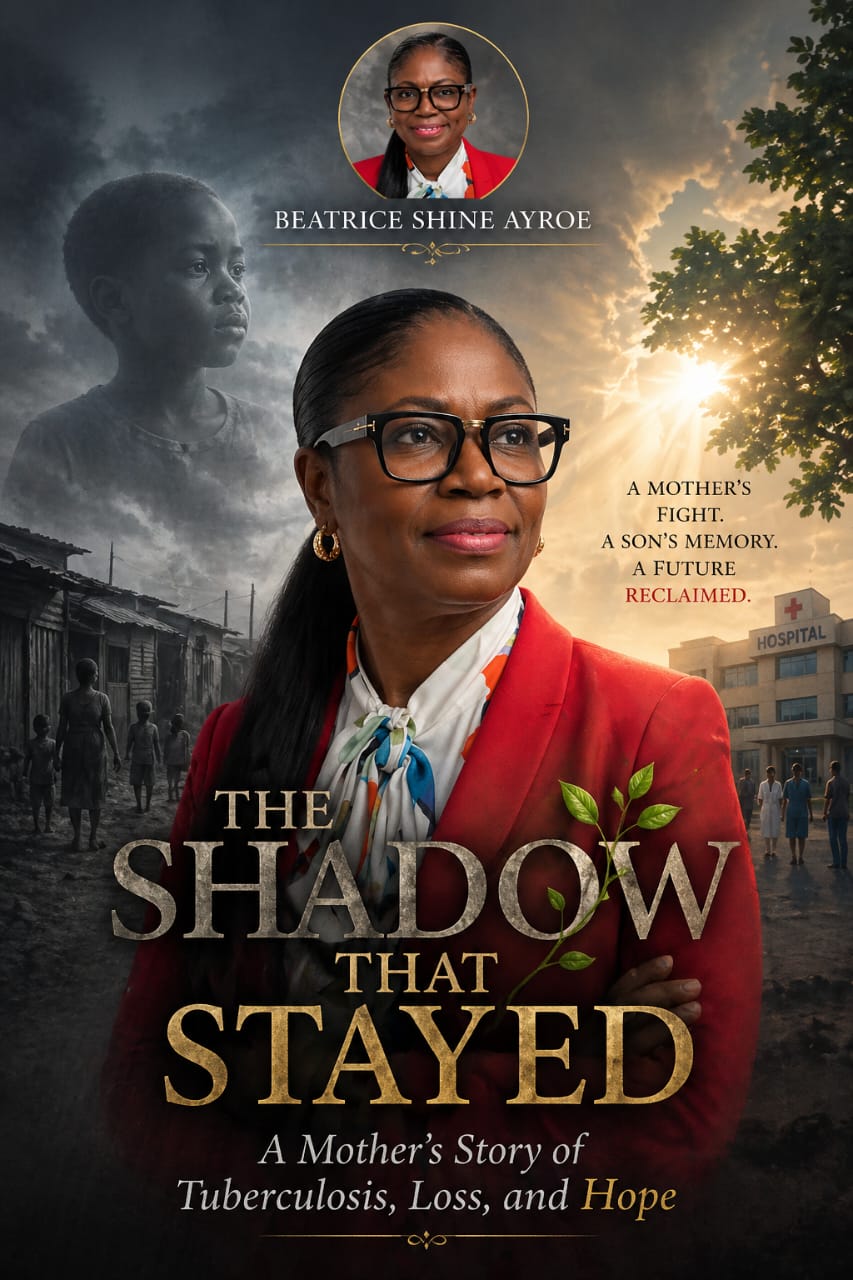
Author: Ms. Beatrice Shine Ayroe
(Based on a true account. Names have been withheld out of respect for the living and the dead. This story is dedicated to all those lost to TB, and to all those still fighting.)
Before I Knew
Before I joined the Stop TB Partnership Ghana, tuberculosis was just a word, a word that meant nothing to me, until it meant everything.
I come from a family that believed sickness was something you could see coming. A fever announced itself. Malaria had its signature. But TB? TB crept in like a thief in the night, and by the time we knew it was there, it had already taken what it came for.
My brother left for Accra with dreams stuffed into a small bag. Like so many young people, he went to hustle, to find something bigger. We didn’t hear much from him after he left, the occasional phone call, that was all. No money came home. No promises kept. Just silence, and then longer silence.
When he came back, he wasn’t the brother who left.
The Cough That Changed Everything
At first, we thought it was nothing. A cough, yes, but people cough. He was tired, but Accra is exhausting. He complained of chest pain, and we gave him pain relievers. He sweated at night, and we blamed the heat.
None of us knew.
None of us knew that inside his lungs, something was eating him alive from the inside out.
It wasn’t until he collapsed, until his legs gave way under him in the middle of the compound, that we took him to the hospital. I remember watching them wheel him in, his eyes half-closed, his lips cracked. My mother was crying. I wasn’t. I was too busy being angry at him for being sick, as if he had chosen this.
The doctors did their tests. They came back with a word: Tuberculosis.
I still didn’t know what that meant.
But I learned quickly.
What we did not know then, what crushed us when we found out later, was that he had already been diagnosed in Accra. The doctors there had caught it. They had given him medicine. And he had stopped taking it.
He had stopped because the medicine was hard. After all, he thought he was getting better, because life got in the way, or perhaps because no one had explained clearly enough what would happen if he stopped.
No one had told him that with TB, stopping halfway is not neutral. It is worse. Stopping treatment allows the bacteria to regroup, to grow stronger, to become harder to fight. His own decision to stop, made in ignorance and not in malice, had brought him to this point.
The Separate Room
They placed him on treatment again. But here’s the thing about my brother: he was stubborn, always had been. He refused the medications. He said they made him feel worse. He said he didn’t trust the hospital. He had stopped taking them in Accra before he came home, and none of us asked. None of us thought to ask.
When he came home from that first admission, we treated him like a ghost.
He was isolated in a room. Just one room. A door that stayed closed. He had his own plate, his own cup, his own spoon, even his own bucket for bathing. We left food at the door like he was a prisoner. Nobody entered. Nobody sat with him. Nobody held his hand.
I am ashamed to say this now, but I was relieved. Relieved that it wasn’t me in that room. Relieved that he was contained.
But my son, my curious and stubborn son, didn’t understand isolation. When his uncle came out of that room, my son was there. Always there. Sitting next to him on the step. Sharing space. Sharing breath.
I should have known. I should have seen what was coming.
The Second Admission
Stopping the medication made him worse. The cough deepened into something wet and hollow. The weight fell off him as if he were shedding a skin he no longer needed. He was re-admitted.
This time, he couldn’t do anything for himself.
I became his hands, his legs, his voice.
Every day, I went to that isolated ward. The nurses handed me a nose mask and gloves, always the mask, always the gloves, before I could go near him. I wiped his face. I turned him in bed. I fed him what little he could swallow. I watched him shrink.
He became thin. So thin that when I lifted him, I felt every bone beneath his skin. He couldn’t walk. He couldn’t stand. He could barely speak.
And I watched.
I watched the life drain out of him in that sterile room, and I kept thinking: This cannot be how he ends. This cannot be.
But it was.
The Loss
He died on a hospital bed. I was holding his hand, gloved, masked, protected from him even at the end.
Even in death, he was not allowed to rest the way other people rest. At the mortuary, his body was kept isolated. We were told to bury him quickly, the next day, because even in death, TB can be dangerous. So, we rushed the burial. We said goodbye to him in haste, in grief, in confusion, in the particular loneliness of mourning someone who was never fully allowed to come home.
I thought that was the end of it, the end of TB in our family. The chapter closed.
I was wrong.
The Cough That Returned
A few months after the burial, my son started coughing.
He was fifteen. A goalkeeper for his school football team, quick, strong, full of the particular energy of a boy who has not yet learned to be tired. But suddenly he couldn’t run. He couldn’t dive for the ball. He sat on the bench watching his teammates, short of breath, complaining of chest pain, growing weak.
I told myself it was something else. A cold, maybe. The harmattan season. The dust. I told myself this because the alternative was something I could not yet afford to believe.
I took him for a routine check-up. Just to be sure. Just to quiet the voice in my head that was already screaming.
The test came back positive. Tuberculosis.
I cannot describe to you what happened inside me when I heard that word again. It was like being pushed off a cliff. The ground disappeared. The air left my lungs. I died several times in that doctor’s office, standing there, holding my son’s hand.
Because I knew. I knew what TB did. I had watched it. I had wiped the sweat from my brother’s forehead. I had buried him the next day. The only end, I thought, was death.
The Gentleman at the Chest Clinic
I asked the man at the chest clinic, a kind man with tired eyes who had probably answered this question a thousand times, if my son was going to die.
He didn’t laugh at me. He didn’t tell me I was being dramatic. He pulled up a chair and sat down next to me, and he explained.
He told me that TB is curable. If the medication is taken with care, taken diligently, for six months, my son could live. He told me about the drugs, about the timeline, about what to expect.
That gave me hope. Just a little. Like a match struck in a dark room. But the fear, the fear stayed.
A Mother’s Determination
As a mother, I could not watch my son go through what my brother went through. I refused. I asked every question I could think of. How do I protect the rest of my family? How do I keep him from spreading it to his schoolmates? How do I keep him alive?
That’s when I learned something that changed everything. The nurse told me that after a few weeks of taking the medication correctly, my son would no longer be able to infect anyone else.
A few weeks.
Not forever. Not isolation in a single room with his own cup and his own spoon. Just a few weeks.
I clung to that information like a drowning person clings to a rope.
Six Months
He started treatment.
The medicine was strong, brutally strong. My son, who had never been a big eater, suddenly ate everything in sight. He was hungry all the time. The drugs did strange things to his body, but I watched him every day, counting pills, marking dates on the calendar.
After one month, he started improving. The cough softened. The color returned to his face. He could walk to the football park without stopping to breathe.
I took him back to school. I found his senior house father, a good man, a responsible man, and I entrusted my son to him. I showed him the medications.
I explained the schedule. I made him promise to watch, to remind, to call me if anything seemed wrong.
Letting him go was one of the hardest things I have ever done.
But he needed to be a boy again. He needed his friends, his classes, his life.
The Negative Result
Six months. One hundred and sixty-eight days of pills, of worry, of hoping. And then they tested him again.
Negative.
I wept in that hospital corridor. Not quiet tears, the kind that come from somewhere deep, somewhere that has been holding its breath for too long. My son wrapped his arms around me, confused, probably embarrassed, but I didn’t care.
I didn’t lose him. He survived.
My brother died, but my son lived.
What I Know Now
Years passed. Life continued. My son grew up. Today, he is twenty-three years old and in his final year at the university. He is alive. He is well. He is my daily proof that TB is not a death sentence.
Then I got employed as the Projects Coordinator for the Stop TB Partnership Ghana.
And I learned not just from my own pain, but from an entire movement.
The Stop TB Partnership Ghana is an organization with a clear and urgent mission: to ensure that every person with TB has access to effective diagnosis, treatment, and cure; to stop the transmission of TB; to reduce the inequitable social and economic toll of the disease; to develop and increase access to new preventive, diagnostic, and therapeutic tools; and above all, to amplify the voices of people with and affected by TB through strategic advocacy and communication.
We do not work alone. Across all 16 regions of Ghana, we work hand in hand with over 90 non-governmental organizations (NGOs) that reach the hardest-to-reach communities, the crowded ghettos, the remote districts, the prisons, the markets, and the schools.
They are the feet on the ground. They are the ones who find the missing cases, who convince the frightened to test, who sit with patients through the long six months so they do not stop their medication.
And I have learned that preventing TB is just as important as treating it.
Prevention starts with simple things that save lives. Good ventilation, opening windows, and letting air move through rooms reduce the concentration of TB bacteria in the air.
Covering your mouth when you cough and teaching others to do the same stops the bacteria from traveling to new lungs. Early testing when a cough lasts more than two days means less time for the disease to spread to family, friends, and classmates.
There is also something called TB Preventive Treatment (TPT), medicine given to people who have been exposed to TB but are not yet sick. It kills the dormant bacteria before it wakes up. If my son had been given preventive treatment after my brother’s diagnosis, he might never have fallen ill. I did not know that then. I want you to know it now.
Because of all this, I have learned that stigma, the isolation, the separate plates, the closed doors, can kill a person faster than the disease itself. I have learned that the fear we wrap around people with TB is sometimes more deadly than the bacteria in their lungs. And I have learned that prevention, early detection, and complete treatment are the three pillars that break the chain of infection.
I have learned to seek help early. To recognize the signs. To act before it’s too late.
The Ghetto
Because I believe that knowledge should travel, that it should move from adults to children, from professionals to communities, from the known world into the unknown, I sometimes bring my children with me when we go into the field. I want them to see. I want them to understand, not just what their mother does, but why it matters.
On field visits, when we go to screen people or hold trainings, I sometimes bring them along. They wear masks and gloves for protection. They hand out forms, share water, and they listen.
One day, my daughter, fourteen years old then, came with us to one of the ghettos in Accra. Her job was simple: register everyone who walked into the screening centre. Name, age, occupation, etc.
During registration, she called me over. Her face was confused, almost disturbed.
“Mama,” she whispered, “I asked the man his occupation, and he told me to write “small small stealing.”
A pickpocket. That was his answer. That was what he called his work.
My daughter was shocked. She grew up in a home where stealing was wrong, where work meant something honest. But standing in that ghetto, surrounded by people who had nothing, she was learning something I couldn’t have taught her any other way.
I did not have time, in that moment, to explain everything. But later, I tried. I tried to explain that poverty is not a moral failing. That people who steal to eat are not simply criminals; they are people who have been failed by every system that should have caught them. And that among those people, TB moves freely, because treatment requires consistency, and consistency requires stability, and stability is the one thing that poverty makes impossible.
These people, the ones living in the ghettos, are human beings. Many of them have TB. Many of them have no means to take their medications regularly because they cannot afford food, let alone transport to a clinic.
They get arrested during police raids, thrown into cells, and locked up with dozens of others. And there, in those crowded cells, they spread the disease.
No one thinks about that. No one counts those infections.
But I do. Now I do, all of us in the Stop TB Partnership Ghana and our 90+ NGOs across all 16 regions do.
The Child I Could Not Save
Not every story ends the way my son’s did.
Recently, my cousin called me. She was crying before she even finished speaking.
One of our nieces, eight years old, just a child, had been sick for months. Her parents thought it was asthma. They treated her for asthma. Inhalers, hospital visits, prayers. But she wasn’t getting better.
By the time she was diagnosed with TB, it was too late. She died.
She died of paediatric tuberculosis, and I didn’t know until after she was gone.
My cousin called me, me who works for Stop TB Partnership Ghana, who knows the signs, who can make calls, who can get help, but the information came too late.
I sat with the phone in my hand and felt the weight of every person I couldn’t reach, every family that didn’t know, every child who slipped away because someone thought it was asthma, or a cold, or nothing serious.
What I Want You to Know
I am telling you this story, my brother’s story, my son’s story, my niece’s story, because someone needs to hear it.
TB is not a disease of the past. It is here, in our communities, in our schools, in our families. It is curable. It is treatable. But only if we catch it early. Only if we take the medication seriously, all of it, every single pill, for the full course. Only if we stop isolating people as if they are already dead.
Stigma kills. Fear kills. Silence kills.
When my brother was isolated in that room, we thought we were protecting ourselves. But we were also telling him that he was dangerous, that he was untouchable, that he was already gone. I don’t know if that contributed to his death, the loneliness, the shame, but I know it didn’t help him live.
When my son was diagnosed, I chose differently. I chose education over fear. I chose treatment over isolation. I chose hope.
And my son is alive.
A Mother’s Plea
If you take one thing from my story, let it be this:
If you have a cough that won’t go away for two days, one week, or more, go to the hospital. Ask to be tested for TB. Do not wait.
If someone you love is diagnosed, do not lock them away. Do not give them their own plate and their own room and pretend they have already died. Give them your presence. Give them your support. Help them take their medication. Walk with them through the six months.
If you are a parent, learn the signs. Night sweats. Weight loss. Chest pain. A cough that lingers. Do not assume it is asthma. Do not assume it will pass.
And if you work in healthcare, if you are a teacher, if you are a community leader, talk about TB. Normalize it. Take away the shame. Because a child in a ghetto, a teenager in a cell, a mother who doesn’t know, they need to hear that TB is not a death sentence.
It never was. But silence? Silence can be.
My name is a mother, a sister, an aunt, and the Projects Coordinator of the Stop TB Partnership Ghana. I have lost people I love to this disease. I have also saved people I love. The difference between those two outcomes was not luck. It was knowledge. It was action. It was refusing to be silent.
Please, do not wait until it is too late for someone you love.
(For information on TB symptoms, testing, and treatment, speak to your nearest health facility or contact the Stop TB Partnership Ghana.)
TB is curable. Seek help early.
Written By: Ms. Beatrice Shine Ayroe