



















Author: Victoria Beeko Danso || Broadcast Journalist, GN Media (ATV)
The persistent flooding in Accra has evolved into an existential threat that challenges the city’s aspirations for sustainable development.
While unauthorized construction on waterways is frequently scapegoated as the primary driver of this crisis, it represents only one facet of a deeply embedded systemic failure.
As Accra continues to expand, the intersection of rapid, unplanned urbanization, deteriorating infrastructure, weak enforcement of planning regulations, and the mounting pressures of climate change has created a cycle of environmental insecurity.
For the capital to survive and thrive, it must transition from reactive crisis management to a proactive, integrated framework that treats natural assets as critical infrastructure and waste as an economic resource.
The Anatomy of Failure: Beyond Illegal Structures


Accra’s vulnerability is multifaceted. Over the past few decades, the city’s population has grown dramatically from approximately 2 million residents to well over 5 million people today.
This surge has been fueled largely by rural-urban migration, as thousands continue to move to the capital in search of economic opportunities, better education, healthcare, and improved living standards.
However, the pace of urban growth has consistently outstripped the capacity of municipal authorities to plan for and implement critical infrastructure expansion.
The result is sprawling informal settlements, increasing pressure on public services, and widespread development in ecologically sensitive areas.
The city is also experiencing extensive concretization—the paving over of soil, wetlands, and natural water retention areas—which leaves rainwater with nowhere to infiltrate, forcing it to overwhelm existing and often inadequate drainage systems. Natural waterways that once absorbed and redirected excess water have either disappeared or been severely degraded.
Equally troubling is the persistent lack of enforcement of planning regulations. Building permits are often disregarded, developments emerge in flood-prone zones, and encroachment on waterways continues despite repeated warnings from authorities.
While laws exist, inconsistent enforcement has allowed these practices to become entrenched, significantly increasing the city’s flood risk.
The human and economic toll of this failure is staggering. The memories of the June 3, 2015 disaster—which claimed more than 150 lives—serve as a grim reminder of the cost of inaction.
Yet, eleven years later, progress remains elusive. The flooding witnessed on the evening of June 3 and the morning of June 4, 2026 confirms that the city remains highly vulnerable.
Beyond the tragic loss of life, recurring floods destroy homes and businesses, displace families, interrupt education, damage roads and public infrastructure, spread waterborne diseases, and reduce investor confidence.
Traffic congestion worsens, productivity declines, and businesses suffer losses from damaged goods and interrupted operations. These cumulative impacts ultimately slow national economic growth and place additional strain on already limited public resources.
Turning Liability into Value: The Waste Management Paradigm
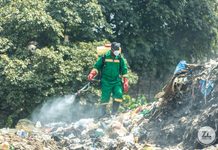
Poor waste disposal habits continue to act as a catalyst for flooding, as refuse-choked drains lose their capacity to channel runoff effectively.
However, the current “chaos” of waste management can be reimagined as an engine for economic transformation through a circular economy model. Instead of viewing waste as a burden, we must recognize its latent value as a raw material.
Circular Manufacturing: Plastics clogging our drains can be repurposed into durable products such as pavement blocks and construction materials, reducing reliance on traditional concrete while simultaneously clearing critical drainage channels.
Economic Incentivization: When waste carries financial value, public behavior changes. Establishing buy-back systems and incentives for waste segregation can encourage households to collect, sort, and properly dispose of waste, creating a sustainable supply chain for recycling industries.
Employment and Energy: Ghana’s growing waste stream presents an opportunity to generate thousands of green jobs for young people.
Waste collection, recycling, processing, manufacturing, and waste-to-energy technologies can create sustainable livelihoods while contributing to national energy production.
By integrating these economic drivers, we move from a state of chaotic disposal to a structured system where keeping our city clean becomes a shared and profitable responsibility.
A Roadmap for Structural Resilience
To mitigate these risks, the focus must shift toward comprehensive, long-term engineering and policy solutions.
Integrated Flood Management: Developing a comprehensive Flood Management Master Plan that incorporates modern drainage expansion, retention and detention basins, smart stormwater systems, and underground flood diversion infrastructure.
Ecological Restoration: Wetlands, lagoons, rivers, and mangroves are natural flood-control systems. Their preservation and restoration must be prioritized over further development.
Innovative Financing: Pursuing Public-Private Partnerships involving government agencies, development finance institutions, private investors, and recycling enterprises can unlock much-needed resources for climate resilience projects.
Sustainable Funding Cycles: Establishing a National Flood Infrastructure Fund is essential to decouple critical climate resilience investments from short-term political cycles, ensuring continuity of funding and implementation.
Strict Enforcement: Strengthening urban planning enforcement and applying sanctions consistently against illegal developments are critical. Public education campaigns must also be sustained to discourage indiscriminate waste disposal and prevent future encroachment on waterways.
Conclusion
Accra stands at a crossroads. The recurring nature of these floods indicates that the current status quo is no longer sustainable.
For a city aspiring to be a hub of innovation, investment, and commerce, the inability to effectively manage water systems represents a significant developmental bottleneck.
The flooding challenge is no longer simply an environmental issue; it is an economic, social, health, and governance issue.
Every flood event pushes vulnerable families deeper into poverty, destroys productive assets, and undermines national development efforts.
By embracing a holistic approach—one that combines engineering rigor, ecological preservation, effective governance, and economic circularity—Accra can transform its flood vulnerability into a blueprint for modern, climate-resilient urban planning in the Global South.
The time for discussions alone has passed. We must move away from being a talking nation and become a doing nation.
About The Writer:
Victoria Beeko Danso is a Broadcast Journalist, writer, and Development Communication professional, as well as a climate change advocate.
She uses media as a tool to drive conversations that influence policy, promote sustainable development, and inspire social change.
With a background in Development Communication, she is passionate about storytelling that highlights critical issues such as governance, youth development, environmental sustainability, and social accountability.
Through her work, she amplifies underrepresented voices and creates platforms that connect citizens, experts, and policymakers to foster informed dialogue and impactful decision-making.
She is committed to using journalism and strategic communication to advance climate action, strengthen public awareness, and contribute to sustainable development.