













For Dotom, Koniyaw and Kokotro, the struggle for a dependable road has become a recurring story of hardship, intervention and renewed hope. And once again, Bekwai MP Hon. Ralph Poku-Adusei has stepped in, this time with GHS 30,000 to get stalled road reshaping works back on track.
The latest intervention may be smaller in value than his previous commitment, but its significance is difficult to miss.
In 2024, then Parliamentary Candidate Ralph Poku-Adusei committed GHS 160,000 from his own resources to reshape and surface the entire Dotom-Koniyaw-Kokotro road after a tragic incident exposed the devastating consequences of the road’s deplorable condition.
A pregnant woman in labour had reportedly lost her life while being transported along the road.
For Mr. Poku-Adusei, the tragedy was more than an unfortunate incident. It was a stark reminder of what poor roads mean to people living in communities where access to healthcare, markets, schools and other essential services depends heavily on road connectivity.
At a time when the District Road Improvement Programme, DRIP, machines had not yet been deployed to the Assemblies, he mobilised the GHS 160,000 to undertake the work without the benefit of state equipment.
That intervention provided temporary relief and restored motorability to the road.
TWO YEARS ON, THE SAME ROAD NEEDS ANOTHER RESCUE
Fast-forward to 2026, and the same road has once again become the centre of concern.
This time, however, a DRIP machine is available.
The problem is fuel.
The Assembly had commenced reshaping works on the road using the DRIP equipment, but the exercise stalled after the machine ran out of fuel. Efforts by the communities to contribute towards fuelling the operation proved insufficient to sustain the work.
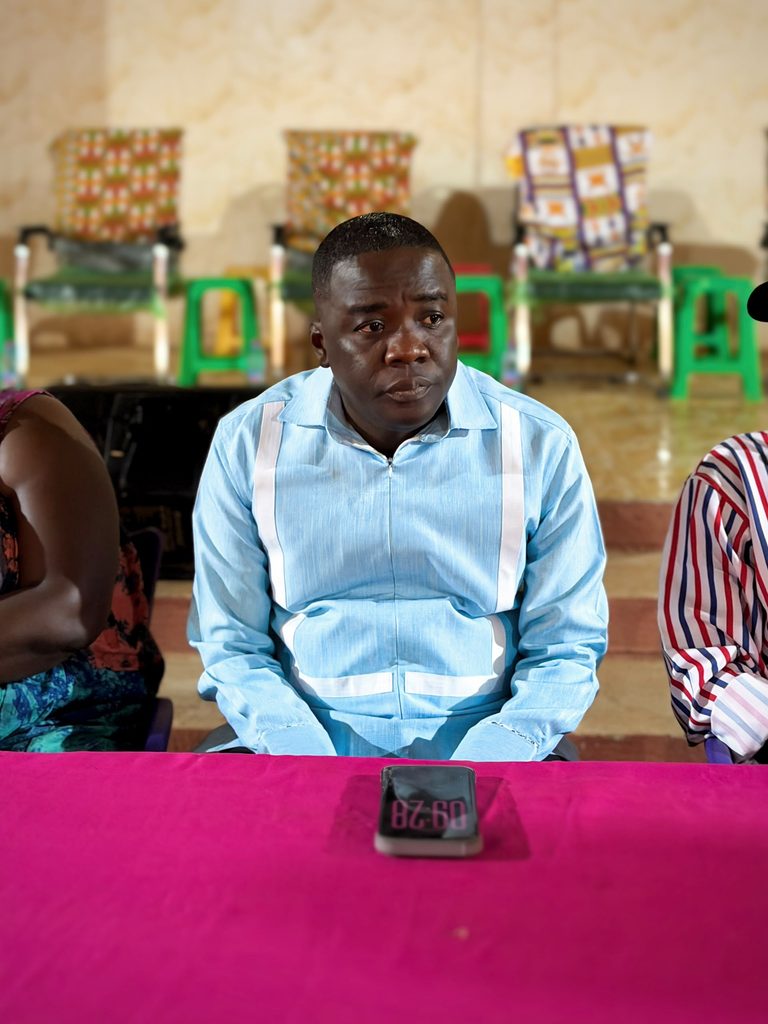
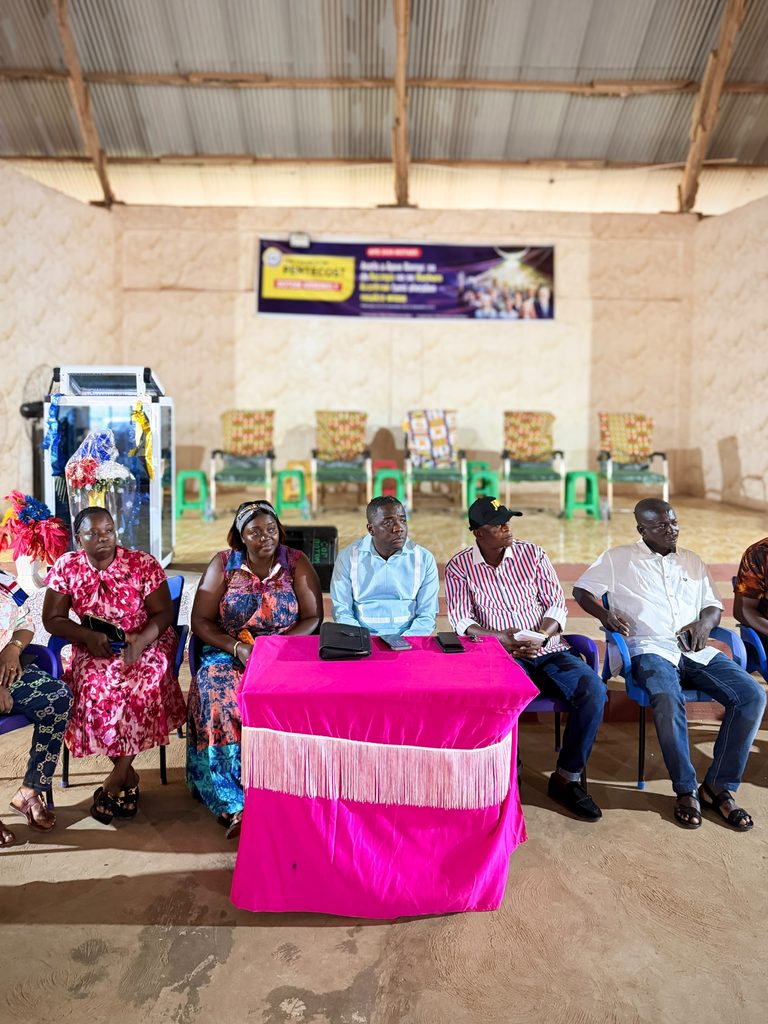
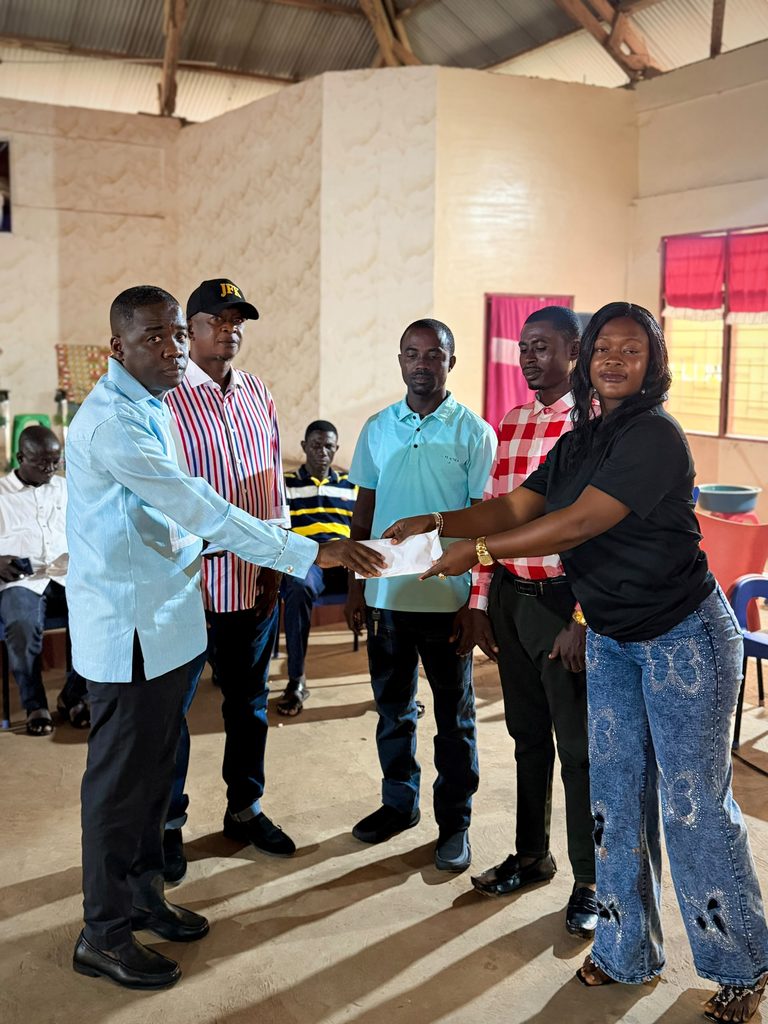
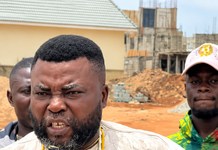
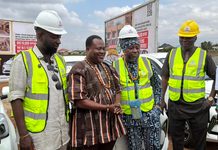
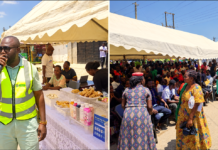
Following engagements with Assembly Members, traditional and community leaders and residents, Hon. Poku-Adusei has released GHS 30,000, with GHS 10,000 each going to Dotom, Koniyaw and Kokotro, to purchase fuel and enable the road works to continue.
It is an intervention aimed at solving an immediate problem: getting the machine back onto the road and restoring access for residents.
But behind the GHS 30,000 is a much bigger conversation about the future of rural roads and the sustainability of DRIP.
THE DRIP DILEMMA: MACHINES ARE AVAILABLE, BUT WHAT FUELS THEM?
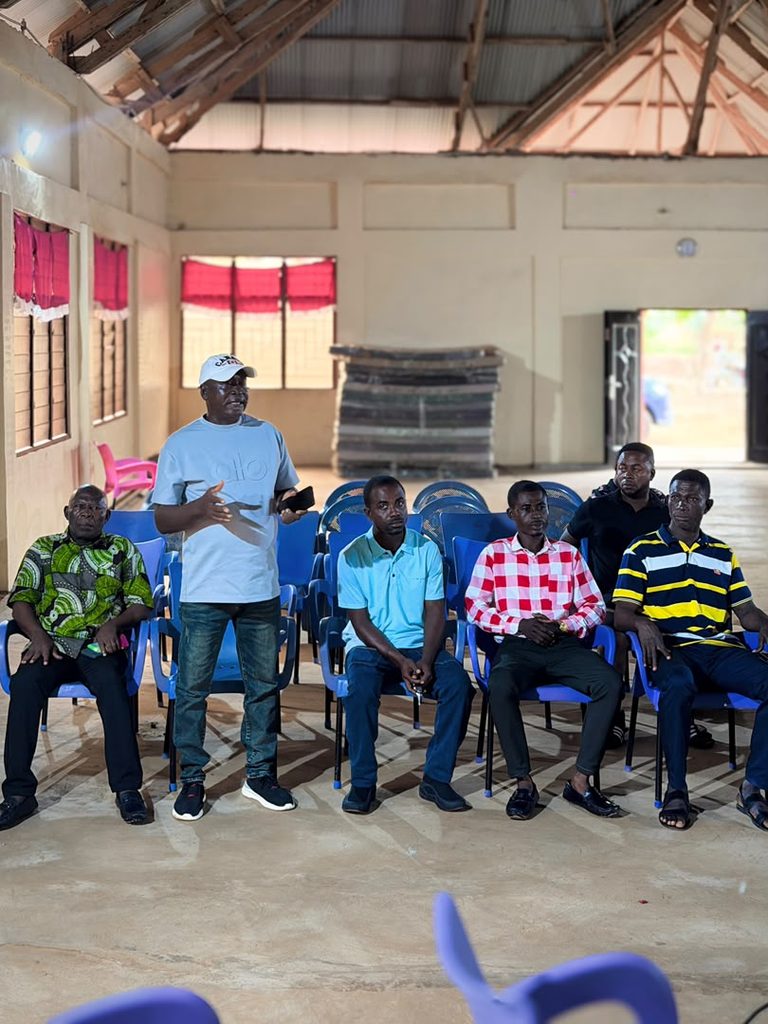
Addressing residents, Hon. Poku-Adusei pointed to what he described as a fundamental change in the financing of DRIP operations.
He recalled that the NPP government introduced DRIP as a major intervention to give Assemblies the machinery needed to tackle poor road networks within their jurisdictions, with dedicated funding arrangements to support the fuelling of the equipment.
According to him, under the current NDC administration, that dedicated central funding for fuelling DRIP machines is no longer available.
Assemblies, he said, are consequently being compelled to rely on their limited Internally Generated Funds or contributions from beneficiary communities to keep the machines operating.
The result, in his view, is a difficult contradiction.
Communities that were expected to benefit from government-provided road improvement equipment are now having to find money to keep those machines running.
And for rural communities with limited financial capacity, even a machine sitting in the community cannot guarantee that road works will continue.
That is the situation he says has confronted Dotom, Koniyaw and Kokotro.
“It is unfortunate therefore,” the MP noted, “that a road project which I single-handedly financed to the tune of GHS 160,000 before DRIP machines even arrived, cannot be completed today even with the availability of DRIP machines, without the financial support of the very communities it is meant to serve.”
GHS 30,000 IS THE RESCUE. PERMANENT CONSTRUCTION IS THE GOAL.
Hon. Poku-Adusei is clear that the latest financial support is not being presented as the final solution.
The GHS 30,000 is intended to get the reshaping exercise moving again and provide immediate relief to residents.
The bigger objective is to see the road properly constructed and tarred.
The MP disclosed that efforts are being intensified to get B. Beniako, the contractor whose contract for the road was awarded as far back as 2019, to return to site and complete the project.
For him, reshaping the road every few years cannot replace the permanent construction of the road.
He therefore pledged to continue pushing for the completion of three critical road networks in the Bekwai Constituency:
- Dotom-Koniyaw-Kokotro
- Kensere-Biribiwomanmu-Pampaso
- Anwiankwanta-Poano-Sarfokrom
These roads, he argues, are not merely infrastructure projects. They are economic lifelines.
They connect farmers to markets, enable traders to move goods, improve access to healthcare and education, and determine how easily communities can participate in the wider economic life of the constituency.
A COMMITMENT THAT GOES BEYOND ONE ROAD
The Dotom-Koniyaw-Kokotro corridor has become particularly significant in Hon. Poku-Adusei’s interventions.
Beyond the GHS 160,000 road intervention in 2024 and the latest GHS 30,000 support, his other interventions cited in the area include GHS 10,000 towards electricity expansion at Koniyaw, a borehole at Asokore, the Dotom-Kokotro bridge, and fuel support for road works on the Kensere-Biribiwomanmu-Pampaso stretch.
His position is that development interventions should respond to the immediate needs of constituents while creating the conditions for longer-term development.
“I am not doing politics. I will continue to help my constituents to develop,” he reiterated.
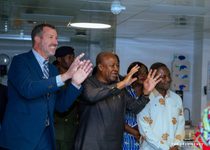
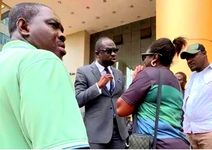
Assembly Members led by Mr. Boat, Hon. Mavis and Hon. Ken Oppong Kyekyeku expressed appreciation to the MP for responding swiftly to the situation, even without a formal invitation.
They described the intervention as a lifeline for the affected communities.
FROM EMERGENCY INTERVENTION TO PERMANENT SOLUTION
The story of the Dotom-Koniyaw-Kokotro road is therefore no longer simply about a bad road.
It is a story that has moved from a GHS 160,000 personal intervention in 2024, prompted by a tragic loss of life, to a GHS 30,000 intervention in 2026 aimed at keeping a DRIP machine operating.
But the latest intervention also exposes the bigger challenge: temporary reshaping can provide relief, but it cannot substitute for a properly constructed road.
For Hon. Ralph Poku-Adusei, the immediate task is to put fuel in the machine and get the road works moving again.
The larger task is to get the contractor back to site and push the project towards completion.
For the people of Dotom, Koniyaw and Kokotro, that is the outcome they ultimately want: not another temporary rescue, but a road that remains motorable long after the next intervention.
And that is where the journey from GHS 160,000 to GHS 30,000 ultimately points: from responding to an emergency to pursuing a permanent solution for communities that have waited long enough.