




















‘Displacement, loss of livelihoods and destruction of nature and agricultural areas are consequences of climate change that ordinary Ghanaians have to deal with in their daily lives. There is coastal erosion from sea level rise, driving people away from their homes.
The rainy season used to be in June and July, now it stays dry during that time; farmers cannot plant. People don’t always know that the higher temperatures and the drought are caused by greenhouse gas emissions, but they do notice the consequences – and it is mainly the poor and vulnerable people who are affected first.’
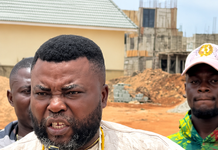
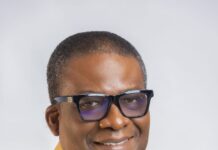
Kenneth Nana Amoateng, environmental and policy advisor at the AbibiNsroma Foundation in Ghana, is speaking.
He works on capacity building of grassroots organizations and communities and lobbies and campaigns against the government for climate justice. Like last week, when he tackled Afreximbank, which invests in fossil projects. Amoateng attended several climate conferences, including COP27 in Egypt, to make Africa’s voice heard.
More than incoherent
“Climate change is an injustice,” he says. ‘Countries that caused it, including the Netherlands, must do much more themselves to limit the crisis and emit less CO 2 from now on .’ Not that the Netherlands is doing nothing, he agrees.
Minister Jetten is investing 28 billion euros in reducing greenhouse gas emissions in the Netherlands and the Netherlands is also investing abroad through development cooperation and through the combination of aid and trade.
But at the same time, the Netherlands still supports the exploitation of fossil fuels abroad through export credit insurance, which is contrary to the Paris climate agreement, says Amoateng.
‘This is measuring with double standards: on the one hand, the Netherlands strives for fewer emissions and spends money on this, but on the other hand it continues to subsidize fossil fuels abroad. That is not only incoherent, it is also unjust and dishonest.’
During the climate summit in Glasgow, the Netherlands already promised to discontinue export credit insurance that companies offer insurance if they invest abroad in the exploitation of oil, coal or gas, or the construction of infrastructure for the extraction thereof.
Despite these good intentions, the government chose to make 2023 a transition year. As a result , investments worth € 4 billion may still be insured this year .
This makes it possible, for example, to build a floating oil platform off the coast of Brazil by the Dutch maritime company SBM Offshore – that platform will continue to drill oil for another thirty years.
The Netherlands also protects fossil investments through bilateral investment treaties (see the end of this article).
‘The Dutch government’, says Amoateng, ‘must immediately end all new international government financing of oil and gas projects. Leave the oil in the ground.’
He is not only concerned with subsidies for investments by the fossil industry abroad, the Netherlands must also do more ‘at home’ to combat the cause of climate change, he believes: by abolishing subsidies on fossil fuels and making the economy more sustainable .
No access to money
In addition, the money that the Netherlands invests in countries in the Global South does not always go to the right things, he says. Ghana needs a lot of money to meet its own target of CO2 reduction, says Amoateng.
Think of investments in solar panels and wind turbines. ‘Ghana has enormous potential to benefit from renewable energy, but investments are needed to do so.’ Ghana is partially successful in finding financing for this mitigation, through development banks or the World Bank.
Kenneth Nana Amoateng
But there is a lack of sufficient money for adaptation and ‘damage and loss’, says Amoateng, which was also the main point African countries made at the climate summit in Egypt.
Adaptation is about preventing damage from climate change, for example through coastal reinforcement. Damage and loss is about reparations for damage that has already been done and can no longer be repaired.
Even if there are funds, that money does not always reach the people who need it. ‘Communities,’ he says, ‘have been damaged by climate change or need help to adapt to its effects, but it is proving very difficult for the poor and vulnerable people in particular to access the funds.’
Funding often goes to large government projects, which the population is not waiting for. Grassroots organizations lack the capacity to make applications; there are administrative restrictions that prevent smaller organizations from accessing the resources, or it is not known what funds are available. ‘Capacity building is needed to get funding to local community organizations in Ghana.’
Zero growth
Niels Hazekamp, policy officer at the environmental and human rights organization Both ENDS, also finds it incoherent that the Netherlands is asking developing countries to emit less CO 2 on the one hand and on the other hand continuing as before, and far too little to reduce greenhouse gas emissions.
‘Dutch climate diplomats’, he says, ‘are trying to convince other countries to emit less greenhouse gases, but they don’t have a simple message, because the Netherlands itself is not doing well in that area.
It would help enormously in these international climate negotiations if rich countries in their own country simply honor the agreements they made in the Paris Agreement.
The Netherlands is still drilling for oil and gas in the North Sea and does not want to take any measures that make life less easy for citizens.’
The Netherlands is doing poorly on climate compared to other countries: it is almost at the top of the yardstick of EU countries when it comes to greenhouse gas emissions – but four countries are doing worse. Moreover, a large part of the emissions caused by the Netherlands are not emitted in the Netherlands itself, but abroad, because we import a lot of stuff that we consume here.
During its production, CO 2 is emitted abroad , which should actually be included in the Dutch emissions. Because the so-called emissions created by consumption are so high for the Netherlands, the Netherlands scores poorly in the spillover ranking of the Sustainable Development Report.
This ranking is a measure of the positive or negative effect that countries have on sustainable development in other countries.
‘We should seriously think about changing our economy towards zero growth,’ says Hazekamp. ‘The fixation on economic growth is the system’s fault, but let’s at least harvest the low-hanging fruit in the short term and stop the thirty billion in fossil subsidies that the Netherlands gives to fossil companies.
We are campaigning against this, just like Extinction Rebellion, and we must also stop the four billion euros that the Netherlands still wants to give to export credit insurance in this transition year.’
Reducing the climate impact is also a point that Partos, the umbrella organization for development cooperation, raised with sixteen organizations in response to the international climate strategy published by the government last November.
It recognizes the seriousness of the climate crisis and is full of buzzing sentences about the great ambitions of the Netherlands to contribute to the fight against climate change, but it lacks deadlines and decisive, clear objectives, the organizations subtly noted in their response.
They argue for clear targets for reducing the Dutch international climate impact, including targets for reducing consumption-created emissions and abolishing subsidies on fossil fuels.
The government’s international climate strategy also says little about climate damage, even though it directly affects the lives of people in the South. After publication of the international climate strategy, a lot has happened in that area: Minister Jetten argued for the establishment of a climate damage fund , which was decided during the climate summit in Egypt.
Resources for this should not come from development cooperation, the organizations argue in their response, but from taxes on the use of fossil fuels, for example through a flight or meat tax.
Coherence debate
On 6 July, the House of Representatives will talk about policy coherence . It is the first time that various ministers, including those from Finance and Economic Affairs and Climate, have come to the House to account for the coherence of policy, says Anna Hengeveld, policy advisor at ActionAid.
It is about how to prevent the Dutch commitment to development cooperation from being undermined by Dutch policy in other areas, for example by combating tax avoidance and unequal distribution of vaccines and health care, but also by reducing the Dutch ecological footprint.
In November, Minister Schreinemacher published a revised version of the policy coherence action plan, in which reducing the Dutch footprint is the first priority. In May, the annual report came out with results in this area.