










Ghana’s Fourth Republic, since its inauguration in 1992, stands as a testament to the nation’s enduring commitment to democratic governance.
It has been marked by relatively transparent elections and, on each occasion, the peaceful transfer of power between the two dominant political traditions—the NPP and the NDC.
Where disputes have arisen, the Supreme Court has intervened with authority and finality, and its judgements have been accepted in the spirit of national unity.
Beyond the formal institutions of state, Ghana has cultivated a deeply rooted culture of dialogue—seen in the orderly, if sometimes spirited, exchanges within Parliament and across the media landscape.
Supporting this democratic fabric is a resilient network of civil society and non-partisan institutions, including the National and Regional Houses of Chiefs and the Peace Council, whose timely interventions have often helped to calm tensions and preserve stability.
Not least, Ghana’s military, mindful of its history, has in this Fourth Republic largely remained within the bounds of constitutional duty, demonstrating a restraint that distinguishes the nation within the sub-region.
This stability, however, did not emerge by chance. It represents a profound departure from the turbulence that defined Ghana’s earlier political journey.
The years preceding and immediately following independence, and the period between 1966 and 1981, were marked by uncertainty and upheaval—a near civil war, the imposition of a one-party state, cycles of military coups, and interrupted attempts at democratic rule.
It was a time when competing visions of Ghana’sfuture clashed; when tradition and modernity wrestled for authority; and when the very soul and direction of the nation were being contested.
It was in this crucible that men and women of uncommon courage and conviction emerged individuals who stood firm in the face of uncertainty and helped shape the course of Ghana’s history.
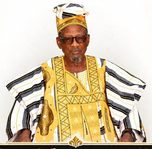
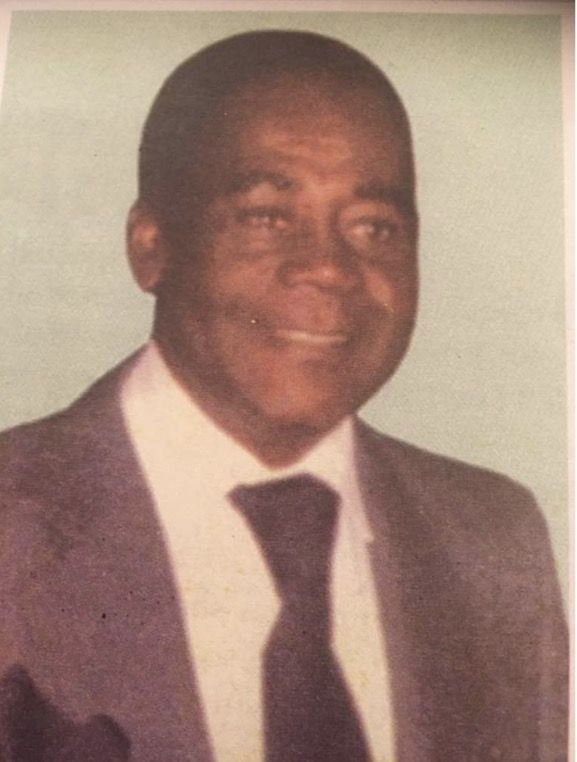
Among them was Mr Sam Boateng
Sam Boateng was not merely a participant in Ghana’s political story; he was, in many respects, a witness to its most defining moments and a contributor to its unfolding chapters.
His life journey, spanning the final years of colonial rule through the complexities of post independence governance and into the dawn of the Fourth Republic, reflects the intricate interplay of nationalism, political ideology, and institutional evolution that has shaped modern Ghana.
Early life and political awakening
Born in 1924, Sam Boateng came of age at a time when the Gold Coast was awakening to the call of self-determination. Like many of his generation, he was drawn into the nationalist movement through the Convention People’s Party (CPP), led by Osagyefo Dr Kwame Nkrumah.
As an active member of the Ashanti Youth Association, he contributed to the growing momentum for independence.
Yet, in 1954, guided by conviction and a deep sense of justice, he made a defining choice. Alongside others, he broke away from the CPP, driven by concerns over representation, fairness, and the economic welfare of Asante farmers. This moment of principled dissent would chart the course of his political life.
The National Liberation Movement
From this break emerged the National Liberation Movement (NLM), founded in Kumasi underthe moral authority of the Asantehene, Otumfuo Osei Agyeman Prempeh II. The Asanteheneentrusted leadership to Okyeame Baffuor Akoto, his Chief Linguist, as the principal founder.
Alongside figures such as Barima Osei Asibey, Frank Tawiah, Kwaku Danso, and othercommitted patriots, Sam Boateng stood among its early organisers, helping to build amovement that sought to protect regional autonomy, uphold traditional institutions, andadvocate for a federal system of governance.
As a leading figure among the nkwankwaa—the “youngmen” who declared “Mate Me Ho” (“Ihave separated myself”)—he became a voice of a movement grounded in identity, dignity, andself-determination.
Voice through the media
Understanding the power of ideas, Sam Boateng also took the struggle into the realm of media.
He was a co-founder of the Samalex News Syndicate, which later contributed to the development of Ghana’s media landscape.
Sam Boateng and Alex Osei were the founders of the research outlet of The Liberator, with Sam serving as editor.
Through this platform, alongside contributions to The Pioneer, he helped craft a counter-narrative to the dominant political discourse of the time, articulating the aspirations of his people and advancing the cause of federalism and self-determination.
Service in the Second Republic
With the advent of the Second Republic in 1969, Sam Boateng once again answered the call to service. As the first Ashanti Regional Secretary of the Progress Party under Dr. Kofi Abrefa Busia, he played a central role in organising, mobilising, and strengthening the party’s presence in the region. His work during this period reflected both loyalty to principle and dedication to national progress.
Leadership beyond politics
Beyond the political arena, he distinguished himself in professional life as Executive Secretaryof the Civil Engineering and Building Contractors Association of Ghana (CEBCAG).
Under his leadership, CEBCAG became a powerful and highly influential professional bodythat effectively regulated access to government contracts in Ghana.
Association with CEBCAGbecame a critical requirement for companies seeking to undertake public sector projects.
Through this role, Sam Boateng wielded considerable influence within Ghana’s business andinfrastructure sectors, shaping participation in major national development initiatives andserving as a key bridge between the state and private enterprise.
A contested chapter
His service as Special Aide to General Ignatius Kutu Acheampong marked a complex and, attimes, controversial chapter in his life. As part of a small but influential circle of advisers, hewas entrusted with overseeing the “satellite organisations” established to mobilise grassrootssupport for the regime and to promote the Union Government (UNIGOV) concept.
These organisations included:
• The Patriots
• The Organisers Council
• The Ghana Youngsters Club
• The Friends
• The African Youth Command
Under his direction, these groups became central to the UNIGOV campaign—mobilising public opinion, organising demonstrations, and countering opposition from professional bodies, students, and civil society.
Their activities played a prominent role in shaping the political climate of the period, particularly during the controversial 1978 referendum.
Collapse and aftermath
Following the palace coup of 1978 that removed General Acheampong, the new regime swiftlydismantled these structures.
The satellite organisations were banned, and Sam Boateng, alongwith other key figures such as S.O. Lamptey, Kwesi Ghapson, S.K. Danso, and Ben Kuma,faced investigations and the freezing of personal and corporate assets. His legacy becameclosely intertwined with both the rise and the fall of that era.
Return to Nation-Building:
The 1992 Constitution
In a moment of historic significance, Sam Boateng returned to national service as a member ofthe Consultative Assembly that drafted the 1992 Constitution of Ghana.
The Assembly, inaugurated on 25 August 1991, comprised 258 members drawn from acrossGhanaian society:
• 117 members elected by District, Municipal, and Metropolitan Assemblies
• 121 members representing identifiable bodies, including professional associations,
religious organisations, and other civil society groups
• 22 members appointed by the PNDC
The Ghana Bar Association and the National Union of Ghana Students declined participation, leaving their allocated seats unoccupied.
Within this distinguished body, Sam Boateng contributed to deliberations that reviewed over a thousand public submissions and shaped the constitutional framework that would give birth to the Fourth Republic.
The Constitution was approved by referendum in April 1992 and came into force in January 1993.
In this role, his journey came full circle—from a young nationalist challenging central authority to a statesman helping to craft a democratic constitutional order.
Final reflections
On 25 April 2009, Sam Boateng departed this world, leaving behind a legacy that is as complexas it is significant.
His life speaks to the resilience required to navigate changing politicallandscapes, the courage to stand by one’s convictions, and the willingness to serve—even inimperfect and often difficult circumstances.
Today, as we reflect on his life, we are reminded that the story of Ghana is not written in simplelines, but in the layered experiences of individuals like Sam Boateng, men and women who, intheir own ways, helped shape the destiny of this nation.
May his contributions never be forgotten. May his legacy continue to inspire. And may his soul continue to rest in perfect peace.