





















Writer: Dennis Appiah Larbi Esq.
What KFC did in Ghana on August 15th was not only legally reckless — it was managerially incompetent. I will leave the management analysis to those in corporate circles. Lets focus on the legal liability exposure KFC decided to create for itself.
Let me start with the honest truth: Ghana, like many jurisdictions, has not comprehensively codified most of its civil liability laws. And when you layer on top of that our cultural firmware — “3ny3 hwee” (it is nothing), “leave it to God,” and the general allergy to accountability — the reality is that KFC will probably walk away from this without consequence. That is the painful truth. But it does not mean they are not legally exposed. They are.
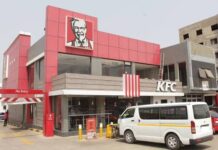
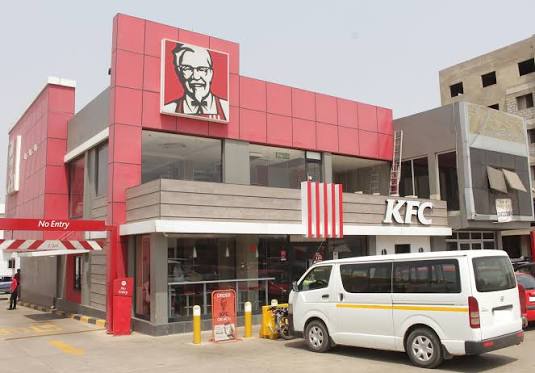
To celebrate their 15th anniversary, KFC Ghana offered a GH¢15 meal pack (roughly $1.30) — at all 43 branches nationwide or so, I am not too sure, from 9am to 5pm on August 15th. They advertised it heavily for weeks. Queues formed from 7am, I am told killers at Ashaiman ( not my Kasoa people) went at dawn. At some branches, the crowd shattered the glass entrance door. Security officers responded by physically assaulting customers. Police had to intervene. Videos are everywhere.
KFC has not released a single statement. They are active on social media — celebrating their “win.”
Now, let us be clear on one thing. When you decide to offer GH¢15 chicken to a country in the middle of a severe cost-of-living crisis, at 43 branches simultaneously, for one day only — you did not just run a promotion. You created a foreseeable crowd event. The law has a word for that: you knew, or ought to have known. That standard is the backbone of negligence in common law.
Ghana is a common law jurisdiction. Our courts apply, adopt, and adapt the common law principles developed through centuries.
- Occupiers’ Liability and the Duty of Care
Under the common law principles applicable in Ghana — rooted in landmark cases like Donoghue v Stevenson [1932] and the occupiers’ liability framework developed through Indermaur v Dames (1866) and subsequently codified in the UK’s Occupiers’ Liability Acts (which inform our courts’ reasoning) — KFC owed every customer who walked through or attempted to walk through that door a legal duty of care. Customers are invitees. Invitees attract the highest duty of care from an occupier.
What does that duty require? Reasonable steps to ensure the premises are safe for the purpose for which people were invited. You cannot invite tens of thousands of people to a promotion, fail to put in place crowd management structures, barriers, ticketing systems, staggered entry, or adequate security — and then claim you are not responsible when chaos follows. The duty is breached. The breach caused the harm. That is negligence, plainly put.
- The Factories, Offices and Shops Act, 1970 (Act 328)
We do have domestic statute law that bites here. Under Act 328, an occupier of a commercial premises has specific legal responsibilities for the safety of those within and entering the premises. Section 9 requires that every place of work be maintained in a safe condition. The Act also imposes vicarious liability — where an act or default is committed by an agent, servant or employee in the course of their duties, the occupier bears the same liability as if the act were their own.
This matters enormously when it comes to the security officers who are on video assaulting customers. KFC cannot distance itself from its guards’ conduct. Under respondeat superior — the doctrine of vicarious liability — an employer is liable for the wrongful acts of an employee committed in the course and scope of their employment. Those guards were employed to manage the crowd. Beating people is a direct extension of that role, however wrongly executed. KFC owns that. I even saw a video of the Sunyani staff spraying water on customers, jack ad3n?
- The Tort of Battery
A battery in law is the intentional application of unlawful force to another person without consent. No legal gymnastics required here. If you were beaten by a KFC security guard on August 15th, that is battery. And under vicarious liability, KFC is the defendant. No 3na 3na biaaa.
- The Consumer Protection Act, 2012 (Act 851)
Ghana’s Consumer Protection Act obliges sellers and service providers to ensure that the conditions under which goods and services are provided do not endanger the health and safety of consumers. Running a promotion of this scale, at this price point, in a cost-of-living environment like Ghana’s, without adequate safety planning is not just reckless — it is a breach of the legal obligation to provide services in conditions that are safe. The Ghana Standards Authority and the Food and Drugs Authority both have regulatory reach that extends to how services are delivered to consumers.
- State and Local Government Action
Beyond civil suits, the Metropolitan, Municipal and District Assemblies (MMDAs) with jurisdiction over each of those branches have regulatory authority over commercial premises. They can suspend operating licences. They can mandate compliance with public safety standards as a condition of continued operation. It simply requires political will.
THE “BLAME THE POOR” ARGUMENT
I know the typical reflex. We are already blaming the customers — blaming poverty, blaming the “desperation” of those who showed up. And look, I am not going to pretend that economic hardship is not part of the story. The sight of thousands of Ghanaians queuing from dawn for a GH¢15 meal is itself a sobering commentary on where household budgets are right now.
But here is the problem with that framing: it lets the powerful off the hook by blaming the powerless. KFC knew what GH¢15 would do in this economy. They planned the marketing. They ran the hype. They watched the queue videos go viral and said nothing about safety.
Greater responsibility sits with the party that had the resources, the planning capacity, and the legal obligation to anticipate and manage the risk. That is not the customer who woke up at dawn hoping for a decent meal. That is KFC.
But you know what, KFC knows exactly what they are doing. They are careful when they run these promotions in markets where accountability is real. In the United States or United Kingdom, after what happened at Ashaiman and other places, the lawsuits would have been filed by Monday morning.
We are talking personal injury claims, premises liability suits, battery claims, regulatory investigations — billions in potential exposure, and class action lawyers circling the building before the glass was even swept up.
But in Ghana? They are not worried. And that is not an accident. They calculate their risk by jurisdiction. They know that our civil liability culture is weak, our courts are slow, and our politicians will not touch this because there is no political point to score. No opposing party is embarrassed by a KFC crowd crush. So no one picks it up.
Let us have some honesty about ourselves. A few months ago, our own government organised a military recruitment exercise at El-Wak Stadium in Accra. Six young Ghanaians died in a stampede. Twenty-two were injured.
The story became a global embarrassment — covered by the BBC, DW, AP, and others. A global embarrassment. And yet: no accountability, no public inquiry with teeth, no lawsuits, no compensation framework that we know of, and no resignations.
If we cannot hold our own government accountable when six of our people die, why would KFC lose sleep?
And just weeks ago, in California, a court held Meta and YouTube liable for social media addiction — platforms said, “users chose to use us.” The court said, that is not enough. You had a duty. You knew what your product did to people. You were responsible. There are no specific statutes on social media addiction. But the system found a way to make them pay. Billions.
We do not need to wait for perfect legislation to demand accountability. We have enough. We just need the culture and the will to use it.
Y’AKYI GU H)
KFC should issue a full public apology — not a PR release, an apology. They should voluntarily establish a compensation fund for anyone injured on August 15th.
The relevant MMDAs should conduct immediate safety audits of all KFC branches and hold operating licences to account. Parliament’s Trade Committee under Hon. Hottordze and the ranking Hon. Baafi has the investigatory power to summon KFC Ghana management and demand answers. They should use it.
Will any of this happen? Watch your MPs. Watch your government officials. None of them will touch this. Not because they cannot — because there is no political currency in it.
That is not KFC’s problem. That is ours.
And oh, so far not a single video on Kasoa. T for thanks.