























Author: Peter Martey Agbeko
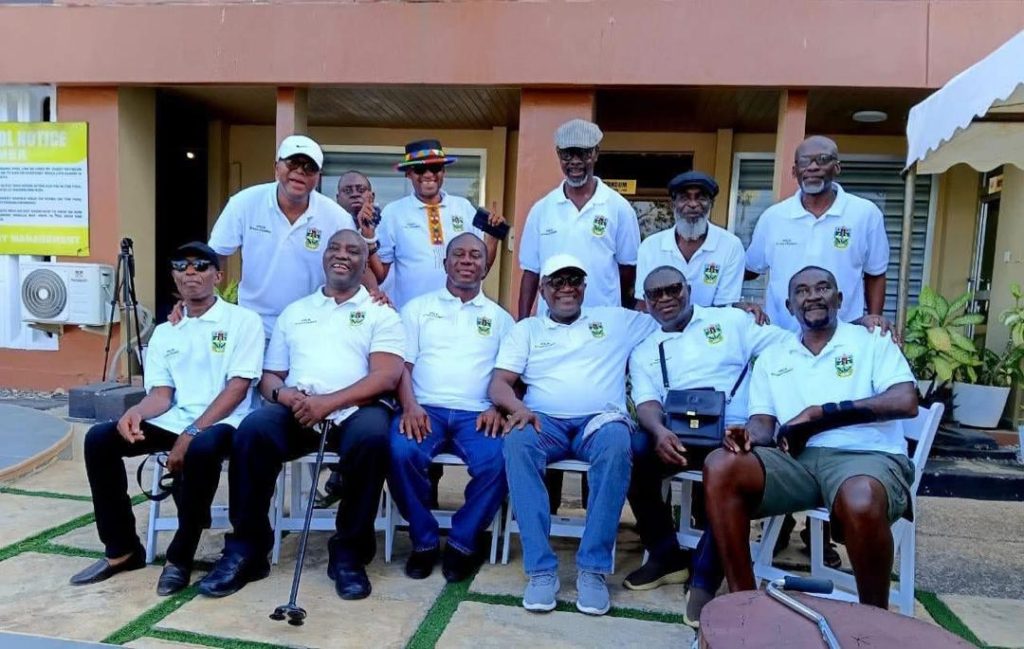
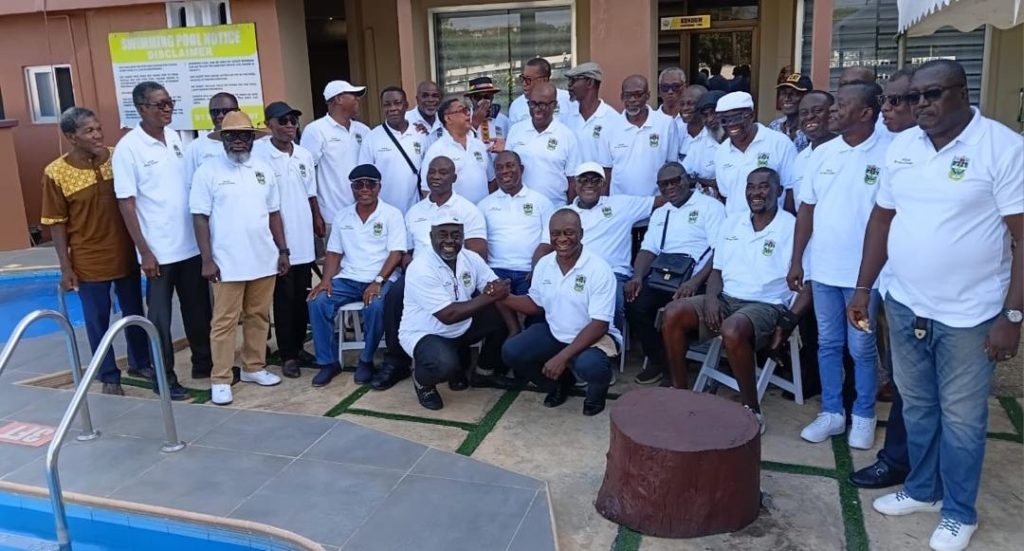
It was meant to be a day of laughter, nostalgia, and brotherhood — the golden jubilee celebration of the 1980 Year Group of St.Augustine’s College, fifty long years since a bunch of eager boys in khaki shorts first set foot on the hallowed grounds of “Augusco.”
We’d already had our triumphant moment a few weeks earlier — returning to Cape Coast to present fifty shiny galvanised double beds and a CCTV facility to our alma mater. That weekend was beautiful, full of emotion and shared pride. So, when the Accra get-together at the SSNIT Guest House came around on November 1, we all expected a relaxed, laughter-filled evening.
We got that… and a little divine drama on the side.
A Prayerful Beginning — Almost
Before the programme kicked off, our Master of Ceremonies — a man with an enviable sense of humour and the organisational instincts of a juggler — decided to start things right: with prayer.
He scanned the room for a willing victim — sorry, volunteer. His eyes fell upon one of our mates, known for his quick wit and even quicker ability to avoid duties he wasn’t comfortable with. “Brother, would you please lead us in prayer?”
Our friend smiled, wriggled, and escaped with the grace of a cat avoiding a bath. The MC, not easily deterred, spotted salvation in the form of a guest from the Class of ’79 — conveniently, a pastor. The man rose gladly, prayed beautifully, and all was well.
Until it wasn’t.
Because somewhere in the crowd sat another pastor — our own pastor — a proud member of the Class of ’80, who was not invited to say a word.
At the end of the event, when the MC once again called upon the visiting pastor to close the gathering in prayer, heaven itself must have gasped.
A small oversight on earth was about to unleash a spiritual tsunami on WhatsApp.
The Sunday After the Sabbath
The next morning, the group’s WhatsApp platform — usually a friendly place for sharing jokes, health tips, and old photos of ourselves with more hair and fewer worries — became the scene of a digital sermon.
Our pastor mate, clearly wounded, posted a message longer than most homilies, detailing how he had been sidelined. He even noted arrival times (he came at 1:45 p.m., the other pastor at 3:00 p.m.) — proof, apparently, that the heavens themselves had been keeping score.
He declared his disappointment, his withdrawal from future activities, and his resolve to “continue contributing only to funeral donations.” (One assumes he meant other people’s funerals.)
It was a heartfelt lament, complete with scriptural references — Psalms, Matthew, Romans — the works.
Brethren, Let Us Reply
The responses came fast and faithful.
Some brothers pleaded for forgiveness. “To err is human, to forgive is divine,” one wrote.
Another tried logic: “Any one of us could have been asked to pray — engineer, carpenter, or even you…” (That last bit had the chat room rolling with laughter.)
One poetic soul compared our occasional clashes to “trees rubbing against each other during a storm,” while another suggested that perhaps we had simply been “too aggressive over a non-issue.”
Our MC, humble as ever, took full responsibility: “It’s my fault. Please forgive me. To forgive, they say, is divine.”
Even in the chaos, there was a kind of beauty — a brotherhood trying desperately to hold itself together through humour, humility, and grace.
The Agbeko Intervention
Then, yours truly — a journalist and public relations man who believes in the healing power of clear communication — felt compelled to step in.
I gently reminded our good pastor that while his feelings were valid, airing such grievances publicly, without first engaging the event organisers, with time stamps and all, seemed a little… disproportionate. A private chat first might have healed the wound faster than a public outcry.
Apparently, not everyone appreciated my tone.
One mate described my message as “confrontational.” Another, off the platform, hinted that I’d “ridiculed” the pastor (such is life — opinions differ). Several others, however, privately called to commend my “forthrightness.” It seems even in retirement, journalism keeps you in the crossfire.
To my colleague who saw my piece as confrontational, my question to him is whether there’s a new meaning to the word that I’m not apprised of. I checked my dictionary and asked AI, but nothing came up to support the use of the word confrontational in the context of what is being discussed.
And to the gentleman who suggested that I had ridiculed the pastor, I disagree — not on this occasion. Those who know me will tell you that if I embark on that kind of mission, I pull no punches; I go for the jugular. I work in a field that requires such tactics when the need arises.
A Private Parable
The pastor later messaged me privately. It was a fascinating theological discourse. He cited Achan, Paul rebuking Peter, and even President Trump — all in one breath. He made it clear that his actions were divinely led and not for human applause.
He also assured me that “there’s peace,” which, in WhatsApp diplomacy, means “I’m still upset, but I’ll let God handle it.”
When Prayer Becomes the Problem
And so, dear reader, here we are — pondering a simple yet profound question:
Why should prayer, of all things, divide us when its very purpose is to unite us?
We had gathered to celebrate 50 years of friendship, shared memories, and mutual respect — the bonds forged under the motto Omnia Vincit Labor (“Perseverance Conquers All”). Yet, in one ironic twist, a moment of prayer — meant to bless and bind us — almost broke us apart.
Perhaps the lesson is that even in holy matters, pride lurks. Perhaps the Lord sometimes allows such minor storms to remind us that unity doesn’t just happen — it must be worked at, forgiven into existence.
In the end, no one died, no plates were broken, and no prayers were wasted. Just a few cases of wounded pride, a lot of brotherly love, and a good story for our grandchildren.
Because, as one wise mate said, “We are a family under God, indivisible — even when we forget who gets to pray first.”
Next reunion suggestion: script the prayers, adopt a structured programme format, and maybe — just maybe — let’s pray silently