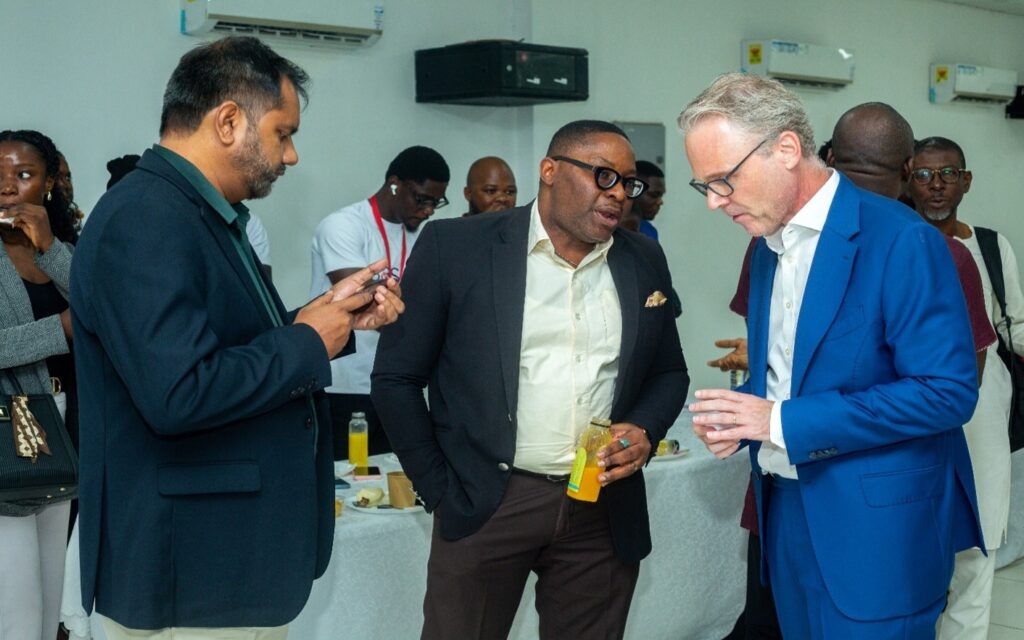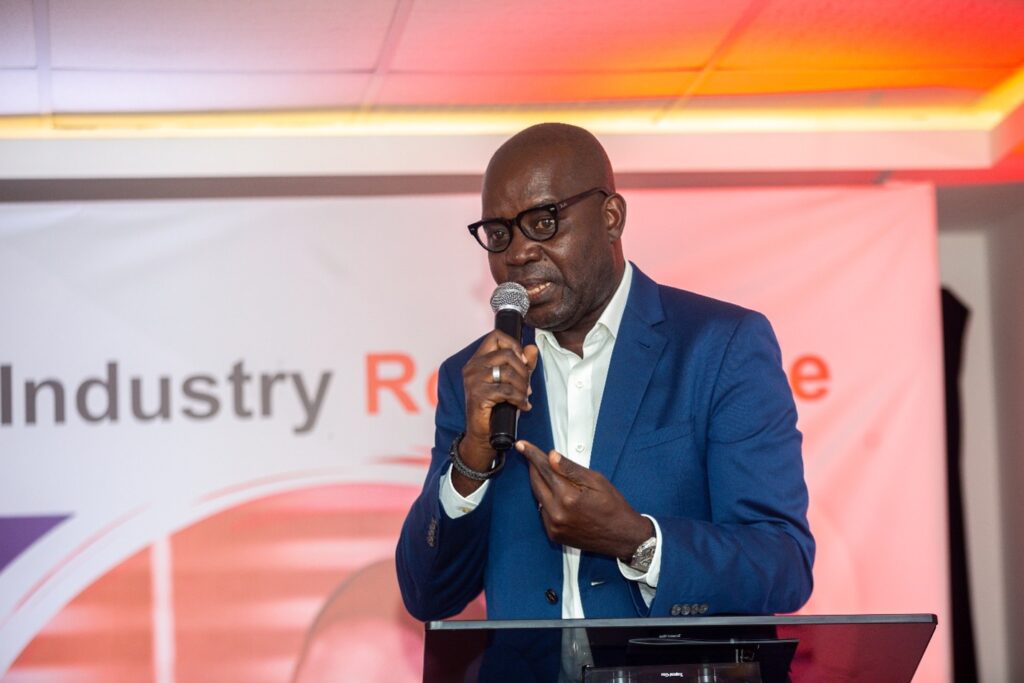


















The Business Outsourcing Services Association Ghana (BOSAG) successfully convened the third High-Level Government–Industry Roundtable on Ghana’s Outsourcing Sector, hosted by eSAL on Tuesday 25th August 2026, under the theme: ‘Scaling Ghana’s Outsourcing Sector through the 24-Hour Economy: Infrastructure, Talent and Market Access for 100,000 Jobs’.
The Roundtable brought together government officials, industry leaders, development partners, investors, and ecosystem stakeholders to examine the role of outsourcing and digital services in advancing Ghana’s 24-Hour Economy and Accelerated Export Development Programme (24H+), while supporting BOSAG’s ambition of facilitating 100,000 jobs through the sector.
A central feature of the engagement was the participation of Mr. Augustus Goosie Tanoh, Presidential Advisor to the 24-Hour Economy Authority, who served as Guest Speaker and led an Executive Dialogue on building Ghana’s next generation of outsourcing hubs.
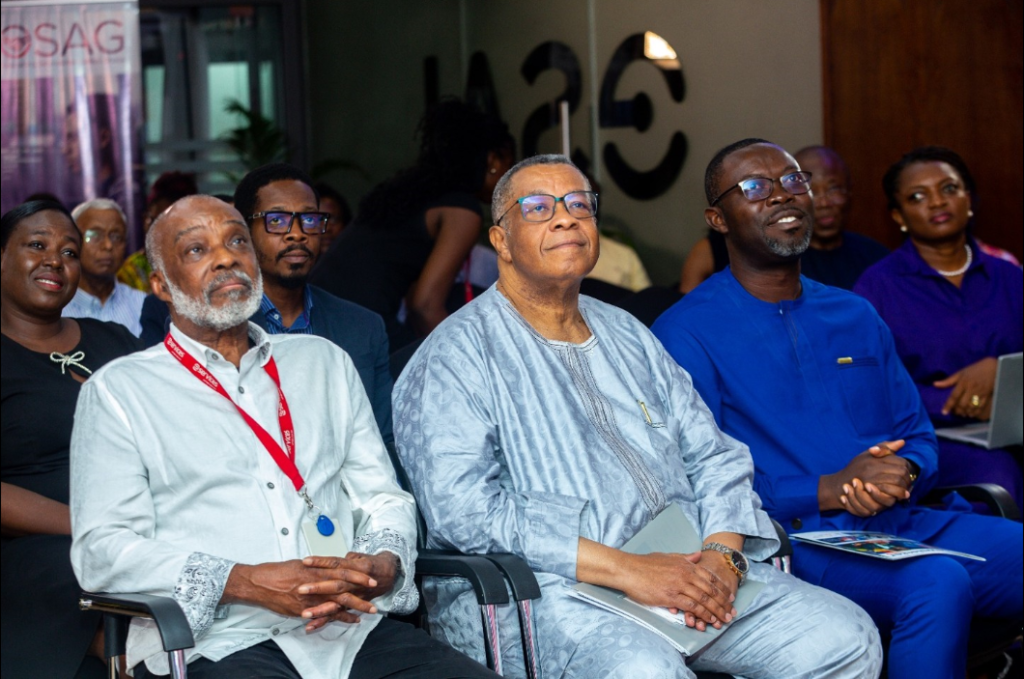
Setting the tone for the Roundtable, Mr. Stephen N. Boadi, Digital Marketing and Branding Consultant for BOSAG, noted that the Association initiated its quarterly Executive Roundtable series to create a platform where government, industry, and ecosystem stakeholders can engage on the practical actions required to accelerate the growth of Ghana’s outsourcing sector.
Reflecting on the progress made since BOSAG launched its five-year strategic plan, he highlighted how the Association has deliberately brought together key stakeholders, including the Minister for Communication, Digital Technology and Innovations, development partners, and industry operators, to discuss critical issues affecting the sector, including infrastructure, skills development, investment attraction, and job creation. “We believe Ghana is ready.
The challenge is that we are not always on the radar of the people and institutions whose support we need. Through these Roundtables, we want to create awareness of the impact the sector is already making and build stronger collaboration to drive its future growth.”
The Business Outsourcing Services Association Ghana (BOSAG) successfully convened the third High-Level Government–Industry Roundtable on Ghana’s Outsourcing Sector, hosted by eSAL on Tuesday 25th August 2026, under the theme: ‘Scaling Ghana’s Outsourcing Sector through the 24-Hour Economy: Infrastructure, Talent and Market Access for 100,000 Jobs’.
The Roundtable brought together government officials, industry leaders, development partners, investors, and ecosystem stakeholders to examine the role of outsourcing and digital services in advancing Ghana’s 24-Hour Economy and Accelerated Export Development Programme (24H+), while supporting BOSAG’s ambition of facilitating 100,000 jobs through the sector.
A central feature of the engagement was the participation of Mr. Augustus Goosie Tanoh, Presidential Advisor to the 24-Hour Economy Authority, who served as Guest Speaker and led an Executive Dialogue on building Ghana’s next generation of outsourcing hubs.
Setting the tone for the Roundtable, Mr. Stephen N. Boadi, Digital Marketing and Branding Consultant for BOSAG, noted that the Association initiated its quarterly Executive Roundtable series to create a platform where government, industry, and ecosystem stakeholders can engage on the practical actions required to accelerate the growth of Ghana’s outsourcing sector.
Reflecting on the progress made since BOSAG launched its five-year strategic plan, he highlighted how the Association has deliberately brought together key stakeholders, including the Minister for Communication, Digital Technology and Innovations, development partners, and industry operators, to discuss critical issues affecting the sector, including infrastructure, skills development, investment attraction, and job creation. “We believe Ghana is ready.
The challenge is that we are not always on the radar of the people and institutions whose support we need. Through these Roundtables, we want to create awareness of the impact the sector is already making and build stronger collaboration to drive its future growth.”
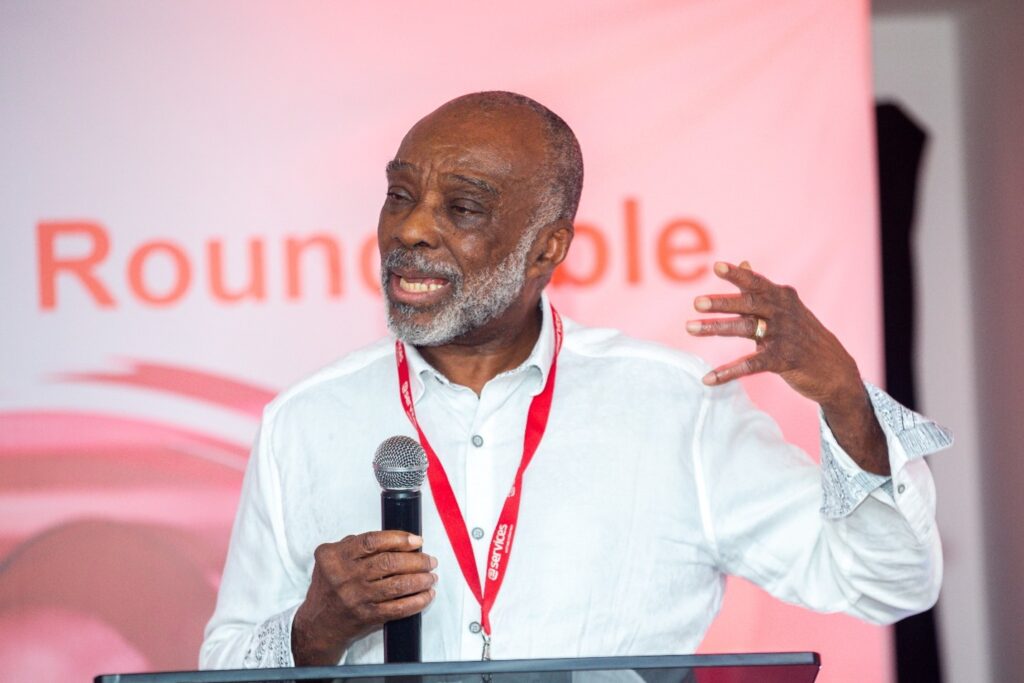
Eservices Africal Ltd (eSAL) announces expansion into Tamale
Opening the Roundtable, Mr. Kojo Hayford, Founder and Chief Executive Officer of eSAL and Board Chair of BOSAG, highlighted the transformative role of Ghana’s outsourcing industry in creating employment opportunities for young people. He announced that eSAL will establish a new delivery centre in Tamale in the fourth quarter of 2026, positioning Northern Ghana as a gateway for serving Francophone West Africa and the Sahel region.
Mr. Hayford emphasized that Ghana possesses significant untapped talent across the country and that outsourcing jobs must increasingly move beyond Accra into secondary cities where opportunities can have a broader socio-economic impact. He also underscored the growing role of Artificial Intelligence, noting that AI should be viewed as an enabler that enhances productivity while creating opportunities for workers to perform higher-value tasks requiring human judgment and empathy.
Supporting this vision, Nii Gogo, Impact Sourcing Program Head at eSAL, highlighted the company’s talent development approach, which focuses on converting raw potential into productive employment through a structured work-readiness programme.
He explained that eSAL has trained more than 3,000 young people over the years, with many entering formal employment for the first time. He noted that 55 percent of programme participants are women, while a significant proportion come from underserved communities and have previously experienced long-term unemployment.
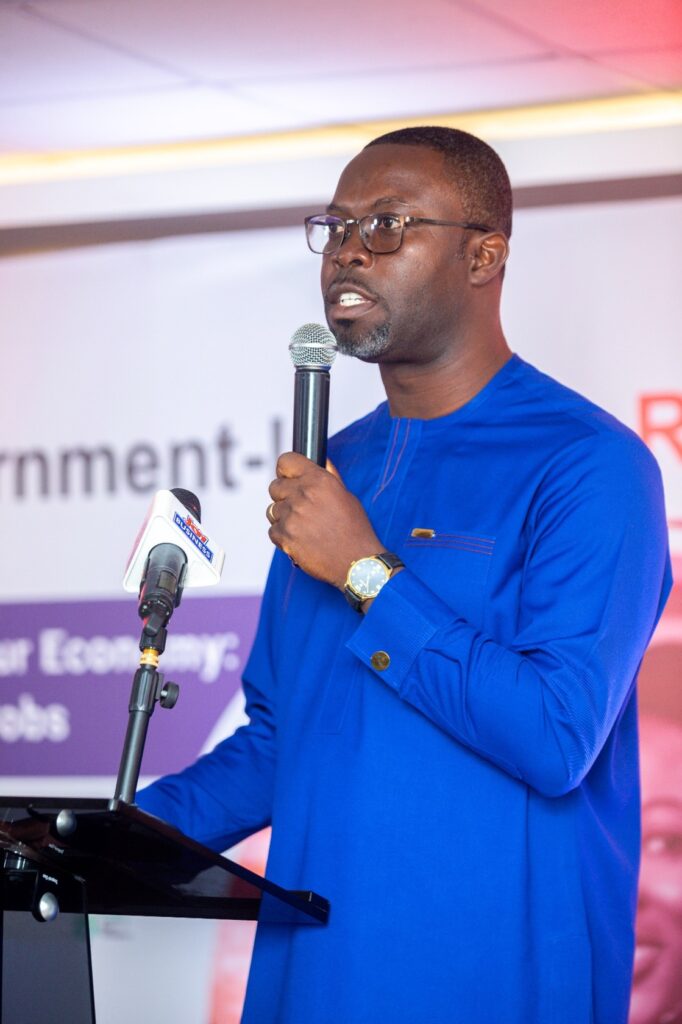
BOSAG introduces SERVE24 proposal
Presenting BOSAG’s strategic outlook, David Gowu, Chief Executive Officer of BOSAG, outlined the progress made since the Association launched its five-year strategy with a target of facilitating 100,000 jobs by 2030. He highlighted BOSAG’s recent engagements, including the inaugural Government–Industry Roundtable in Accra and the Global Business Services Executive Roundtable in London.
Mr. Gowu noted that Ghana possesses a significant and growing talent pool, with over 138,000 graduates entering the labour market annually, while the economy continues to absorb only a fraction of this number. He emphasized that the outsourcing sector represents one of the most practical pathways for converting this talent into productive employment opportunities.
Highlighting the scale of the opportunity, he noted that the global outsourcing and global business services market is valued at approximately US$1.5 trillion, yet Africa currently captures only about 2.8 percent of that market despite its youthful population and growing digital talent base.
He stressed that Ghana has all the ingredients required to compete more aggressively, including political stability, English language proficiency, strong fibre-optic connectivity, and a growing ecosystem of outsourcing operators. He further noted that Ghana is already hosting some of the world’s leading outsourcing companies, including Teleperformance and Concentrix, alongside a growing number of indigenous operators like eSAL.
Collectively, the sector has already created employment opportunities for more than 20,000 young people in Ghana, demonstrating both the viability of the industry and its potential for further expansion. A key proposal tabled during the Roundtable was the introduction of SERVE24, a dedicated services-export focus within the 24-Hour Economy framework.
BOSAG proposed SERVE24 as a mechanism to position outsourcing and digital services alongside other strategic sectors benefiting from the Government’s accelerated export development agenda. Through SERVE24, BOSAG believes Ghana can unlock significant export earnings, accelerate job creation, attract new investment, and create sustainable employment opportunities across both Accra and secondary cities.
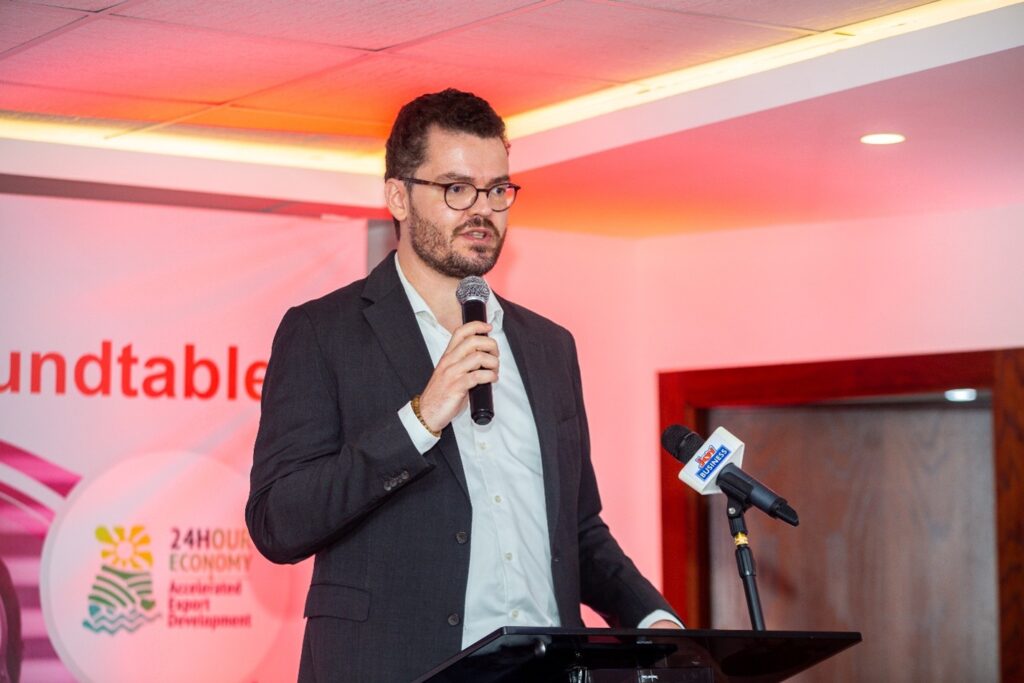
GIZ highlights secondary city opportunity
Delivering the GIZ Invest for Jobs perspective, a key strategic partner of BOSAG, Simon Hochstein, Head of Component, Business/Invest & Cluster Focus, Invest for Jobs, GIZ emphasized that outsourcing presents one of Ghana’s most promising pathways for large-scale job creation and economic transformation.
He highlighted ongoing collaboration between GIZ, eSAL, and ecosystem partners to pilot outsourcing operations in Tamale, demonstrating the viability of secondary cities as future outsourcing hubs.
According to GIZ, talent development, ecosystem strengthening, and targeted infrastructure investments can unlock significant opportunities outside Accra, helping to spread the benefits of growth more evenly across the country.


24-Hour Economy Authority unveils support framework
Kafui Abbah-Foli, Head of Project Development presenting the 24-Hour Economy’s vision for outsourcing, representatives of the 24-Hour Economy Authority outlined several initiatives designed to support the growth of export-oriented services. These include infrastructure development, talent development, investment facilitation, energy interventions, and the establishment of technology and outsourcing hubs.
Samlara Baah Koduah mentioned particular attention was given to the planned Ogua Tech Park at the University of Cape Coast, which is expected to include a 3,000-seat BPO facility, student accommodation, training facilities, and supporting infrastructure aimed at creating a globally competitive outsourcing environment.
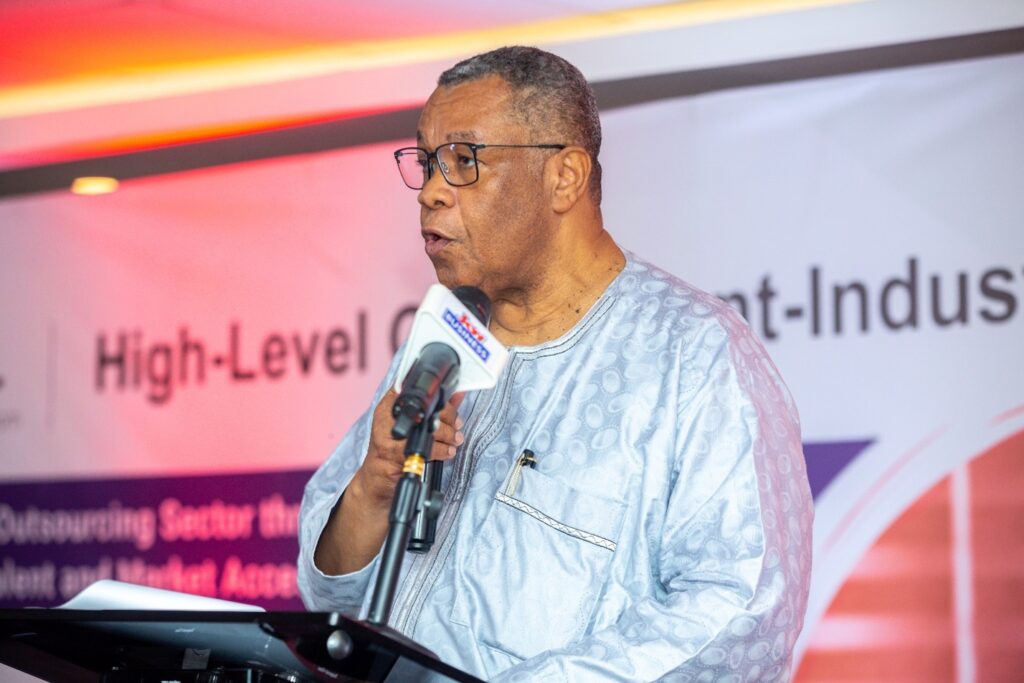
Government signals support for outsourcing-led growth
In his keynote remarks, Mr. Augustus Goosie Tanoh, Presidential Advisor to the 24-Hour Economy Authority, described outsourcing as one of the sectors most naturally aligned with the objectives of the 24-Hour Economy and Accelerated Export Development Programme. He noted that outsourcing is already a true 24-hour industry, operating across global time zones and providing a direct pathway to export earnings, youth employment, and economic diversification.
The Guest Speaker highlighted Ghana’s strong starting position, noting that the country has a youthful workforce, a strategic time zone, growing digital infrastructure, and significant investments under the One Million Coders Programme and the National AI Strategy, which together provide a strong foundation for expanding Ghana’s global services industry.
He further emphasized that outsourcing represents a unique opportunity to export talent without exporting people, allowing young Ghanaians to serve global markets while living and working in their communities. He pointed to the sector’s potential to support the broader goals of the 24-Hour Economy through job creation, export expansion, private-sector growth, and regional economic development.
The Presidential Advisor on 24-Hour Economy acknowledged the strategic importance of the SERVE24 proposal and confirmed the Authority’s willingness to work closely with BOSAG and industry stakeholders to examine how a dedicated services-export focus can be incorporated within the broader 24-Hour Economy framework. He also announced that the Authority would welcome BOSAG’s participation in the development of the Ogua Tech Park through a formal collaboration framework.
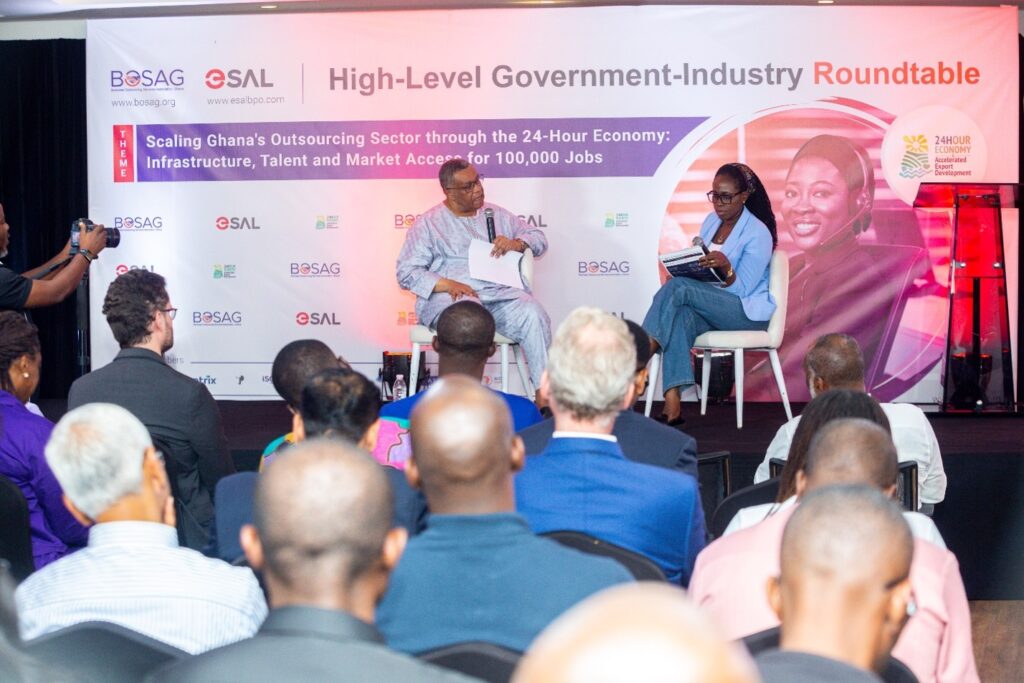
Executive Dialogue examines the future of Ghana’s outsourcing sector under the 24-Hour Economy
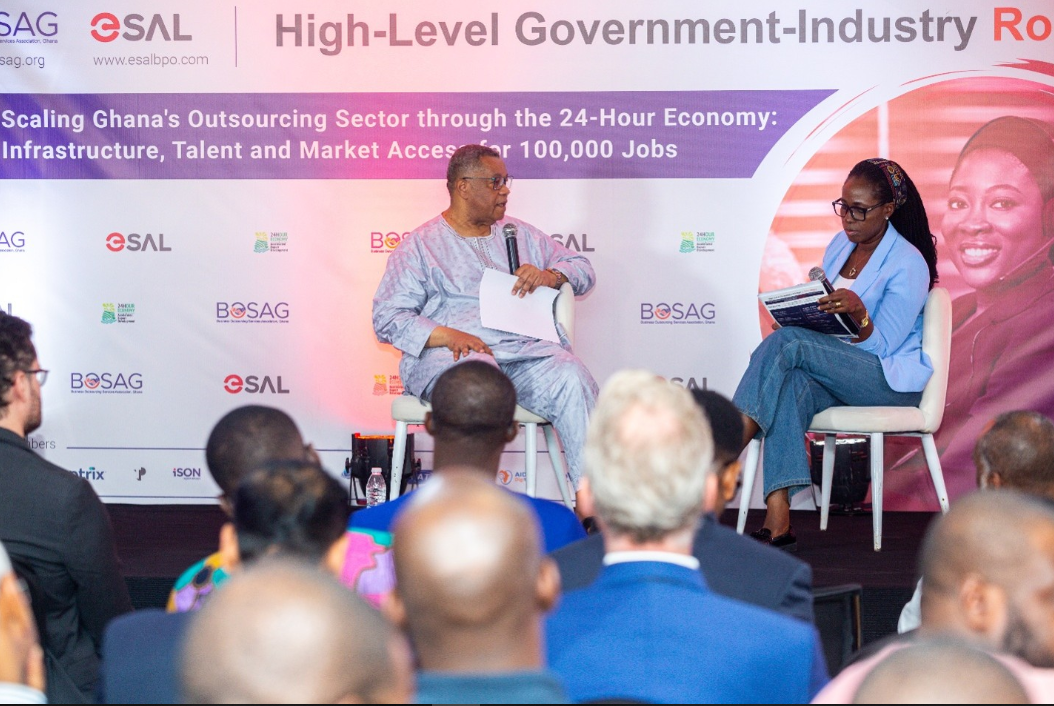
A major highlight of the Roundtable was the Executive Dialogue with Mr. Augustus Goosie Tanoh, moderated by Mary Ama Bawa, which explored how Ghana can leverage the outsourcing sector to accelerate job creation, exports, and economic transformation under the Government’s 24-Hour Economy agenda.
A central theme of the discussion was the proposal for SERVE24, a dedicated services-export focus within the 24-Hour Economy architecture. Stakeholders noted that unlike many sectors that require significant capital investments and lengthy production cycles, outsourcing can scale rapidly through investments in talent, connectivity, power, and suitable workspace.
Participants highlighted the sector’s ability to generate export earnings, absorb skilled youth into formal employment, and support economic activity across multiple time zones. The dialogue also examined how investments in the National AI Strategy and the One Million Coders Programme can be connected more directly to employment opportunities within the outsourcing and digital services sectors.
Participants emphasized the importance of building industry-led pathways that convert digital skills into jobs, income, and export revenue.
Particular attention was given to opportunities beyond Accra. Discussions explored the readiness of secondary cities such as Tamale and other growth centres identified under the 24-Hour Economy Initiative to host outsourcing operations.
Stakeholders highlighted the importance of reliable power supply, high-speed internet connectivity, quality office space, and access to skilled talent in attracting operators and investors to these locations. The dialogue further considered the role of indigenous Ghanaian outsourcing companies as anchor employers and ecosystem builders. Participants called for stronger public-private collaboration, targeted investment incentives, and coordinated international promotion efforts to position Ghana as a preferred outsourcing destination for global clients.
The Executive Dialogue concluded with a shared commitment among government, industry, development partners, and investors to advance practical actions that will enable the sector to scale and contribute meaningfully to BOSAG’s ambition of facilitating 100,000 jobs through Ghana’s outsourcing sector.
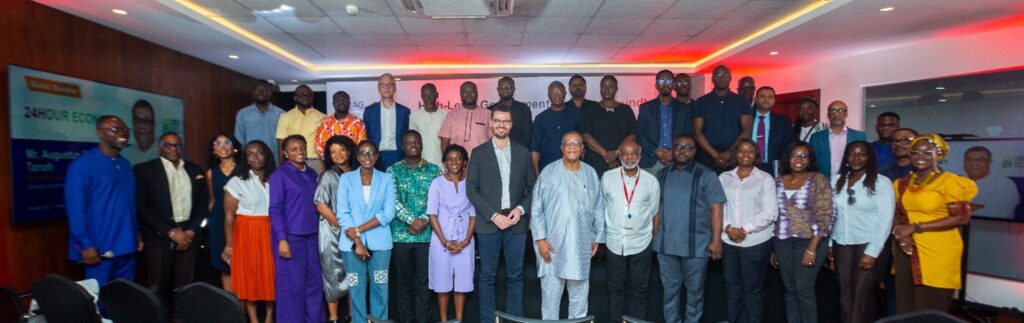
The Roundtable concluded with strong alignment between government, industry, and development partners on the need to accelerate the growth of Ghana’s outsourcing ecosystem. Stakeholders agreed that outsourcing and digital services represent a significant opportunity to generate exports, create employment, and support Ghana’s economic transformation agenda.
The proposal for SERVE24, together with emerging investments in infrastructure, skills development, and secondary-city growth, provides a practical pathway to achieving BOSAG’s ambition of facilitating 100,000 jobs through the outsourcing sector.
BOSAG
The Business Outsourcing Services Association Ghana (BOSAG) is the national industry association representing Ghana’s Business Process Outsourcing (BPO) and Global Business Services (GBS) sector. BOSAG serves as a coordinating platform for industry players, government, and development partners, with a mandate to position Ghana as a competitive global outsourcing destination, drive policy advocacy, support skills development, and facilitate largescale job creation for Ghanaian youth.
The Association is leading a strategic agenda to unlock 100,000 new BPO/GBS jobs through coordinated investment promotion, talent pipeline development, infrastructure enablement, and international market engagement.